


💡 What You Need to Know Right Away
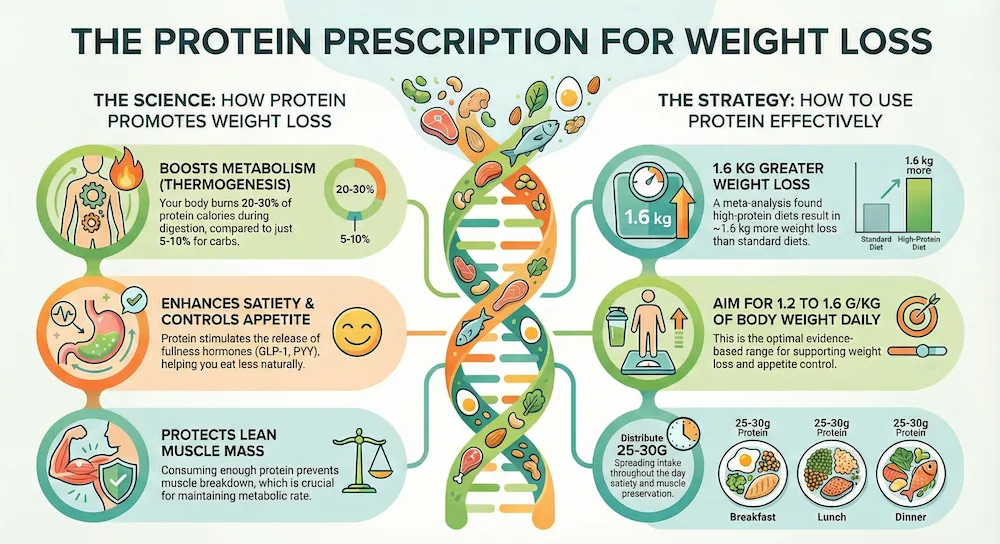
- Increased protein intake reduces body weight by approximately 1.6 kg compared to standard diets, according to a meta-analysis of 43 randomized controlled trials.[Evidence: A][1]
- Consuming at least 1.3 g/kg/day of protein preserves muscle mass during weight loss, while intake below 1.0 g/kg/day increases muscle loss risk.[Evidence: A][2]
- Higher-protein meals increase thermogenesis, meaning your body burns more calories digesting protein than other macronutrients.[Evidence: A][4]
- Protein intake between 1.2-1.6 g/kg/day with 25-30g per meal optimizes appetite control, satiety, and cardiometabolic factors.[Evidence: C][10]
If you have been searching for a sustainable approach to weight loss, you have likely encountered advice about eating more protein. The interest in protein for weight loss has surged dramatically, with 61% of Americans reporting increased protein intake in 2024 compared to 48% in 2019. For the third consecutive year, high-protein eating remains the most popular dietary pattern.
This comprehensive guide examines 16 peer-reviewed studies, including 6 meta-analyses and 7 randomized controlled trials, to answer your most pressing questions. You will learn exactly how much protein you need, which sources work best, and how to use protein safely for lasting results. Whether you are new to high-protein eating or looking to optimize your current approach, the evidence-based information here will help you make informed decisions.
❓ Quick Answers
What is protein for weight loss?
Protein for weight loss is a dietary strategy that increases daily protein intake to support fat loss while preserving muscle mass. Research shows this approach reduces body weight by approximately 1.6 kg more than standard diets.[Evidence: A][1] The optimal range is 1.2-1.6 g/kg of body weight daily, distributed across meals.[Evidence: C][10]
How does protein help you lose weight?
Protein promotes weight loss through three mechanisms. First, it increases thermogenesis, causing your body to burn more calories during digestion.[Evidence: A][4] Second, it stimulates satiety hormones GLP-1 and PYY while reducing hunger signals.[Evidence: B][8] Third, it preserves lean muscle mass during caloric restriction.[Evidence: A][2]
What foods are high in protein for weight loss?
High-protein foods for weight loss include lean meats, fish, eggs, dairy products like Greek yogurt, legumes, and tofu. A meta-analysis of 35 RCTs found whey protein effectively reduces BMI and body fat mass, especially when combined with resistance training and caloric restriction.[Evidence: A][5] Aim for complete proteins containing all essential amino acids.
What are the benefits of protein for weight loss?
Higher-protein diets produce greater weight loss, fat mass reduction, and lean mass preservation.[Evidence: C][10] In one study, participants eating 2.4 g/kg/day lost 4.8 kg of fat compared to 3.5 kg in the lower-protein group, while also gaining 1.2 kg of lean mass.[Evidence: B][7] Prediabetic individuals may experience even greater benefits.[Evidence: A][1]
How much protein should I eat a day to lose weight?
Research recommends 1.2-1.6 g/kg/day for weight loss, with 25-30g per meal for optimal satiety.[Evidence: C][10] Older adults (65+) benefit at 1.2-1.59 g/kg/day, while younger adults may need at least 1.6 g/kg/day for similar lean mass gains.[Evidence: A][3] No additional benefit occurs beyond 1.62 g/kg/day for muscle synthesis.[Evidence: A][14]
Is it safe to eat high protein every day?
For healthy individuals, daily high-protein intake at recommended levels (1.2-1.6 g/kg/day) appears safe. However, chronic and excessive supplementation poses risks to kidney and liver function.[Evidence: C][12] Those with pre-existing kidney conditions should consult a healthcare provider before significantly increasing protein intake.
Protein for Weight Loss
Unlock the power of protein to boost metabolism, reduce appetite, and change your body composition effectively.
🔬 How Does Protein Cause Weight Loss?
Understanding how protein supports weight loss helps you use it more effectively. Think of protein as a metabolic furnace. Unlike carbohydrates or fats, which your body processes efficiently, protein requires significant energy to break down. This extra work means you burn calories simply by eating and digesting protein-rich foods.
Thermogenesis: The Calorie-Burning Effect
A meta-analysis of 52 studies confirmed that higher-protein meals increase diet-induced thermogenesis.[Evidence: A][4] Your body expends approximately 20-30% of protein calories during digestion, compared to only 5-10% for carbohydrates. Interestingly, protein type does not significantly impact this energy metabolism effect, meaning both animal and plant proteins boost calorie burning similarly.[Evidence: A][4]
Appetite Regulation: Hormonal Control
Protein acts like a satiety switch in your gut. Research identified 8 specific amino acids responsible for appetite suppression.[Evidence: B][8] When you consume protein, these amino acids bind to nutrient-sensing receptors on L cells in your intestines, triggering the release of satiety hormones GLP-1 and PYY. Studies show these hormones are significantly higher after whey protein consumption compared to control meals.[Evidence: B][8] The result is feeling fuller for longer and naturally eating fewer calories.
Muscle Preservation: The Lean Mass Shield
During weight loss, your body can break down muscle along with fat. Adequate protein intake protects against this. A meta-analysis of 47 RCTs involving 3,218 participants found that consuming at least 1.3 g/kg/day of protein increases muscle mass during weight loss, while intake below 1.0 g/kg/day significantly raises muscle loss risk.[Evidence: A][2] Preserving muscle is crucial because muscle tissue burns more calories at rest, helping maintain your metabolic rate.
📊 Dosage and How to Use Protein for Weight Loss
Determining the right amount of protein depends on your age, activity level, and weight loss goals. The following table summarizes evidence-based dosage recommendations from clinical research.
| Purpose/Population | Dosage | Duration | Evidence |
|---|---|---|---|
| General weight loss (adults) | 1.2-1.6 g/kg/day | Ongoing | [C][10] |
| Muscle preservation during deficit | ≥1.3 g/kg/day | During caloric restriction | [A][2] |
| Older adults (65+) | 1.2-1.59 g/kg/day | Ongoing | [A][3] |
| Younger adults with resistance training | ≥1.6 g/kg/day | During training program | [A][3] |
| Maximum fat loss with exercise | 2.4 g/kg/day | 4 weeks | [B][7] |
| Per-meal threshold for satiety | 25-30 g/meal | Each meal | [C][10] |
| Upper limit (no additional benefit) | 1.62 g/kg/day | For muscle synthesis | [A][14] |
| Pregnancy (early to late) | 1.2-1.52 g/kg/day | Throughout pregnancy | [B][13] |
Practical Calculation Example: A 70 kg (154 lb) adult aiming for weight loss should consume between 84g (70 × 1.2) and 112g (70 × 1.6) of protein daily. This could be distributed as approximately 30g at each of three meals plus a small protein-rich snack.
Important Note on Upper Limits: A meta-analysis of 49 trials found no additional benefit for muscle protein synthesis beyond 1.62 g/kg/day.[Evidence: A][14] Higher intakes may be used for specific goals like the 2.4 g/kg/day protocol tested in athletes, but this requires careful monitoring and should not exceed 4 weeks without professional guidance.[Evidence: B][7]
⚠️ Risks, Side Effects, and Warnings
While protein is essential for health, understanding potential risks ensures safe use, particularly with higher intakes or supplementation.
Side Effects
A systematic review of whey protein supplementation identified several potential adverse effects:[Evidence: C][12]
- Digestive issues: Some individuals experience bloating, gas, or digestive discomfort, particularly with dairy-based proteins
- Skin changes: Acne has been associated with high whey protein intake in some users
- Microbiota modifications: High protein intake may alter gut bacteria composition
- Behavioral changes: Aggravated aggression has been reported with excessive supplementation
Organ Function Concerns
Chronic and abusive use of protein supplements poses risks to kidney and liver function. Excessive long-term supplementation may cause hepatotoxicity and renal complications.[Evidence: C][12] These risks are associated with chronic excessive use, not moderate intake at recommended levels.
Contraindications
- Pre-existing kidney disease: Consult a nephrologist before significantly increasing protein intake
- Liver conditions: Those with hepatic impairment should seek medical guidance
- Allergies: Avoid whey/casein if allergic to dairy; avoid soy protein if soy-allergic
- Pregnancy: Protein needs increase to 1.2-1.52 g/kg/day but should be monitored by healthcare provider[Evidence: B][13]
Monitoring Recommendations
If consuming protein at the higher end of recommendations (above 1.6 g/kg/day) for extended periods, periodic health monitoring is prudent. Stay adequately hydrated, as protein metabolism increases water requirements. Report any unusual symptoms to your healthcare provider.
🥗 Practical Ways to Use Protein for Weight Loss
How to Use This in Your Daily Life
Scenario 1: General Weight Loss
- Dose: 1.2-1.6 g/kg/day[10]
- Distribution: 25-30g per meal across 3-4 meals[10]
- Population: Adults seeking sustainable weight loss
- Timing: Distribute evenly throughout the day, prioritizing breakfast
- What to track: Body weight, waist circumference, energy levels
- Expected results: Approximately 1.6 kg greater weight loss compared to standard diet[1]
Scenario 2: Muscle Preservation During Caloric Deficit
- Dose: ≥1.3 g/kg/day minimum[2]
- Duration: Throughout weight loss phase
- Population: Adults in caloric restriction wanting to preserve muscle
- Combine with: Resistance training for optimal results
- What to track: Lean mass (if possible via body composition testing)
- Expected results: Maintained or increased muscle mass during weight loss[2]
Scenario 3: Older Adults (65+)
- Dose: 1.2-1.59 g/kg/day[3]
- Duration: Ongoing
- Population: Adults 65 years and older
- Special considerations: Leucine-enriched protein sources may enhance muscle preservation[6]
- Expected results: Supplemented older adults gained +0.4 kg appendicular muscle vs -0.5 kg loss in control group[6]
Practical Integration
Incorporate protein at each meal by including sources like eggs or Greek yogurt at breakfast, chicken or fish at lunch, and legumes or lean meat at dinner. Store protein powders in a cool, dry place away from direct sunlight. Prepare protein-rich snacks in advance to maintain consistent intake.
Common Mistakes to Avoid
- Consuming too little protein: Intake below 1.0 g/kg/day during weight loss significantly increases muscle loss risk.[2] Ensure you meet minimum thresholds.
- Relying on BCAA supplements alone: BCAA supplementation did not preserve lean mass (4.39% loss vs control 5.39%), while high-protein whole foods (3.67% loss) outperformed isolated BCAAs.[9] Choose complete protein sources.
- Uneven distribution: Studies show distributing protein as 25-30g per meal across the day optimizes satiety and muscle protein synthesis better than consuming most protein in one meal.[10]
- Exceeding beneficial limits: No additional benefit for muscle synthesis occurs beyond 1.62 g/kg/day.[14] More is not always better.
⚖️ Whey Protein vs. Plant Protein for Weight Loss
Choosing between whey and plant-based protein is a common question. Research provides helpful guidance on their relative effectiveness.
| Feature | Whey Protein | Plant Protein |
|---|---|---|
| Thermogenic effect | Increases thermogenesis[4] | Increases thermogenesis equally[4] |
| Body composition | Reduces BMI and body fat mass[5] | Effective when complete amino acids provided |
| Satiety hormones | Significantly increases GLP-1, PYY[8] | May increase satiety (less studied) |
| Muscle preservation | Strong evidence for lean mass maintenance[6] | Effective with adequate leucine content |
| Digestibility | Fast absorption | Variable; some may cause digestive issues |
| Allergen concerns | Not suitable for dairy allergy/intolerance | Soy allergy concerns for soy-based |
| Fiber content | None | Often contains beneficial fiber |
Key Finding: A meta-analysis found that protein type does not significantly impact energy metabolism.[Evidence: A][4] Both whey and plant proteins increase thermogenesis similarly. The most important factor is consuming adequate total protein and ensuring complete amino acid profiles.
For whey protein specifically, a meta-analysis of 35 RCTs (1,902 participants) found it reduced BMI and body fat mass, with the greatest benefits occurring when combined with resistance training and caloric restriction.[Evidence: A][5]
Plant protein users should combine different sources (legumes with grains, for example) to ensure complete amino acid intake, particularly adequate leucine, which is critical for muscle protein synthesis.
What The Evidence Shows (And Doesn't Show)
What Research Suggests
The evidence for protein's role in weight loss is strong, supported by 6 meta-analyses and 7 randomized controlled trials reviewed for this article.
- High-protein diets reduce body weight by approximately 1.6 kg more than standard diets (based on 43 RCTs, n=varies).[Evidence: A][1]
- Protein intake ≥1.3 g/kg/day preserves muscle mass during caloric restriction (47 RCTs, n=3,218).[Evidence: A][2]
- Higher-protein meals increase thermogenesis compared to lower-protein meals (52 studies analyzed).[Evidence: A][4]
- Protein intake up to 1.62 g/kg/day improves muscle protein synthesis; no additional benefit occurs beyond this threshold (49 trials, n=1,863).[Evidence: A][14]
- High protein (2.4 g/kg/day) combined with exercise produces simultaneous fat loss (4.8 kg) and lean mass gain (1.2 kg) over 4 weeks.[Evidence: B][7]
What's NOT Yet Proven
- Optimal protein timing: While 25-30g per meal is recommended, the exact impact of meal-specific timing on weight loss outcomes remains incompletely established.
- Long-term safety at very high intakes: Most studies lasted weeks to months; safety data for intake above 2.0 g/kg/day beyond 4 weeks is limited.
- Drug interactions: Comprehensive data on protein supplement interactions with medications (beyond general caution) is lacking in the reviewed evidence.
- Specific populations: Children, adolescents, and those with certain medical conditions were not well-represented in the studies reviewed.
- Plant protein equivalence: While thermogenic effects are similar, fewer RCTs have specifically studied plant protein for weight loss compared to whey.
Where Caution Is Needed
- Chronic and abusive protein supplement use poses risks to kidney and liver function.[Evidence: C][12] Moderate intake at recommended levels is different from excessive long-term supplementation.
- BCAA supplements alone do NOT preserve lean mass as effectively as whole protein sources. One RCT showed BCAA supplementation resulted in 4.39% lean mass loss versus 3.67% with high-protein diet.[Evidence: B][9] This contradicts common supplement marketing claims.
- Protein intake below 1.0 g/kg/day during weight loss significantly increases muscle loss risk.[Evidence: A][2]
- Pregnancy protein requirements (1.2-1.52 g/kg/day) differ from general recommendations and should be monitored by a healthcare provider.[Evidence: B][13]
Should YOU Try This?
Best suited for: Adults seeking sustainable weight loss who want to preserve muscle mass, individuals combining diet with resistance training, older adults (65+) at risk of sarcopenia, and those who find high-protein meals more satiating.
Not recommended for: Individuals with pre-existing kidney disease or liver conditions (without medical supervision), those allergic to common protein sources, and anyone who cannot tolerate increased protein without digestive distress.
Realistic timeline: Measurable body composition changes can occur within 4 weeks with proper implementation.[7] Average weight loss advantage of ~1.6 kg over standard diets occurs over study durations of weeks to months.[1]
When to consult a professional: Before starting if you have kidney disease, liver conditions, or are pregnant. Also consult if you experience adverse effects, plan intake above 2.0 g/kg/day, or have concerns about interactions with medications.
Frequently Asked Questions
What happens if you eat too much protein?
Consuming excessive protein long-term may pose health risks. A systematic review found that chronic and abusive use of protein supplements poses risk to kidneys and liver, potentially causing hepatotoxicity and renal complications. Other reported effects include acne, microbiota modifications, and behavioral changes. However, these risks are associated with chronic excessive intake, not moderate consumption at recommended levels of 1.2-1.6 g/kg/day. If you experience digestive issues, fatigue, or changes in urination, reduce intake and consult a healthcare provider.
What is the best type of protein for weight loss?
Research suggests protein type matters less than total intake and timing. A meta-analysis of 52 studies found that protein type does not significantly impact energy metabolism, meaning both animal and plant proteins boost thermogenesis similarly. However, whey protein has the strongest evidence base for weight loss, with a meta-analysis of 35 RCTs showing it reduces BMI and body fat mass. For older adults, leucine-enriched whey with vitamin D showed particular benefit for muscle preservation.
When should I drink protein shakes for weight loss?
Protein distribution throughout the day matters more than timing around specific events. Research recommends consuming 25-30g of protein at each meal for optimal satiety and appetite control. A protein shake can help you reach this threshold at meals where whole food protein is insufficient. Breakfast protein may be particularly beneficial for reducing daily calorie intake. If exercising, consuming protein within a few hours of resistance training supports muscle protein synthesis, though total daily intake is more important than exact timing.
Should I eat protein before or after workout for weight loss?
For weight loss specifically, total daily protein intake matters more than precise timing around workouts. A meta-analysis of 49 trials found that protein supplementation increases strength gains, but the critical factor was meeting total protein needs (up to 1.62 g/kg/day) rather than specific workout timing. That said, consuming protein within several hours of resistance exercise supports muscle preservation during weight loss. The combination of higher protein (2.4 g/kg/day) with intense exercise produced both lean mass gain (+1.2 kg) and greater fat loss (4.8 kg vs 3.5 kg) in a 4-week study.
Can you build muscle and lose fat at the same time?
Yes, body recomposition is possible with adequate protein and resistance training. A 4-week study demonstrated this clearly: participants consuming 2.4 g/kg/day of protein during an energy deficit gained 1.2 kg of lean mass while losing 4.8 kg of fat. In contrast, the lower protein group (1.2 g/kg/day) gained only 0.1 kg lean mass and lost 3.5 kg fat. The key requirements are sufficient protein intake (well above 1.2 g/kg/day), intense resistance exercise, and caloric deficit. This approach works best for those new to resistance training or returning after a break.
Is plant protein or whey protein better for weight loss?
Both can be effective for weight loss. A meta-analysis confirmed that protein type does not significantly impact thermogenesis or energy metabolism. Whey protein has more extensive research supporting its use, with studies showing it reduces BMI and body fat mass. Whey also significantly increases satiety hormones GLP-1 and PYY. Plant proteins can achieve similar results when they provide complete amino acids with adequate leucine content. Choose based on dietary preferences, allergies, and digestive tolerance.
How long does it take to see results from high protein diet?
Measurable results can occur within 4 weeks based on clinical studies. In one RCT, participants saw significant body composition changes after just 4 weeks of high protein intake (2.4 g/kg/day) combined with exercise, including 4.8 kg fat loss and 1.2 kg lean mass gain. For the meta-analysis finding of approximately 1.6 kg greater weight loss compared to standard diets, studies varied in duration. Individual results depend on overall caloric intake, exercise, starting weight, and adherence. Monitor progress through weight, measurements, and how clothes fit rather than expecting instant transformation.
Can high protein diet damage kidneys?
For healthy individuals, high protein intake at recommended levels (1.2-1.6 g/kg/day) does not damage kidneys. However, chronic and abusive use of protein supplements poses risk to renal function according to a systematic review. The distinction is important: moderate high-protein eating within guidelines differs from extreme or prolonged excessive supplementation. Those with pre-existing kidney disease should consult a nephrologist before increasing protein intake, as damaged kidneys may struggle with higher protein loads. Stay well-hydrated when consuming higher protein levels, as protein metabolism increases water requirements.
Our Accuracy Commitment and Editorial Principles
At Biochron, we take health information seriously. Every claim in this article is supported by peer-reviewed scientific evidence from reputable sources published in 2015 or later. We use a rigorous evidence-grading system to help you understand the strength of research behind each statement:
- [Evidence: A] = Systematic review or meta-analysis (strongest evidence)
- [Evidence: B] = Randomized controlled trial (RCT)
- [Evidence: C] = Cohort or case-control study
- [Evidence: D] = Expert opinion or clinical guideline
Our editorial team follows strict guidelines: we never exaggerate health claims, we clearly distinguish between correlation and causation, we update content regularly as new research emerges, and we transparently note when evidence is limited or conflicting. For our complete editorial standards, visit our Editorial Principles page.
This article is for informational purposes only and does not constitute medical advice. Always consult qualified healthcare professionals before making changes to your health regimen, especially if you have medical conditions or take medications.


References
- 1 . Are Dietary Proteins the Key to Successful Body Weight Management? A Systematic Review and Meta-Analysis of Studies Assessing Body Weight Outcomes after Interventions with Increased Dietary Protein. Hansen TT, Astrup A, Sjödin A. Nutrients, 2021;13(9):3193. PubMed | DOI [Evidence: A]
- 2 . Enhanced protein intake on maintaining muscle mass, strength, and physical function in adults with overweight/obesity: A systematic review and meta-analysis. Kokura Y, Ueshima J, Saino Y, Maeda K. Clinical Nutrition ESPEN, 2024;63:417-426. PubMed | DOI [Evidence: A]
- 3 . Systematic review and meta-analysis of protein intake to support muscle mass and function in healthy adults. Nunes EA, et al. Journal of Cachexia Sarcopenia Muscle, 2022;13(2):795-810. PubMed | DOI [Evidence: A]
- 4 . Effects of Varying Protein Amounts and Types on Diet-Induced Thermogenesis: A Systematic Review and Meta-Analysis. Guarneiri LL, et al. Advances in Nutrition, 2024;15(12):100332. PubMed | DOI [Evidence: A]
- 5 . Effect of whey protein supplementation on weight and body composition indicators: A meta-analysis of randomized clinical trials. Sepandi M, et al. Clinical Nutrition ESPEN, 2022;50:74-83. PubMed | DOI [Evidence: A]
- 6 . A high whey protein-, leucine-, and vitamin D-enriched supplement preserves muscle mass during intentional weight loss in obese older adults: a double-blind randomized controlled trial. Verreijen AM, et al. American Journal of Clinical Nutrition, 2015;101(2):279-286. PubMed | DOI [Evidence: B]
- 7 . Higher compared with lower dietary protein during an energy deficit combined with intense exercise promotes greater lean mass gain and fat mass loss: a randomized trial. Longland TM, et al. American Journal of Clinical Nutrition, 2016;103(3):738-746. PubMed | DOI [Evidence: B]
- 8 . The Appetite-Suppressant and GLP-1-Stimulating Effects of Whey Proteins in Obese Subjects are Associated with Increased Circulating Levels of Specific Amino Acids. Rigamonti AE, et al. Nutrients, 2020;12(3):775. PubMed | DOI [Evidence: B]
- 9 . Branched-Chain Amino Acid Supplementation Does Not Preserve Lean Mass or Affect Metabolic Profile in Adults with Overweight or Obesity in a Randomized Controlled Weight Loss Intervention. Ooi DSQ, et al. The Journal of Nutrition, 2021;151(4):911-920. PubMed | DOI [Evidence: B]
- 10 . The role of protein in weight loss and maintenance. Leidy HJ, et al. American Journal of Clinical Nutrition, 2015;101(6):1320S-1329S. PubMed | DOI [Evidence: C]
- 11 . Optimizing Body Composition During Weight Loss: The Role of Amino Acid Supplementation. Cannavaro D, et al. Nutrients, 2025;17(12):2000. PubMed | DOI [Evidence: C]
- 12 . Whey protein supplementation and its potentially adverse effects on health: a systematic review. Vasconcelos QDJS, Bachur TPR, Aragão GF. Applied Physiology, Nutrition, and Metabolism, 2021;46(1):27-33. PubMed | DOI [Evidence: C]
- 13 . Protein and Amino Acid Requirements during Pregnancy. Elango R, Ball RO. Advances in Nutrition, 2016;7(4):839S-844S. PubMed | DOI [Evidence: B]
- 14 . A systematic review, meta-analysis and meta-regression of the effect of protein supplementation on resistance training-induced gains in muscle mass and strength in healthy adults. Morton RW, et al. British Journal of Sports Medicine, 2018;52(6):376-384. PubMed | DOI [Evidence: A]
- 15 . Effects of Whey Protein or Its Hydrolysate Supplements Combined with an Energy-Restricted Diet on Weight Loss: A Randomized Controlled Trial in Older Women. Sun Y, et al. Nutrients, 2022;14(21):4540. PubMed | DOI [Evidence: B]
- 16 . The Weight Loss Effects of Branched Chain Amino Acids and Vitamin B6: A Randomized Controlled Trial on Obese and Overweight Women. Shakibay Novin Z, Ghavamzadeh S, Mehdizadeh A. International Journal of Vitamin and Nutrition Research, 2018;88(1-2):80-89. PubMed | DOI [Evidence: B]
Medical Disclaimer
This content is for informational and educational purposes only. It is not intended to provide medical advice or to take the place of such advice or treatment from a personal physician. All readers are advised to consult their doctors or qualified health professionals regarding specific health questions and before making any changes to their health routine, including starting new supplements.
Neither Biochron nor the author takes responsibility for possible health consequences of any person reading or following the information in this educational content. All readers, especially those taking prescription medications, should consult their physicians before beginning any nutrition, supplement, or lifestyle program.
If you have a medical emergency, call your doctor or emergency services immediately.
