


Selenium is an essential trace mineral that functions as a powerful antioxidant through its incorporation into selenoproteins like glutathione peroxidase and thioredoxin reductase. It protects cells from oxidative damage caused by free radicals, supports thyroid hormone metabolism, and enhances immune function. Adults require 55 micrograms daily for optimal antioxidant defense and overall health.
💡 What You Need to Know Right Away
- Selenium supports 25 selenoproteins that regulate oxidative stress responses and immune function, with glutathione peroxidases and thioredoxin reductases providing primary antioxidant defense.[Evidence: D][11]
- Higher selenium status is associated with 13% lower all-cause mortality, 11% lower cardiovascular mortality, and 15% lower cancer mortality based on meta-analysis of 20 cohort studies.[Evidence: A][3]
- Selenium supplementation significantly increases glutathione peroxidase activity and total antioxidant capacity while reducing malonaldehyde, a marker of oxidative damage.[Evidence: A][2]
- Selenium in antioxidant mixtures reduced cardiovascular mortality by 23% (RR: 0.77) and all-cause mortality by 10% (RR: 0.90) in analysis of 43 randomized controlled trials.[Evidence: A][1]
If you have been researching ways to protect your cells from oxidative damage and support healthy aging, you have likely encountered selenium. This essential trace mineral plays a central role in your body's antioxidant defense system, yet many people remain uncertain about its benefits, proper dosing, and safety.
It is common to feel overwhelmed when evaluating health supplements. Questions about whether selenium actually works, how much to take, and whether food sources are sufficient can make decision-making difficult. This guide cuts through the confusion with evidence from 12 peer-reviewed studies published between 2016 and 2025.
You will learn how selenium functions as an antioxidant at the molecular level, what the research shows about its health benefits, safe dosage ranges, potential risks, and practical guidance for incorporating selenium into your wellness routine. By the end, you will have the knowledge to make an informed decision about selenium supplementation.
❓ Quick Answers
What is selenium?
Selenium is an essential trace mineral that your body cannot produce on its own. It serves as the active center of 25 selenoproteins that regulate responses to oxidative stress and support immune function.[Evidence: A][9] Adults need 55 micrograms daily from food or supplements to maintain optimal health.
How does selenium work as an antioxidant?
Selenium functions through incorporation into selenoproteins, particularly glutathione peroxidases and thioredoxin reductases. These enzymes neutralize harmful reactive oxygen species and protect cell membranes from oxidative damage.[Evidence: D][11] Supplementation has been shown to increase glutathione peroxidase activity and total antioxidant capacity.[Evidence: A][2]
What foods are highest in selenium?
Brazil nuts are the richest food source, providing 68-91 micrograms per nut. Seafood, organ meats, and muscle meats also contain significant amounts. Grains and dairy products contribute selenium depending on soil content where they were grown. One to two Brazil nuts daily can meet recommended intake for most adults.
What are the benefits of selenium?
Research indicates selenium supports antioxidant defense, thyroid function, and cardiovascular health. Higher selenium status is associated with 13% lower all-cause mortality and 15% lower cancer mortality in observational studies.[Evidence: A][3] Selenium also plays essential roles in thyroid hormone conversion from T4 to T3.[Evidence: C][8]
How much selenium should I take daily?
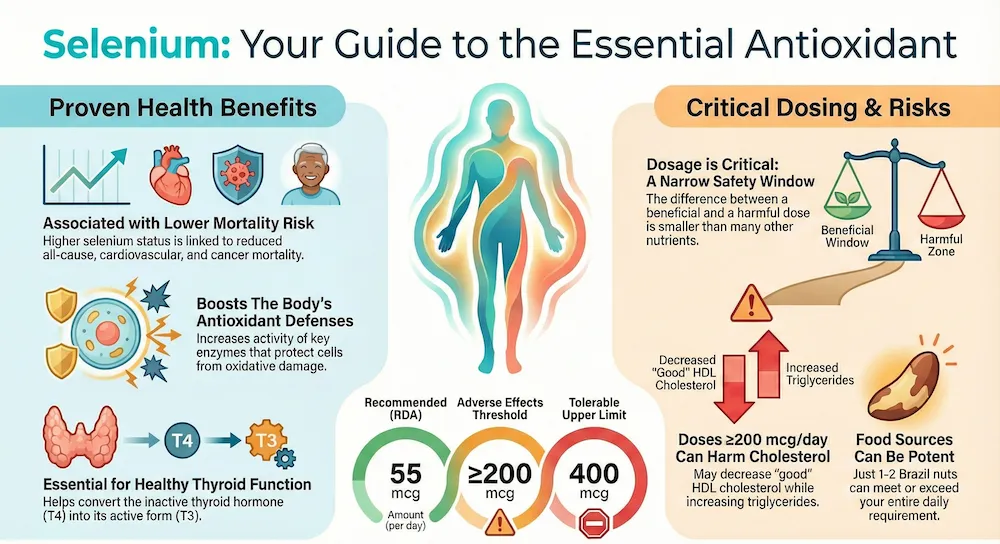
The recommended dietary allowance is 55 micrograms daily for adults. Therapeutic doses in clinical trials have used 200 micrograms daily for specific conditions.[Evidence: B][4] The tolerable upper intake level is 400 micrograms daily. Exceeding this threshold increases risk of adverse effects.[Evidence: A][5]
Is selenium safe to take every day?
Selenium at doses up to the RDA of 55 micrograms is considered safe for daily long-term use. Higher doses of 200 micrograms daily or more may cause adverse lipid effects including decreased HDL cholesterol and increased triglycerides.[Evidence: A][5] Stay below 400 micrograms daily to avoid toxicity risk.[Evidence: D][6]
Can selenium help with thyroid problems?
Selenium is essential for thyroid hormone metabolism. The iodothyronine deiodinases that convert T4 to active T3 require selenium as a cofactor.[Evidence: D][11] Severe selenium deficiency impairs this conversion, causing elevated free T4 levels that normalize with supplementation.[Evidence: C][8]
Is selenium good for your immune system?
Selenium shows dose-dependent effects on certain immune cells. A systematic review found some effects on T cells and natural killer cells with an inverted U-shaped dose-response pattern.[Evidence: A][9] However, selenium did not substantially affect immunoglobulin or white blood cell concentrations, and no evidence supports supplementation beyond the RDA for immune benefits.[Evidence: A][7]
Selenium Benefits
Selenium is a trace mineral that plays a critical role in your health. From fighting oxidative stress to regulating metabolism, discover why this nutrient is essential for your body.
🔬 How Does Selenium Work as an Antioxidant?
Understanding how selenium protects your cells requires looking at its molecular machinery. The human genome contains 25 selenoprotein genes that regulate responses to oxidative stress, immune function, and thyroid metabolism.[Evidence: D][11]
Think of selenoproteins as specialized security guards stationed throughout your body. Each guard carries selenium as their badge of authority, which allows them to neutralize dangerous intruders called reactive oxygen species. Without adequate selenium, these guards cannot function, leaving your cells vulnerable to oxidative damage.
The primary antioxidant selenoproteins include glutathione peroxidases (GPx) and thioredoxin reductases (TrxR). Glutathione peroxidases convert harmful hydrogen peroxide into harmless water, protecting cell membranes and DNA from oxidative injury. Thioredoxin reductases maintain the cellular redox balance essential for protein function and cell survival.[Evidence: D][11]
Clinical research confirms these mechanisms translate to measurable benefits. A meta-analysis of 13 randomized controlled trials found that selenium supplementation significantly increased glutathione peroxidase activity and total antioxidant capacity while reducing malonaldehyde, a biomarker of oxidative damage.[Evidence: A][2]
Selenoprotein P functions like a delivery truck, transporting selenium from the liver to tissues throughout the body. This transport protein is synthesized in the liver and carries selenium to endocrine glands, the brain, and other organs via the SELENOP cycle. Beyond transport, selenoprotein P also catalyzes peroxide degradation and protects LDL cholesterol from oxidation.[Evidence: D][10]
Low selenoprotein P levels have been associated with increased cardiovascular disease risk and poorer outcomes in critical illness, highlighting the importance of adequate selenium for whole-body antioxidant protection.[Evidence: D][10]
Beyond antioxidant defense, selenium-containing iodothyronine deiodinases regulate thyroid hormone metabolism by converting inactive T4 to active T3. Severe selenium deficiency impairs this conversion, causing elevated free T4 levels that normalize with selenium supplementation.[Evidence: C][8]
📊 Dosage and How to Use Selenium
Selenium dosing requires careful attention because of its narrow therapeutic window. The difference between beneficial and potentially harmful doses is smaller than many other nutrients. Here is what clinical research supports for different purposes.
| Purpose/Condition | Dosage | Duration | Evidence |
|---|---|---|---|
| General antioxidant support (RDA) | 55 mcg/day | Ongoing | [A][9] |
| Ulcerative colitis disease activity reduction | 200 mcg/day (selenomethionine) | 10 weeks | [B][4] |
| Upper limit (adverse lipid effects threshold) | ≥200 mcg/day | N/A - caution threshold | [A][5] |
Recommended Daily Allowances by Life Stage
| Life Stage | RDA (mcg/day) | Upper Limit (mcg/day) |
|---|---|---|
| Adults (19+ years) | 55 | 400 |
| Pregnant women | 60 | 400 |
| Lactating women | 70 | 400 |
The 200 mcg/day dose used in the ulcerative colitis trial induced clinical remission in 38% of treated patients compared to 6% with placebo, reduced IL-17 inflammatory markers, and improved quality of life over 10 weeks.[Evidence: B][4]
However, a dose-response meta-analysis found that selenium administration at and above 200 mcg/day decreased HDL and LDL cholesterol while increasing triglyceride levels, with inorganic forms showing stronger adverse effects than organic forms.[Evidence: A][5] Blood selenium concentrations above 150 µg/L were positively associated with these adverse lipid effects.[Evidence: A][5]
Key dosing principles:
- Start with the RDA of 55 mcg/day unless directed otherwise by a healthcare provider
- Organic forms like selenomethionine may have better safety profiles than inorganic forms
- Never exceed the 400 mcg/day upper limit to avoid toxicity
- Account for dietary selenium intake when calculating supplement doses
⚠️ Risks, Side Effects, and Warnings
Side Effects by Severity
Mild effects (at high-normal doses): Garlic breath odor, metallic taste, mild gastrointestinal discomfort. These may occur even at doses below the upper limit in sensitive individuals.
Moderate effects (chronic excess): Excessive selenium supplementation causes toxic effects that may impact growth and development. The selenosis threshold can be exceeded at modest doses above the recommended intake.[Evidence: D][6]
Severe effects (toxicity/selenosis): Hair loss, nail brittleness and loss, skin lesions, neurological symptoms, liver damage. These require immediate medical attention and cessation of selenium intake.
Metabolic Cautions
A dose-response meta-analysis of experimental human studies found that selenium administration at and above 200 mcg/day decreased both HDL cholesterol and LDL cholesterol while increasing triglyceride levels.[Evidence: A][5] Inorganic selenium forms showed stronger adverse effects than organic forms. Importantly, these effects were more pronounced in healthy populations than in those with existing disease, suggesting that supplementation in selenium-replete individuals may carry metabolic risks.
Special Populations
Pregnancy: Maternal selenium status profoundly affects fetal development. Low maternal selenium causes oxidative disruption in both the dam and offspring, leading to intrauterine growth retardation and tissue abnormalities. Adequate selenium supplementation during pregnancy helps prevent these effects and may protect against fetal alcohol spectrum disorders.[Evidence: C][12] However, pregnant women should not exceed the 400 mcg upper limit.
Drug Interactions
Specific drug interaction data from the reviewed studies was limited. Inform your healthcare provider of all medications before starting selenium supplementation. Potential theoretical interactions include:
- Anticoagulants: Selenium may have additive effects on bleeding risk
- Cholesterol-lowering medications: Given selenium's effects on lipid profiles at higher doses
- Thyroid medications: Due to selenium's role in thyroid hormone metabolism
Contraindications
Avoid selenium supplementation if you have a known allergy to selenium compounds. Use caution and consult a healthcare provider if you have kidney disease, are on dialysis, or have existing lipid abnormalities. Those with adequate selenium intake from diet may not benefit from supplementation and could experience adverse effects.
🥗 Practical Ways to Use Selenium
How to Use This in Your Daily Life
Scenario 1: General Antioxidant Support
- Dose: 55 mcg/day (RDA)[9]
- Duration: Ongoing for maintenance
- Population: Adults seeking baseline antioxidant support
- Timing: With meals to enhance absorption
- What to track: Overall wellbeing, energy levels
- Expected results: Maintenance of antioxidant capacity and selenoprotein function
Scenario 2: Inflammatory Bowel Condition Support
- Dose: 200 mcg/day selenomethionine[4]
- Duration: 10 weeks[4]
- Population: Adults with mild-to-moderate ulcerative colitis (under medical supervision)
- Timing: With meals
- What to track: Disease activity scores, quality of life
- Expected results: Clinical remission achieved in 38% of treated patients vs 6% with placebo; reduced IL-17 levels[4]
Practical Integration
For most adults, meeting selenium needs through food is achievable. One to two Brazil nuts daily provide approximately 68-180 mcg, meeting or exceeding the RDA. If using supplements, choose selenomethionine, which showed a better safety profile than inorganic forms in research.[Evidence: A][5]
Store selenium supplements in a cool, dry place away from direct sunlight. Follow product label instructions for specific storage requirements.
Common Mistakes to Avoid
- Taking too much: Studies used specific doses for defined conditions[4]. More is not better with selenium due to its narrow therapeutic window.
- Choosing inorganic forms: Inorganic selenium showed stronger adverse lipid effects than organic forms[5]. Opt for selenomethionine when supplementing.
- Ignoring dietary intake: If eating Brazil nuts regularly, you may already meet or exceed needs. Adding supplements could push you toward toxicity.
- Expecting immune miracles: Research found no evidence for supplementation beyond the RDA for immune benefits[7].
⚖️ Selenium vs. Other Antioxidants
Understanding how selenium compares to other antioxidants helps you make informed decisions about your antioxidant strategy. Selenium works differently from vitamin C, vitamin E, and other common antioxidants.
| Feature | Selenium | Vitamin E |
|---|---|---|
| Primary mechanism | Cofactor for selenoproteins (GPx, TrxR) | Direct free radical scavenging in lipid membranes |
| Where it works | Intracellular enzymes, thyroid, immune cells | Cell membrane lipids |
| Mortality association | 13% lower all-cause mortality per SD increase[3] | Part of antioxidant mixtures with mortality benefit[1] |
| Cardiovascular effects | In antioxidant mixtures: RR 0.77 for CV mortality[1] | Works synergistically with selenium |
| Standalone benefit | Standalone selenium showed no mortality benefit[1] | Variable evidence for standalone use |
| Best approach | May work best in combination with other antioxidants | May work best in combination with selenium |
A key finding from the meta-analysis of 43 randomized controlled trials: selenium in antioxidant mixtures reduced cardiovascular mortality (RR: 0.77) and all-cause mortality (RR: 0.90), but standalone selenium supplementation showed no significant benefit.[Evidence: A][1]
This suggests selenium may work synergistically with other antioxidants rather than as a solo intervention. If optimizing antioxidant protection is your goal, consider selenium as part of a comprehensive approach that includes adequate vitamin E, vitamin C, and other antioxidant nutrients from food sources.
What The Evidence Shows (And Doesn't Show)
What Research Suggests
- Higher selenium status is associated with 13% lower all-cause mortality, 11% lower cardiovascular mortality, and 15% lower cancer mortality (based on meta-analysis of 20 cohort studies, large pooled populations).[Evidence: A][3]
- Selenium in antioxidant mixtures reduced cardiovascular mortality (RR: 0.77) and all-cause mortality (RR: 0.90) in meta-analysis of 43 randomized controlled trials.[Evidence: A][1]
- Selenium supplementation significantly increases glutathione peroxidase activity and total antioxidant capacity while reducing malonaldehyde (based on 13 RCTs).[Evidence: A][2]
- Selenium 200 mcg/day induced clinical remission in 38% of ulcerative colitis patients vs 6% placebo over 10 weeks (100-patient RCT).[Evidence: B][4]
- Selenium is the active center of 25 selenoproteins regulating oxidative stress and immune function.[Evidence: D][11]
What's NOT Yet Proven
- Standalone selenium supplementation has not shown mortality benefits. The meta-analysis found benefits only when selenium was part of antioxidant mixtures.[1]
- Immune benefits beyond the RDA are not established. Research found no evidence that supplementation above 55 mcg/day improves immune function.[7]
- Optimal selenium form for specific conditions remains unclear. Direct head-to-head comparisons of selenomethionine vs. selenite for therapeutic outcomes are lacking.
- Pediatric-specific dosing studies are absent from recent literature. Most research involves adult populations.
- Long-term safety data for chronic intake above 200 mcg/day is limited.
Where Caution Is Needed
- Doses ≥200 mcg/day decreased HDL and LDL cholesterol and increased triglycerides, with inorganic forms showing stronger adverse effects.[Evidence: A][5]
- Healthy populations showed more pronounced adverse lipid effects than diseased populations, suggesting selenium-replete individuals may face greater risk from supplementation.[5]
- Selenosis threshold can be exceeded at modest doses above recommended intake.[Evidence: D][6]
- Blood selenium above 150 µg/L is associated with adverse metabolic effects.[5]
- Low maternal selenium causes oxidative disruption and intrauterine growth retardation in offspring.[Evidence: C][12]
Should YOU Try This?
Best suited for: Adults with confirmed selenium deficiency or inadequate dietary intake; individuals in low-selenium soil regions; those with malabsorption conditions affecting selenium status; patients with ulcerative colitis seeking adjunctive therapy (under medical supervision).
Not recommended for: Individuals with adequate selenium intake from diet (especially regular Brazil nut consumers); those with lipid abnormalities who could be affected by high-dose selenium effects[5]; pregnant women should not exceed the 400 mcg upper limit.
Realistic timeline: Antioxidant marker improvements observed in clinical trials; ulcerative colitis benefits seen over 10-week treatment period[4]; general wellness effects vary by individual baseline status.
When to consult a professional: Before starting supplementation if taking medications affecting thyroid function, cholesterol, or blood clotting; if considering doses above the 55 mcg RDA; if pregnant or planning pregnancy; if experiencing symptoms of deficiency or toxicity.
Frequently Asked Questions
What are the symptoms of selenium deficiency?
Selenium deficiency affects multiple body systems. In severe cases, it can cause Keshan disease, a form of cardiomyopathy endemic to selenium-poor regions, and Kashin-Beck disease affecting joints. Clinical research shows severe selenium deficiency (below 2 µg/dl) is associated with elevated free T4 levels due to impaired conversion to T3, which normalizes with selenium supplementation. More subtle deficiency may manifest as fatigue, weakened immunity, cognitive changes, and poor wound healing, though these symptoms are nonspecific. Risk factors include living in low-selenium soil regions, malabsorption conditions, and dialysis.
What are the side effects of too much selenium?
Excessive selenium causes a condition called selenosis. Research confirms that excessive selenium supplementation causes toxic effects on growth and development, and the selenosis threshold can be exceeded at modest doses above the recommended intake. Additionally, doses of 200 mcg/day or higher have been shown to decrease HDL cholesterol and increase triglycerides, with inorganic forms showing stronger adverse effects. Classic selenosis symptoms include garlic breath, hair loss, nail brittleness, skin rashes, and neurological symptoms. The tolerable upper limit of 400 mcg/day exists specifically to prevent these effects.
What is the difference between selenomethionine and sodium selenite?
Selenomethionine is an organic selenium form found naturally in foods and incorporated into body proteins. Sodium selenite is an inorganic form used in some supplements. Research from the dose-response meta-analysis found that inorganic selenium forms showed stronger adverse effects on lipid profiles than organic forms at equivalent doses. The clinical trial demonstrating benefits in ulcerative colitis specifically used selenomethionine at 200 mcg/day. Most experts recommend organic forms like selenomethionine for supplementation due to better bioavailability and potentially improved safety.
How many Brazil nuts should I eat for selenium?
Brazil nuts are exceptionally rich in selenium, containing approximately 68-91 micrograms per nut, though content varies significantly based on growing conditions. One to two Brazil nuts daily typically provides the 55 mcg RDA for adults. Because of this high concentration and variability, limiting intake to 2-3 nuts daily is advisable to avoid exceeding the 400 mcg upper limit. Unlike supplements with precise dosing, Brazil nuts require careful consumption due to natural variability. If you regularly eat Brazil nuts, additional selenium supplementation is likely unnecessary and could increase toxicity risk.
Does selenium prevent cancer?
The relationship between selenium and cancer is complex. The meta-analysis of 20 cohort studies found that higher selenium status was associated with 15% lower cancer mortality per standard deviation increase in selenium biomarkers. However, this observational association does not prove causation. The large SELECT trial (Selenium and Vitamin E Cancer Prevention Trial) found no benefit for selenium supplementation in prostate cancer prevention in selenium-replete populations. Current evidence does not support taking selenium specifically to prevent cancer, particularly in individuals with adequate selenium status.
What is selenium toxicity?
Selenium toxicity, or selenosis, occurs when intake chronically exceeds safe levels. Research confirms that excessive selenium supplementation causes toxic effects, with the selenosis threshold exceeded at modest doses above recommended intake. Acute toxicity from single large doses causes severe gastrointestinal symptoms, while chronic toxicity from sustained excess causes hair loss, nail abnormalities, skin lesions, nervous system dysfunction, and in severe cases, respiratory failure. The 400 mcg/day upper limit was established to prevent chronic toxicity with a safety margin.
Can selenium help with heart health?
Evidence suggests selenium may support cardiovascular health, particularly when combined with other antioxidants. The meta-analysis of 43 RCTs found selenium in antioxidant mixtures reduced cardiovascular mortality by 23% (RR: 0.77). Observational data shows 11% lower cardiovascular mortality per standard deviation increase in selenium status. Selenoprotein P also protects LDL cholesterol from oxidation, and low levels are associated with cardiovascular disease risk. However, standalone selenium supplementation did not show mortality benefits, suggesting combination approaches may be more effective.
Does selenium interact with medications?
Specific drug interaction data from the reviewed clinical studies was limited. However, selenium's effects on multiple body systems suggest potential interactions worth discussing with your healthcare provider. Given the finding that selenium at 200 mcg/day or higher affects lipid profiles, those taking cholesterol medications should use caution. Selenium's role in thyroid hormone conversion suggests possible interactions with thyroid medications. Always inform your healthcare provider of selenium supplementation before starting new medications or adjusting existing ones.
Is selenium good for hair growth?
The relationship between selenium and hair health is dose-dependent. Adequate selenium supports the antioxidant enzymes that protect hair follicles from oxidative damage. However, both deficiency and excess impair hair health. The reviewed research focused on antioxidant mechanisms and mortality outcomes rather than hair growth specifically. Notably, hair loss is a hallmark symptom of selenium toxicity (selenosis). If experiencing hair loss, selenium supplementation could help if you are deficient, but could worsen hair loss if you already have adequate or excessive levels. Testing selenium status before supplementing for hair concerns is advisable.
What is the upper limit for selenium?
The tolerable upper intake level for selenium is 400 mcg/day for adults. This threshold was established to prevent selenosis with a safety margin. Research confirms that adverse effects begin appearing at lower doses: selenium administration at and above 200 mcg/day decreased HDL cholesterol and increased triglycerides in the dose-response meta-analysis. Blood selenium concentrations above 150 µg/L were associated with these adverse metabolic effects. For optimal safety, most people should stay well below the 400 mcg limit unless under medical supervision for a specific condition.
Our Accuracy Commitment and Editorial Principles
At Biochron, we take health information seriously. Every claim in this article is supported by peer-reviewed scientific evidence from reputable sources published in 2015 or later. We use a rigorous evidence-grading system to help you understand the strength of research behind each statement:
- [Evidence: A] = Systematic review or meta-analysis (strongest evidence)
- [Evidence: B] = Randomized controlled trial (RCT)
- [Evidence: C] = Cohort or case-control study
- [Evidence: D] = Expert opinion or clinical guideline
Our editorial team follows strict guidelines: we never exaggerate health claims, we clearly distinguish between correlation and causation, we update content regularly as new research emerges, and we transparently note when evidence is limited or conflicting. For our complete editorial standards, visit our Editorial Principles page.
This article is for informational purposes only and does not constitute medical advice. Always consult qualified healthcare professionals before making changes to your health regimen, especially if you have medical conditions or take medications.


References
- 1 . Selenium, antioxidants, cardiovascular disease, and all-cause mortality: a systematic review and meta-analysis of randomized controlled trials, Jenkins DJA et al., American Journal of Clinical Nutrition, 2020;112(6):1642-1652, PubMed, DOI [Evidence: A]
- 2 . Effect of selenium supplementation on antioxidant markers: a systematic review and meta-analysis of randomized controlled trials, Hasani M et al., Hormones (Athens), 2019;18(4):451-462, PubMed, DOI [Evidence: A]
- 3 . Associations of selenium status with all-cause and cause-specific mortality: a systematic review and meta-analysis of cohort studies, Cui Z et al., Redox Biology, 2025;83:103755, PubMed, DOI [Evidence: A]
- 4 . The effect of selenium supplementation on disease activity and immune-inflammatory biomarkers in patients with mild-to-moderate ulcerative colitis: a randomized, double-blind, placebo-controlled clinical trial, Khazdouz M et al., European Journal of Nutrition, 2023;62(7):2723-2733, PubMed, DOI [Evidence: B]
- 5 . Effects of Selenium Administration on Blood Lipids: A Systematic Review and Dose-Response Meta-Analysis of Experimental Human Studies, Urbano T et al., Nutrition Reviews, 2025;nuaf049, PubMed, DOI [Evidence: A]
- 6 . Advances in Research on the Toxicological Effects of Selenium, Lv Q et al., Bulletin of Environmental Contamination and Toxicology, 2021;106(3):383-395, PubMed, DOI [Evidence: D]
- 7 . Selenium and immune function: a systematic review and meta-analysis of experimental human studies, Filippini T et al., American Journal of Clinical Nutrition, 2023;117(1):93-110, PubMed, DOI [Evidence: A]
- 8 . Thyroid hormone status in patients with severe selenium deficiency, Kawai M et al., Clinical Pediatric Endocrinology, 2018;27(2):67-74, PubMed, DOI [Evidence: C]
- 9 . Selenium status and immunity, Fairweather-Tait SJ et al., Proceedings of the Nutrition Society, 2023;82(1):32-38, PubMed, DOI [Evidence: A]
- 10 . Selenoprotein P - Selenium transport protein, enzyme and biomarker of selenium status, Schomburg L, Free Radical Biology and Medicine, 2022;191:150-163, PubMed, DOI [Evidence: D]
- 11 . Selenoproteins: Antioxidant selenoenzymes and beyond, Steinbrenner H et al., Archives of Biochemistry and Biophysics, 2016;595:113-119, PubMed, DOI [Evidence: D]
- 12 . Fetal Programming Is Deeply Related to Maternal Selenium Status and Oxidative Balance; Experimental Offspring Health Repercussions, Ojeda ML et al., Nutrients, 2021;13(6):2085, PubMed, DOI [Evidence: C]
Medical Disclaimer
This content is for informational and educational purposes only. It is not intended to provide medical advice or to take the place of such advice or treatment from a personal physician. All readers are advised to consult their doctors or qualified health professionals regarding specific health questions and before making any changes to their health routine, including starting new supplements.
Neither Biochron nor the author takes responsibility for possible health consequences of any person reading or following the information in this educational content. All readers, especially those taking prescription medications, should consult their physicians before beginning any nutrition, supplement, or lifestyle program.
If you have a medical emergency, call your doctor or emergency services immediately.
