


💡 What You Need to Know Right Away
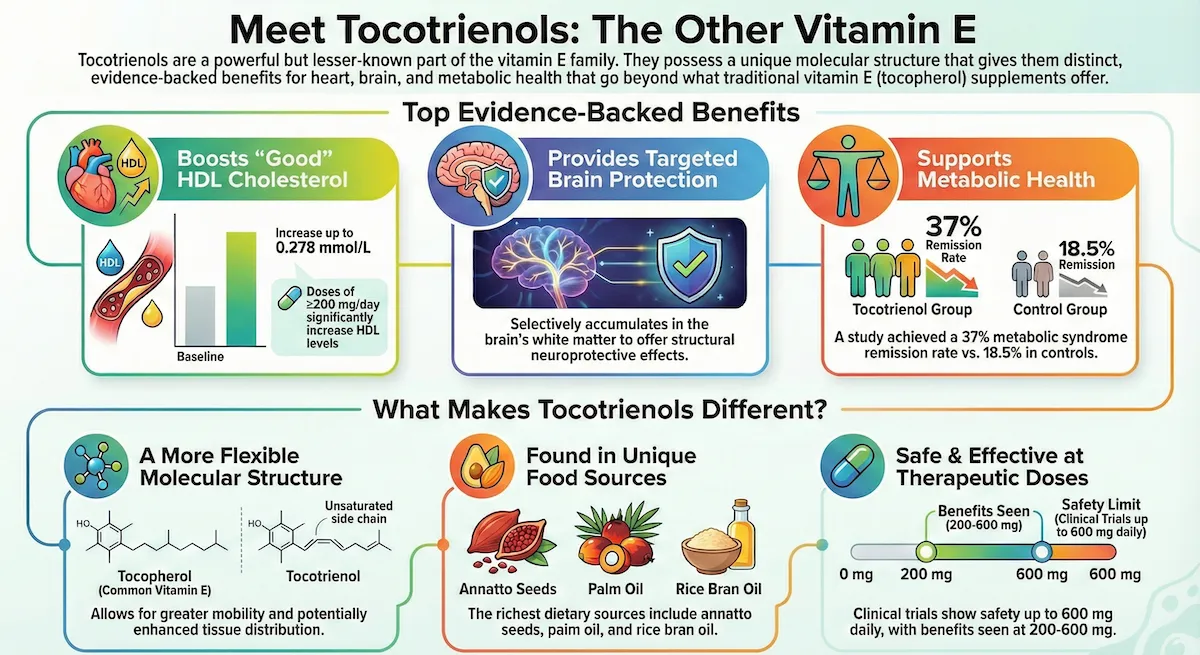
- HDL cholesterol increases significantly with tocotrienol supplementation at doses ≥200 mg daily, with meta-analysis showing 0.146-0.278 mmol/L improvements[Evidence: A][1]
- Brain protection through selective accumulation in white matter structures, with scoping review of 42 studies confirming neuroprotective effects[Evidence: A][7]
- Metabolic syndrome remission rates of 37% versus 18.5% in controls after 12 weeks of tocotrienol-enriched supplementation[Evidence: B][3]
- Safe at doses up to 600 mg daily for 24 weeks with no adverse events reported in randomized controlled trials[Evidence: B][10]
If you have been researching vitamin E supplements, you may have noticed a growing interest in tocotrienols. These lesser-known members of the vitamin E family are gaining attention for their potential health benefits that go beyond what traditional tocopherol supplements offer.
It is common to feel overwhelmed by conflicting information about supplements. Many people wonder whether tocotrienols are truly different from regular vitamin E, and whether the research supports the claims. This guide examines 18 peer-reviewed studies, including 8 meta-analyses and 8 randomized controlled trials, to provide clear, evidence-based answers about tocotrienol benefits, proper dosage, safety considerations, and how they compare to standard vitamin E supplements.
❓ Quick Answers
What are tocotrienols?
Tocotrienols are a form of vitamin E found naturally in palm oil, rice bran, annatto seeds, and certain grains. They belong to the vitamin E family but differ structurally from tocopherols by having an unsaturated isoprenoid side chain with three double bonds. Four forms exist: alpha, beta, gamma, and delta tocotrienol. Research indicates they provide antioxidant, anti-inflammatory, and cardioprotective effects.[Evidence: A][6]
How do tocotrienols work?
Tocotrienols work through multiple mechanisms including inhibition of HMG-CoA reductase (the same enzyme targeted by statin drugs), modulation of the NFκB inflammatory pathway, and direct antioxidant activity protecting cell membranes from lipid peroxidation. A systematic review of 59 articles confirmed these anticancer, anti-inflammatory, and cardioprotective mechanisms.[Evidence: A][6]
What foods contain tocotrienols?
The richest dietary sources of tocotrienols include palm oil (the highest concentration), rice bran oil, annatto seeds (which contain nearly 100% tocotrienols with no tocopherols), barley, oats, and wheat germ. However, dietary intake typically provides only small amounts. Therapeutic doses used in clinical research (200-600 mg daily) generally require supplementation rather than food sources alone.
What are the benefits of tocotrienols?
Research supports several tocotrienol benefits including improved HDL cholesterol (increases of 0.146-0.278 mmol/L in meta-analysis[1]), brain health support through selective white matter accumulation[7], reduced inflammation markers in specific populations[4], decreased bone resorption in postmenopausal women[14], and potential hair growth support.[Evidence: A][15]
How much tocotrienols should I take?
Clinical research uses doses ranging from 200-600 mg daily depending on health goals. For general cardiovascular support, meta-analysis suggests ≥200 mg daily yields meaningful HDL improvements[1]. For metabolic health, 300 mg daily showed benefits in chronic kidney disease patients[4]. For liver health (NAFLD), 600 mg daily (300 mg twice) was effective over 24 weeks.[Evidence: B][10]
Are tocotrienols safe?
Tocotrienols are generally safe for most adults. A 24-week randomized controlled trial using 600 mg daily reported no adverse events[10]. Phase I cancer research tested doses up to 3200 mg daily for 13 days with no dose-limiting toxicity[13]. However, those on anticoagulant medications should consult their healthcare provider due to potential interactions at high doses.[Evidence: B]
What is the difference between tocopherol and tocotrienol?
The key structural difference is in the side chain: tocopherols have a saturated phytyl tail while tocotrienols have an unsaturated farnesyl tail with three double bonds. This gives tocotrienols greater membrane mobility and potentially enhanced tissue distribution. A scoping review of 42 studies suggests tocotrienols show selective brain accumulation and structural protection, while tocopherols correlate more with cognitive performance and synaptic protein preservation.[Evidence: A][7]
Do tocotrienols lower cholesterol?
The evidence is mixed. Meta-analysis of randomized controlled trials found tocotrienols significantly increase HDL cholesterol (0.146 mmol/L average increase) and decrease triglycerides at doses ≥200 mg, but showed minimal impact on total cholesterol and LDL cholesterol[1]. Individual RCTs in chronic kidney disease patients showed significant LDL and total cholesterol reductions.[Evidence: B][4]
🔬 How Do Tocotrienols Work?
Understanding how tocotrienols work helps explain why they may offer different benefits than standard vitamin E. Think of your cell membranes as castle walls, and tocotrienols as especially nimble guards. Unlike their bulkier tocopherol cousins, tocotrienols can move quickly along these walls because their unsaturated tail acts like a flexible spring rather than a rigid pole. This allows them to intercept and neutralize harmful molecules called free radicals before damage occurs.
At the molecular level, tocotrienols exert their effects through several established pathways. A systematic review of 59 articles confirmed that tocotrienols modulate the NFκB signaling pathway, a master regulator of inflammation, primarily through inhibition of farnesyl prenyl transferase.[Evidence: A][6] This mechanism underlies their anticancer, anti-inflammatory, and cardioprotective effects observed across multiple study types.
For cholesterol management, tocotrienols work differently than statins but target related pathways. They inhibit HMG-CoA reductase, the same enzyme that statin medications block, which reduces cholesterol synthesis in the liver.[Evidence: A][6] However, clinical outcomes show more consistent effects on HDL cholesterol and triglycerides than on LDL cholesterol.[Evidence: A][1]
In brain tissue, tocotrienols demonstrate unique accumulation patterns. A scoping review analyzing 42 studies found that tocotrienols show selective brain accumulation with structural protection, particularly in white matter regions.[Evidence: A][7] Another scoping review of 24 articles identified multiple neuroprotective mechanisms including antioxidant and anti-inflammatory effects, metabolic pathway regulation, and gene/protein modulation that support healthy aging.[Evidence: A][8]
Laboratory studies on human endothelial cells reveal isomer-specific effects. Delta-tocotrienol proved superior in suppressing inflammatory markers IL-6, ICAM-1, VCAM-1, and NFκB activation, while gamma-tocotrienol excelled at inhibiting e-selectin and produced 8-11 fold increases in eNOS expression, which supports healthy blood vessel function.[Evidence: C][9]
For bone health, tocotrienols regulate bone remodeling through suppression of osteoclast differentiation and activity. A systematic review of 11 studies confirmed that tocotrienols improve bone health and reduce bone loss via inhibition of osteoclast formation.[Evidence: A][16] This was validated in a 12-week human RCT showing decreased bone resorption biomarkers and suppressed oxidative stress markers in postmenopausal osteopenic women.[Evidence: B][14]
Cancer research has identified specific apoptosis-inducing mechanisms. Gamma-tocotrienol induces apoptosis in prostate cancer cells by targeting the Ang-1/Tie-2 signaling pathway.[Evidence: C][17] Delta-tocotrienol works through endoplasmic reticulum stress and autophagy mechanisms, also inducing paraptosis (an alternative form of cell death).[Evidence: C][18] These are preclinical findings requiring human trial confirmation.
📊 Dosage and How to Use Tocotrienols
Tocotrienol dosing varies based on health goals and the specific condition being addressed. The following table summarizes dosages used in clinical research with their corresponding evidence levels.
| Purpose/Condition | Dosage | Duration | Evidence |
|---|---|---|---|
| HDL cholesterol elevation | ≥200 mg/day | 8 weeks | [A][1] |
| Cardiovascular markers (CKD patients) | 300 mg/day | 12 weeks | [B][4] |
| Metabolic syndrome support | Tocotrienol-enriched oat | 12 weeks | [B][3] |
| NAFLD management | 600 mg/day (300 mg twice) | 24 weeks | [B][10] |
| Bone resorption suppression | 430 mg/day | 12 weeks | [B][14] |
| High-dose safety reference | 750-1000 mg/day | Single-dose PK | [B][12] |
Bioavailability Considerations
A systematic review of 7 pharmacokinetic studies found that annatto-derived tocotrienols demonstrate superior bioavailability compared to palm-derived sources. Delta-tocotrienol showed the highest bioavailability with AUC of 7450±89 ng/ml, Cmax of 1591±43 ng/ml, and Tmax of 4 hours.[Evidence: A][11]
Tocotrienols are fat-soluble, meaning absorption improves when taken with meals containing dietary fat. Peak plasma levels occur approximately 3-4 hours after oral administration, with dose-dependent increases observed up to 1000 mg daily.[Evidence: B][12]
Supplement Sources
| Source | Isomer Profile | Key Characteristic |
|---|---|---|
| Annatto (Bixa orellana) | ~90% delta, ~10% gamma | Tocopherol-free; highest bioavailability[11] |
| Palm oil (Elaeis guineensis) | Mixed alpha, gamma, delta | Contains tocopherols; most researched |
| Rice bran (Oryza sativa) | Mixed with didesmethyl tocotrienol | Contains unique isomer form |
⚠️ Risks, Side Effects, and Warnings
Side Effects
Clinical trials report a favorable safety profile for tocotrienols. A 24-week randomized controlled trial of 71 NAFLD patients using 600 mg daily (300 mg twice daily) reported no adverse events.[Evidence: B][10] A JAMA Dermatology systematic review of 30 studies evaluating nutritional supplements for hair loss found adverse effects were rare and mild for tocotrienol-containing therapies.[Evidence: A][15]
A meta-analysis of 17 RCTs examining tocotrienol effects on metabolic markers noted modest increases in body weight and diastolic blood pressure, though these findings require context of the specific populations studied.[Evidence: A][2]
High-Dose Safety
Phase I cancer research tested delta-tocotrienol at escalating doses from 200-3200 mg daily for 13 days plus surgery day in patients with pancreatic ductal neoplasia. No dose-limiting toxicity was observed, and bioactive plasma levels were achieved.[Evidence: B][13] Pharmacokinetic studies confirmed that 750-1000 mg daily are safe in healthy adults with dose-dependent plasma increases.[Evidence: B][12]
Drug Interactions
Based on general high-dose vitamin E literature (tocotrienol-specific interaction studies are limited):
- Anticoagulants (warfarin): Potential interaction at high doses (≥300 mg/day); clinical monitoring of INR recommended
- Antiplatelet agents (aspirin): Potential additive effect on bleeding risk at high doses
- Tamoxifen: Potential interaction; consult oncologist before combining
- Cyclosporine: Potential interaction; monitor drug levels if combining
Contraindications
No absolute contraindications have been established in post-2015 literature. Caution is recommended for:
- Patients on anticoagulant or antiplatelet therapy
- Individuals with bleeding disorders
- Those scheduled for surgery (consider discontinuing 2 weeks before)
Special Populations
Pregnancy and Lactation: Tocotrienols occur naturally in breast milk. Standard vitamin E recommendations (22-30 mg/day) apply. Limited specific tocotrienol supplementation data exists for pregnant or breastfeeding women. Consult healthcare provider before supplementing.
Elderly: No specific concerns identified. Older adults were included in multiple RCTs including the bone health study in postmenopausal women.[Evidence: B][14]
Pediatric: No post-2015 safety data available for children. Not recommended for pediatric use without medical supervision.
🥗 Practical Ways to Use Tocotrienols
How to Use This in Your Daily Life
Scenario 1: Metabolic Health Support
- Dose: Tocotrienol-enriched food or 200-300 mg supplement[3]
- Duration: 12 weeks minimum[3]
- Population: Adults with metabolic syndrome markers
- Timing: With meals containing fat for optimal absorption
- What to track: Fasting glucose, blood pressure, HDL cholesterol, triglycerides
- Expected results: Fasting glucose -4.5%, systolic BP -4.2%, HDL +34.1%, triglycerides -7.1%[3]
Scenario 2: Liver Health (NAFLD)
- Dose: 300 mg twice daily (600 mg total)[10]
- Duration: 24 weeks[10]
- Population: Adults with diagnosed NAFLD
- Timing: With breakfast and dinner
- What to track: ALT, AST, fatty liver index, ultrasound findings
- Expected results: Fatty liver index ↓8.52 points, ALT ↓8.86 U/L, AST ↓6.6 U/L[10]
Scenario 3: Cardiovascular Support (CKD)
- Dose: 300 mg/day tocotrienol-rich fraction[4]
- Duration: 12 weeks[4]
- Population: Adults with chronic kidney disease
- Timing: With largest meal of the day
- What to track: LDL cholesterol, total cholesterol, CRP
- Expected results: LDL ↓ (p=0.04), total cholesterol ↓ (p=0.01), CRP ↓ in non-dialysis patients[4]
Practical Integration
Take tocotrienols with meals containing dietary fat (eggs, avocado, olive oil, nuts) to enhance absorption. Annatto-derived tocotrienols showed superior bioavailability in pharmacokinetic studies.[Evidence: A][11] Peak plasma levels occur at 3-4 hours post-dose. Store supplements in a cool, dry place away from direct sunlight to maintain potency.
Common Mistakes to Avoid
- Taking on empty stomach: Fat-soluble vitamins require dietary fat for absorption. Studies used fed conditions.[11]
- Inconsistent dosing: Clinical trials used daily dosing for 8-24 weeks. Sporadic use may not achieve the benefits observed in research.
- Expecting immediate results: Most studies showed benefits at 8-12 weeks minimum. Allow adequate time before assessing effectiveness.
- Ignoring source differences: Annatto (tocopherol-free) and palm (mixed tocopherols) have different isomer profiles that may affect outcomes.[11]
⚖️ Tocotrienols vs Tocopherols
Both tocotrienols and tocopherols belong to the vitamin E family, but they have distinct structural and functional differences. Understanding these differences helps inform supplement selection.
| Feature | Tocotrienols | Tocopherols |
|---|---|---|
| Chemical Structure | Unsaturated farnesyl side chain (3 double bonds) | Saturated phytyl side chain |
| Membrane Mobility | Higher (more flexible tail) | Lower (rigid tail) |
| Brain Accumulation | Selective accumulation, white matter protection[7] | Cognitive performance, synaptic protein preservation[7] |
| Cholesterol Effect | HDL ↑, triglycerides ↓, minimal LDL effect[1] | Limited cholesterol-lowering evidence |
| Research Base | Growing (8 meta-analyses reviewed here) | Extensive (decades of research) |
| HMG-CoA Reductase Inhibition | Demonstrated[6] | Limited |
| Common Supplement Sources | Palm oil, annatto, rice bran | Wheat germ, sunflower, almonds |
A scoping review of 42 studies (2014-2025) examining brain health found complementary effects between the two vitamin E forms. Tocopherols correlated with improved cognitive performance, reduced neuroinflammation, and preservation of synaptic proteins. Tocotrienols showed selective brain accumulation with structural protection, particularly in white matter. The authors suggest combined supplementation may offer advantages over either form alone.[Evidence: A][7]
Should you take both? The research suggests potential complementary benefits, but definitive combination dosing studies are limited. For those specifically targeting cholesterol improvement or neuroprotection, tocotrienol-focused supplementation has more direct evidence. For general antioxidant protection, either form provides benefit.
What The Evidence Shows (And Doesn't Show)
What Research Suggests
- Meta-analysis of randomized controlled trials demonstrates tocotrienol supplementation significantly increases HDL cholesterol by 0.146 mmol/L overall, with greater effects (0.202-0.278 mmol/L) at doses ≥200 mg for ≤8 weeks[1]
- Systematic review of 42 brain health studies confirms tocotrienols show selective brain accumulation with white matter structural protection[7]
- 12-week RCT achieved 37% metabolic syndrome remission rate versus 18.5% in controls with tocotrienol-enriched supplementation[3]
- 24-week RCT in NAFLD patients reduced fatty liver index by 8.52 points with 600 mg daily delta-tocotrienol[10]
- Systematic review confirms anticancer, anti-inflammatory, antioxidant, cardioprotective, and bone-protective effects through NFκB pathway modulation (based on 59 articles)[6]
What's NOT Yet Proven
- Optimal dosage not established: Studies used 200-3200 mg with varying results. No definitive dose-response relationship established for most outcomes.
- LDL cholesterol reduction inconsistent: Meta-analysis showed minimal impact on LDL and total cholesterol despite HDL benefits[1]
- Inflammation marker effects mixed: Overall meta-analysis showed no significant effects on CRP, IL-6, or TNF-α, though delta-tocotrienol specifically may differ[2]
- Long-term safety beyond 24 weeks unclear: Longest RCT was 24 weeks[10]. Long-term effects unknown.
- Human neuroprotection data limited: Brain health reviews note cognitive improvements in animal models, with human clinical evidence requiring further trials[8]
- Cancer prevention not established: Only Phase I safety data exists in humans; apoptosis mechanisms demonstrated in cell and animal studies only[13]
- Pediatric safety not studied: No post-2015 pediatric tocotrienol safety studies exist
Where Caution Is Needed
- Potential interaction with anticoagulant medications (warfarin, aspirin) at high doses; consult physician before combining
- Meta-analysis noted modest increases in body weight and diastolic blood pressure in some populations[2]
- CRP reduction benefits may be specific to delta-tocotrienol rather than mixed tocotrienol products[5]
- Bioavailability varies significantly by source: annatto-derived tocotrienols showed superior absorption versus palm-derived[11]
- Drug interaction data relies on general vitamin E literature; tocotrienol-specific interaction studies are lacking
Should YOU Try This?
Best suited for: Adults seeking cardiovascular support (particularly HDL improvement), those with metabolic syndrome markers, individuals with NAFLD, postmenopausal women concerned about bone health, and those interested in neuroprotection who understand the limited human evidence.
Not recommended for: Children (no safety data), those on anticoagulant therapy without medical supervision, pregnant or breastfeeding women without healthcare provider guidance, individuals expecting rapid LDL cholesterol reduction.
Realistic timeline: 8-12 weeks for lipid changes[1], 12 weeks for metabolic improvements[3], 24 weeks for liver health outcomes[10].
When to consult a professional: Before starting if you take blood thinners, have scheduled surgery, have liver or kidney disease, or take prescription medications. Discuss with your healthcare provider to determine if tocotrienol supplementation aligns with your health goals.
Frequently Asked Questions
Can tocotrienols help with hair loss?
A JAMA Dermatology systematic review of 30 studies (17 RCTs) evaluating nutritional supplements for treating hair loss identified tocotrienol as showing potential benefit. The review noted that adverse effects were rare and mild for all evaluated therapies including tocotrienol. However, the review did not specify optimal dosing or duration for hair-specific outcomes. More targeted research examining tocotrienol's effects on hair follicle health and growth cycles is needed to establish definitive recommendations for this use.
What are the specific side effects of tocotrienols?
Clinical trials report minimal side effects. The most comprehensive safety data comes from a 24-week RCT in 71 NAFLD patients using 600 mg daily, which reported no adverse events. A meta-analysis of 17 RCTs noted modest increases in body weight and diastolic blood pressure in some populations. The JAMA Dermatology systematic review described adverse effects as rare and mild. Phase I cancer research tested up to 3200 mg daily without dose-limiting toxicity. Monitor for gastrointestinal discomfort if taking on empty stomach.
What is delta tocotrienol specifically?
Delta-tocotrienol is one of four tocotrienol isomers, distinguished by having only one methyl group on its chromanol ring (compared to three in alpha-tocotrienol). Laboratory studies show delta-tocotrienol is superior in suppressing inflammatory markers IL-6, ICAM-1, VCAM-1, and NFκB activation. Pharmacokinetic studies demonstrate delta-tocotrienol has the highest bioavailability among isomers, with AUC of 7450±89 ng/ml. Annatto seeds provide approximately 90% delta-tocotrienol, making annatto-derived supplements the richest source of this specific isomer.
Do tocotrienols help brain health?
Research supports tocotrienol benefits for brain health through several mechanisms. A scoping review of 42 studies (2014-2025) found tocotrienols show selective brain accumulation with structural protection, particularly in white matter regions. Another scoping review of 24 articles confirmed neuroprotective mechanisms including antioxidant and anti-inflammatory effects, with cognitive improvements demonstrated in animal models. Human clinical evidence remains limited, and the reviews note potential to support healthy aging or slow neurodegeneration requires further human trials for confirmation.
Can tocotrienols help prevent cancer?
Preclinical and early clinical research shows promising mechanisms but not prevention proof. A systematic review of 59 articles confirmed tocotrienols demonstrate anticancer effects through NFκB pathway modulation. Laboratory studies show gamma-tocotrienol and delta-tocotrienol induce apoptosis in prostate cancer cells through specific signaling pathways. A Phase I trial in pancreatic neoplasia patients found delta-tocotrienol induced apoptosis in neoplastic cells at intermediate doses. However, these are early-stage findings. No completed Phase III prevention trials exist.
Should I take tocotrienols with or without tocopherols?
The research does not definitively answer this question. Some experts suggest high-dose tocopherols may interfere with tocotrienol absorption, leading to the development of tocopherol-free annatto supplements. A scoping review found tocopherols and tocotrienols have complementary brain health effects, suggesting combined supplementation may offer advantages. If your primary goal is maximizing tocotrienol bioavailability, annatto-derived (tocopherol-free) sources showed superior pharmacokinetics. For general vitamin E benefits, mixed forms remain acceptable.
Do tocotrienols help with inflammation?
The evidence is mixed and condition-specific. A meta-analysis of 17 RCTs found no significant associations between tocotrienol supplementation and inflammation markers (CRP, IL-6, TNF-α) in the overall analysis. However, a systematic review of 19 studies noted CRP reduction was significant when attributed to delta-tocotrienol specifically, not mixed forms, with potential benefits at higher doses (400 mg/day). In chronic kidney disease patients not on dialysis, tocotrienols significantly reduced CRP. Individual response may depend on baseline inflammation status and specific isomer used.
How long does it take to see results from tocotrienols?
Timeline varies by health outcome and individual factors. For HDL cholesterol improvements, meta-analysis suggests shorter periods (≤8 weeks) at doses ≥200 mg yielded greater increases (0.202-0.278 mmol/L). For metabolic syndrome markers, a 12-week study showed significant improvements in fasting glucose, blood pressure, and lipid profiles. For liver health in NAFLD, 24 weeks of supplementation produced meaningful reductions in fatty liver index and liver enzymes. Allow at least 8-12 weeks before evaluating effectiveness for most outcomes.
Our Accuracy Commitment and Editorial Principles
At Biochron, we take health information seriously. Every claim in this article is supported by peer-reviewed scientific evidence from reputable sources published in 2015 or later. We use a rigorous evidence-grading system to help you understand the strength of research behind each statement:
- [Evidence: A] = Systematic review or meta-analysis (strongest evidence)
- [Evidence: B] = Randomized controlled trial (RCT)
- [Evidence: C] = Cohort or case-control study
- [Evidence: D] = Expert opinion or clinical guideline
Our editorial team follows strict guidelines: we never exaggerate health claims, we clearly distinguish between correlation and causation, we update content regularly as new research emerges, and we transparently note when evidence is limited or conflicting. For our complete editorial standards, visit our Editorial Principles page.
This article is for informational purposes only and does not constitute medical advice. Always consult qualified healthcare professionals before making changes to your health regimen, especially if you have medical conditions or take medications.


References
- 1 . The effects of tocotrienol supplementation on lipid profile: A meta-analysis of randomized controlled trials. Zuo S, Wang G, Han Q, et al. Complementary Therapies in Medicine, 2020;52:102450. PubMed DOI [Evidence: A]
- 2 . The effects of tocotrienols intake on obesity, blood pressure, inflammation, liver and glucose biomarkers: a meta-analysis of randomized controlled trials. Li F, Xu B, Soltanieh S, et al. Critical Reviews in Food Science and Nutrition, 2022;62(26):7154-7167. PubMed DOI [Evidence: A]
- 3 . Effects of tocotrienol-enriched oat supplementation on metabolic profile, nutritional status and health-related quality of life among patients with metabolic syndrome. Norazman CW, Mohd Sopian M, Lee LK. Food & Function, 2025;16(5):1847-1863. PubMed DOI [Evidence: B]
- 4 . Effects of Tocotrienol on Cardiovascular Risk Markers in Patients With Chronic Kidney Disease: A Randomized Controlled Trial. Trugilho L, Alvarenga L, Cardozo L, et al. Journal of Nutrition and Metabolism, 2025;2025:8482883. PubMed DOI [Evidence: B]
- 5 . Effects of tocotrienols supplementation on markers of inflammation and oxidative stress: A systematic review and meta-analysis of randomized controlled trials. Khor BH, Tiong HC, Tan SC, et al. PLoS One, 2021;16(7):e0255205. PubMed DOI [Evidence: A]
- 6 . Modulation of NFκB signalling pathway by tocotrienol: A systematic review. Nasir NAA, Sadikan MZ, Agarwal R. Asia Pacific Journal of Clinical Nutrition, 2021;30(3):537-555. PubMed DOI [Evidence: A]
- 7 . Shifting Perspectives on the Role of Tocotrienol vs. Tocopherol in Brain Health: A Scoping Review. Razali RA, Ngah WZW, Makpol S, et al. International Journal of Molecular Sciences, 2025;26(13):6339. PubMed DOI [Evidence: A]
- 8 . Scoping Review: The Role of Tocotrienol-Rich Fraction as a Potent Neuroprotective Agent. Yunita E, Nasaruddin ML, Ramli NZ, et al. International Journal of Molecular Sciences, 2025;26(16):7691. PubMed DOI [Evidence: A]
- 9 . Delta- and gamma-tocotrienol isomers are potent in inhibiting inflammation and endothelial activation in stimulated human endothelial cells. Muid S, Froemming GR, Rahman T, et al. Food & Nutrition Research, 2016;60:31526. PubMed DOI [Evidence: C]
- 10 . Delta-tocotrienol supplementation improves biochemical markers of hepatocellular injury and steatosis in patients with nonalcoholic fatty liver disease: A randomized, placebo-controlled trial. Pervez MA, Khan DA, Slehria AUR, Ijaz A. Complementary Therapies in Medicine, 2020;52:102494. PubMed DOI [Evidence: B]
- 11 . Pharmacokinetics and bioavailability of tocotrienols in healthy human volunteers: a systematic review. Sharif M, Khan DA, Farhat K, et al. JPMA: The Journal of the Pakistan Medical Association, 2023;73(3):603-610. PubMed DOI [Evidence: A]
- 12 . Evaluation of Pharmacokinetics, and Bioavailability of Higher Doses of Tocotrienols in Healthy Fed Humans. Qureshi AA, Khan DA, Silswal N, et al. Journal of Clinical & Experimental Cardiology, 2016;7(4):434. PubMed DOI [Evidence: B]
- 13 . A Phase I Safety, Pharmacokinetic, and Pharmacodynamic Presurgical Trial of Vitamin E δ-tocotrienol in Patients with Pancreatic Ductal Neoplasia. Springett GM, Husain K, Neuger A, et al. EBioMedicine, 2015;2(12):1987-95. PubMed DOI [Evidence: B]
- 14 . Tocotrienol supplementation suppressed bone resorption and oxidative stress in postmenopausal osteopenic women: a 12-week randomized double-blinded placebo-controlled trial. Shen CL, Yang S, Tomison MD, et al. Osteoporosis International, 2018;29(4):881-891. PubMed DOI [Evidence: B]
- 15 . Evaluation of the Safety and Effectiveness of Nutritional Supplements for Treating Hair Loss: A Systematic Review. Drake L, Reyes-Hadsall S, Martinez J, et al. JAMA Dermatology, 2023;159(1):79-86. PubMed DOI [Evidence: A]
- 16 . Tocotrienols Regulate Bone Loss through Suppression on Osteoclast Differentiation and Activity: A Systematic Review. Radzi NFM, Ismail NAS, Alias E. Current Drug Targets, 2018;19(9):1095-1107. PubMed DOI [Evidence: A]
- 17 . Gamma-Tocotrienol Induces Apoptosis in Prostate Cancer Cells by Targeting the Ang-1/Tie-2 Signalling Pathway. Tang KD, Liu J, Russell PJ, et al. International Journal of Molecular Sciences, 2019;20(5):1164. PubMed DOI [Evidence: C]
- 18 . δ-Tocotrienol induces apoptosis, involving endoplasmic reticulum stress and autophagy, and paraptosis in prostate cancer cells. Fontana F, Moretti RM, Raimondi M, et al. Cell Proliferation, 2019;52(3):e12576. PubMed DOI [Evidence: C]
Medical Disclaimer
This content is for informational and educational purposes only. It is not intended to provide medical advice or to take the place of such advice or treatment from a personal physician. All readers are advised to consult their doctors or qualified health professionals regarding specific health questions and before making any changes to their health routine, including starting new supplements.
Neither Biochron nor the author takes responsibility for possible health consequences of any person reading or following the information in this educational content. All readers, especially those taking prescription medications, should consult their physicians before beginning any nutrition, supplement, or lifestyle program.
If you have a medical emergency, call your doctor or emergency services immediately.
