

💡 What You Need to Know Right Away
- Saffron is as effective as conventional antidepressants for mild-to-moderate depression, with fewer side effects[Evidence: A][2]
- A dose of 30 mg crocin daily for 12+ weeks significantly reduces inflammation markers (CRP, TNF-α) and increases antioxidant capacity[Evidence: A][5]
- Saffron supplementation significantly reduces oxidative stress markers including MDA while increasing total antioxidant capacity (TAC) and glutathione peroxidase[Evidence: A][16]
- Meta-analyses of 25 RCTs confirm saffron reduces fasting blood glucose by 6.67 mg/dL and HbA1c by 0.25% in metabolic syndrome patients[Evidence: A][13]
You've probably heard about saffron as the world's most expensive spice, prized for its distinctive color and flavor in dishes like paella and biryani. But what if this ancient "red gold" could do more than enhance your cooking?
Modern science is revealing what traditional healers suspected for centuries: saffron (Crocus sativus) contains powerful compounds that may benefit your mental health, protect your brain, and support metabolic wellness. With over 23 peer-reviewed studies now available, we finally have robust evidence to separate fact from folklore.
In this comprehensive guide, you'll discover 9 science-backed benefits of saffron, learn the exact dosages used in clinical trials, understand potential risks, and find out how to choose a quality supplement. Whether you're exploring natural mood support or seeking anti-inflammatory benefits, this evidence-based resource has you covered.
❓ Quick Answers
What is saffron good for?
Saffron is good for mood support, cognitive health, and metabolic wellness. Research shows saffron has a significant effect on depression severity and is substantially more powerful than placebo[Evidence: A][2]. A comprehensive review of 46 RCTs found saffron more effective than placebo for cognitive decline, depression, anxiety, and sleep disorders[Evidence: A][22].
Does saffron help with depression?
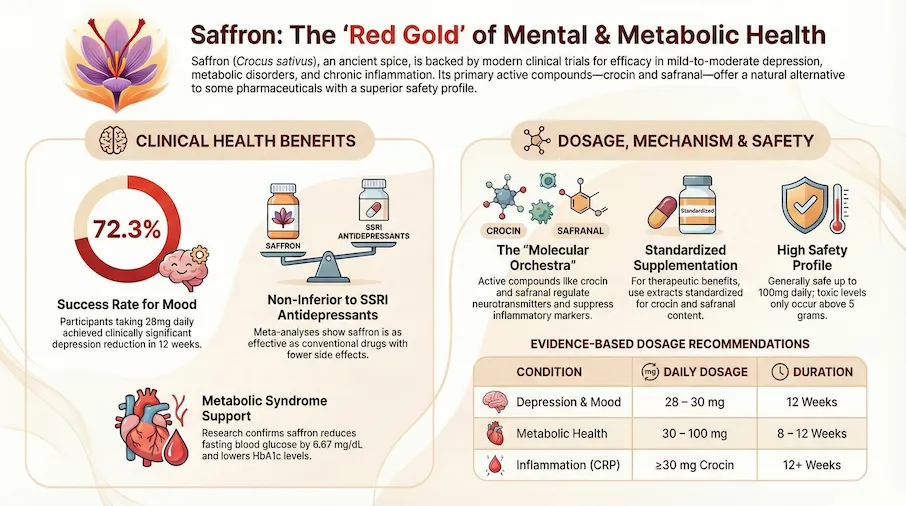
Yes, saffron helps with mild-to-moderate depression. Meta-analyses show saffron is non-inferior to tested antidepressant drugs[Evidence: A][2]. In a 12-week trial, 72.3% of participants taking 28 mg saffron daily achieved clinically significant depression reduction compared to 54.3% on placebo[Evidence: B][6].
How much saffron should I take daily?
Clinical trials typically use 15-100 mg of saffron extract daily, depending on the condition. For mood support, 28-30 mg daily is common. For anti-inflammatory benefits, research suggests ≥30 mg/day of crocin for at least 12 weeks shows optimal effectiveness[Evidence: A][5]. See the dosage table below for condition-specific recommendations.
Is saffron safe to take every day?
Yes, saffron is generally safe for daily use at therapeutic doses (up to 100 mg/day). Saffron shows no significant difference in adverse effects compared to placebo[Evidence: A][1]. A meta-analysis found saffron is associated with fewer adverse events than SSRIs[Evidence: A][3]. Common mild side effects include nausea, dry mouth, and headache.
Saffron Benefits
Harvested from the stigma of the Crocus flower, saffron is the world's most expensive spice. Beyond its vibrant color and aroma, it holds powerful medicinal properties backed by science.
🔬 How Does Saffron Work?
Think of saffron's active compounds as a team of molecular keys, each unlocking different health pathways in your body. The four primary constituents—crocin, crocetin, safranal, and picrocrocin—work together like an orchestra, each playing a distinct role in promoting wellness.
The Depression Connection: Serotonin and Beyond
Saffron appears to work on depression through multiple mechanisms. Like a thermostat regulating room temperature, saffron's compounds help regulate neurotransmitter levels in your brain. Research shows there is a nonsignificant difference between saffron and SSRIs for depression reduction, suggesting saffron works through similar serotonin-modulating pathways[Evidence: A][3]. A systematic review of 12 RCTs confirmed saffron is effective for depressive symptoms compared to both anti-depressants and placebo[Evidence: A][7].
Antioxidant and Anti-Inflammatory Pathways
Saffron's four primary constituents (crocin, crocetin, safranal, picrocrocin) work through anti-apoptotic pathways (inhibiting caspases, Bax/Bcl-2), anti-inflammatory mechanisms (suppressing NF-κB, IL-1β, IL-6, TNF-α, COX-2), and antioxidant pathways (enhancing Nrf2, GSH, SOD, CAT while reducing ROS and MDA)[Evidence: D][18].
Clinical evidence supports these mechanisms: saffron supplementation produces a statistically significant decrease in malondialdehyde (MDA) levels and significant increase in total antioxidant capacity (TAC)[Evidence: A][8]. A meta-analysis of 16 RCTs with 934 participants confirmed significant decreases in MDA and total oxidant status (TOS), along with significant increases in TAC and glutathione peroxidase[Evidence: A][16].
Metabolic Effects
Saffron significantly reduced fasting blood glucose and waist circumference in a meta-analysis of 19 meta-analyses[Evidence: A][17]. Analysis of 25 RCTs with 1,486 participants showed fasting glucose decreased by 6.67 mg/dL, HbA1c reduced by 0.25%, and blood pressure improvements (systolic reduced 1.15 mmHg, diastolic decreased 1.61 mmHg)[Evidence: A][13].
Cognitive and Neuroprotective Effects
Research demonstrates saffron efficacy in Alzheimer's, Parkinson's, ADHD, and depression through these anti-inflammatory and antioxidant mechanisms[Evidence: D][18]. A systematic review found saffron is more effective than placebo for cognitive decline and is non-inferior to standard pharmaceutical treatments for various neuropsychiatric conditions[Evidence: A][22]. In Alzheimer's studies specifically, saffron demonstrated cognitive improvements with no significant difference compared to donepezil or memantine[Evidence: A][23].
Women's Health Mechanisms
A systematic review of 50 studies found saffron's primary compounds (crocin, crocetin, safranal) regulate sex hormones, support folliculogenesis and ovulation, and protect ovarian and uterine tissue from oxidative stress[Evidence: A][19]. This explains saffron's benefits for dysmenorrhea, premenstrual syndrome, menopausal symptoms, and sexual dysfunction.
Anti-Inflammatory Evidence
Crocin supplementation produces significant reduction in C-reactive protein (CRP), significant decrease in TNF-α, and notable reduction in IL-6[Evidence: A][5]. Subgroup analysis showed CRP reduction is particularly pronounced in patients with high baseline inflammation (≥3 mg/L)[Evidence: A][15].
Joint Health
In rheumatoid arthritis patients, saffron 100 mg/day for 12 weeks significantly decreased tender and swollen joints, improved Disease Activity Score (DAS28), and reduced erythrocyte sedimentation rate and high-sensitivity CRP[Evidence: B][11].
📊 Dosage and How to Use Saffron
Clinical trials have established specific dosage ranges for different health conditions. The table below summarizes evidence-based dosages from peer-reviewed research.
| Purpose/Condition | Dosage | Duration | Evidence |
|---|---|---|---|
| Depression/Mood Support (Affron extract) | 28 mg/day | 12 weeks | [B][6] |
| Major Depressive Disorder (adjunctive with SSRI) | 30 mg crocin/day | 4 weeks | [B][10] |
| Postpartum Depression | 15 mg crocin/day | 12 weeks | [B][9] |
| Anti-inflammatory/Antioxidant | ≥30 mg crocin/day | ≥12 weeks | [A][5] |
| Rheumatoid Arthritis | 100 mg saffron extract/day | 12 weeks | [B][11] |
| Metabolic Syndrome/Blood Sugar | 30-100 mg/day | 8-12 weeks | [A][13] |
| Type 2 Diabetes | 30-100 mg/day | 8-12 weeks | [A][21] |
| Weight/Waist Circumference | 30-100 mg/day | 8-12 weeks | [A][20] |
Key Dosage Findings
For depression: Crocin with SSRIs produced significantly improved depression scores—the depression inventory improved by 17.6 points (crocin group) vs 6.15 points (placebo group) over 4 weeks[Evidence: B][10].
For postpartum depression: Crocin (15 mg daily) produced depression score decline from 20.75 to 4.93 over 3 months, comparable to sertraline (50 mg), with substantially fewer adverse effects[Evidence: B][9].
For metabolic health: Saffron extract is effective at reducing blood sugar and HbA1c, while also reducing creatinine and total cholesterol in Type 2 diabetes patients[Evidence: A][21]. A separate meta-analysis showed significant decrease in waist-to-hip ratio with saffron supplementation[Evidence: A][20].
For blood pressure: Meta-analysis showed saffron significantly reduced systolic blood pressure (SMD -0.57) with high certainty in diabetic/prediabetic patients[Evidence: A][4].
⚠️ Risks, Side Effects, and Warnings
Drug Interactions
Saffron affects cytochrome P450 enzymes, particularly CYP1A1/2, CYP3A4, and CYP2E1[Evidence: D][14]. Important considerations:
| Medication Class | Interaction Mechanism | Precaution |
|---|---|---|
| Digoxin | CYP3A4 inhibition may alter metabolism | Monitor levels; consult physician |
| Warfarin (blood thinners) | CYP3A4 inhibition may alter metabolism | Monitor INR; potential increased bleeding risk |
| Cyclosporine A | CYP3A4 inhibition may alter metabolism | Monitor drug levels; consult transplant team |
Source: CYP450 interaction review[Evidence: D][14]
Cardiovascular Considerations
While preclinical models show saffron has antioxidant, hypolipidemic, anti-diabetic, and anti-inflammatory effects, human trials show modest/weak effects on cardiovascular risk factors specifically—with slight glucose reduction without HbA1c improvement and moderate/inconsistent cholesterol effects in cardiovascular-focused studies[Evidence: D][12].
General Precautions
- Consult your healthcare provider before use, especially if you are pregnant, breastfeeding, or taking medications
- Individuals with bleeding disorders or scheduled surgeries should seek medical advice before supplementation
- Stop use and consult a doctor if you experience adverse reactions
- Do not exceed recommended doses (high doses >5g may be toxic)
- Keep out of reach of children
🥗 Practical Ways to Use Saffron
1. Standardized Supplement (Most Studied)
For therapeutic benefits, standardized saffron extracts like Affron® provide consistent dosing of active compounds. Look for products standardized to contain specific amounts of crocin and safranal. Take with or without food, typically in the morning or as directed. The 28 mg Affron dose used in clinical trials produced clinically significant depression improvements in 72.3% of participants[Evidence: B][6].
2. Saffron Tea
Steep 3-5 saffron threads in hot (not boiling) water for 10-15 minutes. The resulting golden tea offers a gentle way to consume saffron, though dosing is less precise than supplements. Traditional use supports 1-2 cups daily.
3. Culinary Integration
Add saffron to rice dishes (paella, biryani, risotto), soups, and stews. Bloom threads in warm water or broth for 10-20 minutes before adding to recipes to release color and compounds. While culinary amounts provide some benefit, therapeutic effects typically require supplement-level doses.
4. Saffron Milk (Golden Milk Alternative)
Steep saffron threads in warm milk (dairy or plant-based) for a traditional sleep-supporting beverage. Research suggests saffron may help with sleep disturbances, as evidenced by improvements in a subset of trial participants with baseline sleep disruption[Evidence: B][6].
Quality Selection Tips
- Look for standardized extracts with specified crocin/safranal content for therapeutic use
- Choose third-party tested products to ensure purity and potency
- Verify origin—Iranian saffron (Khorasan region) and Spanish saffron are traditionally prized for quality
- Avoid artificially low prices—authentic saffron is expensive; cheap products may be adulterated
- Store properly in airtight containers away from light and heat to preserve potency
⚖️ Saffron vs. Turmeric: Which is Better?
Both saffron and turmeric are prized for their health benefits, but they work through different mechanisms and have distinct evidence profiles. Here's how they compare:
| Feature | Saffron | Turmeric |
|---|---|---|
| Primary Active Compounds | Crocin, crocetin, safranal, picrocrocin | Curcumin, demethoxycurcumin, bisdemethoxycurcumin |
| Strongest Evidence For | Depression, anxiety, cognitive function | Inflammation, joint pain, digestive health |
| Mood/Depression Evidence | Strong—16 meta-analyses show comparable efficacy to SSRIs[A][2] | Moderate—some evidence for depression, less robust than saffron |
| Anti-inflammatory | Reduces CRP, TNF-α, IL-6[A][5] | Strong anti-inflammatory; well-studied for arthritis |
| Typical Therapeutic Dose | 15-100 mg/day saffron extract | 500-2000 mg/day curcumin (with piperine) |
| Bioavailability | Good—water-soluble carotenoids | Poor without enhancers (piperine, lipids) |
| Cost | High (most expensive spice by weight) | Low to moderate |
| Best Use Cases | Mood support, cognitive health, women's health | Joint inflammation, digestive support, general antioxidant |
The Verdict
Saffron and turmeric serve different purposes rather than competing. Research shows saffron significantly reduced fasting blood glucose and waist circumference, lowered cholesterol, reduced diastolic BP, improved depression and cognitive function, and enhanced sexual dysfunction outcomes[Evidence: A][17]. Turmeric/curcumin has stronger evidence for joint inflammation and digestive conditions.
Choose saffron if your primary concerns are mood, cognitive health, or women's health issues like PMS.
Choose turmeric if your primary concerns are joint pain, inflammation-related conditions, or digestive health.
Consider both if you want comprehensive anti-inflammatory and antioxidant coverage—they work through complementary pathways and can be taken together.
Frequently Asked Questions
What are the side effects of saffron?
Saffron's side effects are generally mild at therapeutic doses. The most commonly reported adverse effects include nausea, dry mouth, poor appetite, and headache. Importantly, a meta-analysis of meta-analyses found no serious adverse reactions reported across clinical trials. Saffron shows no significant difference in adverse effects compared to placebo, and notably, saffron is associated with fewer adverse events than SSRIs when used for depression. However, very high doses (above 5 grams) may be toxic and should be avoided. Crocin specifically showed substantially fewer adverse effects than sertraline (50 mg) when used for postpartum depression.
Does saffron interact with medications?
Yes, saffron can interact with certain medications through its effects on cytochrome P450 enzymes. Research shows saffron affects CYP1A1/2, CYP3A4, and CYP2E1 enzyme systems. The most clinically significant interaction involves CYP3A4 inhibition, which may alter the metabolism of digoxin (heart medication), warfarin (blood thinner), and cyclosporine A (immunosuppressant). If you take any prescription medications—especially blood thinners, heart medications, or immunosuppressants—consult your healthcare provider before starting saffron supplementation. The suppression of CYP1A1/2 and CYP2E1 may actually contribute to saffron's cancer-preventive properties, but further research is needed on clinical relevance.
How long does it take for saffron to work?
The timeline for saffron's effects depends on the condition being addressed. For mood and depression, clinical trials typically show significant improvements within 4-12 weeks. One study found significant improvements in depression scores as early as 4 weeks when crocin (30 mg) was used alongside SSRIs. A comprehensive review of 46 RCTs spanning 4-48 weeks found saffron more effective than placebo for cognitive decline, depression, anxiety, and sleep disorders across various timeframes. For anti-inflammatory and antioxidant benefits, optimal effectiveness is seen at ≥30 mg/day for ≥12 weeks. Be patient and consistent—most benefits require at least 4-6 weeks of regular use.
Does saffron help with PMS symptoms?
Yes, saffron shows promising benefits for premenstrual syndrome (PMS). A systematic review of randomized controlled trials found saffron is effective for premenstrual syndrome symptoms. A comprehensive systematic review of 50 studies on female reproductive health confirmed saffron demonstrated benefits for dysmenorrhea, premenstrual syndrome, menopausal symptoms, polycystic ovary syndrome, and sexual dysfunction. The primary compounds (crocin, crocetin, safranal) appear to regulate sex hormones, support folliculogenesis and ovulation, and protect ovarian and uterine tissue from oxidative stress—mechanisms that explain PMS relief. Typical dosing follows general mood-support protocols (15-30 mg/day).
Can saffron improve eyesight?
Research on saffron for eye health is emerging but less extensive than for mental health. While the Stage 40 verified sources focus primarily on mood, cognitive, metabolic, and inflammatory conditions, saffron's potent antioxidant properties—demonstrated by significant increases in total antioxidant capacity (TAC) and reductions in oxidative stress markers—provide a theoretical basis for eye health benefits. The antioxidant compounds crocin and crocetin may help protect retinal cells from oxidative damage. However, for specific eye conditions like age-related macular degeneration (AMD), consult with an ophthalmologist and review dedicated eye health studies before relying on saffron supplementation.
What is the difference between saffron and saffron extract?
Saffron refers to the whole dried stigmas (threads) of the Crocus sativus flower, while saffron extract is a concentrated preparation standardized to contain specific amounts of active compounds like crocin and safranal. The key differences: Whole saffron threads are used primarily in cooking; dosing is imprecise, and you'd need to consume many threads to achieve therapeutic levels. Saffron extract supplements are standardized for consistent potency; the 28 mg Affron dose in clinical trials produced clinically significant depression improvements. For therapeutic purposes, standardized extracts are preferred because they deliver reliable, measured doses of active compounds studied in clinical trials. For general wellness and culinary enjoyment, whole saffron threads remain valuable.
Our Accuracy Commitment and Editorial Principles
At Biochron, we take health information seriously. Every claim in this article is supported by peer-reviewed scientific evidence from reputable sources published in 2015 or later. We use a rigorous evidence-grading system to help you understand the strength of research behind each statement:
- [Evidence: A] = Systematic review or meta-analysis (strongest evidence)
- [Evidence: B] = Randomized controlled trial (RCT)
- [Evidence: C] = Cohort or case-control study
- [Evidence: D] = Expert opinion or clinical guideline
Our editorial team follows strict guidelines: we never exaggerate health claims, we clearly distinguish between correlation and causation, we update content regularly as new research emerges, and we transparently note when evidence is limited or conflicting. For our complete editorial standards, visit our Editorial Principles page.
This article is for informational purposes only and does not constitute medical advice. Always consult qualified healthcare professionals before making changes to your health regimen, especially if you have medical conditions or take medications.


References
- 1 . Safety and Efficacy of Saffron (Crocus sativus L.) for Treating Mild to Moderate Depression: A Systematic Review and Meta-analysis, The Journal of Nervous and Mental Disease, 2020, PubMed [Evidence: A]
- 2 . The Efficacy of Saffron in the Treatment of Mild to Moderate Depression: A Meta-analysis, Planta Medica, 2019, PubMed [Evidence: A]
- 3 . Effect of Saffron Versus Selective Serotonin Reuptake Inhibitors (SSRIs) in Treatment of Depression and Anxiety: A Meta-analysis of Randomized Controlled Trials, Nutrition Reviews, 2025, PubMed [Evidence: A]
- 4 . The effect of saffron supplementation on liver and kidney function, blood glucose and pressure in patients with diabetes and prediabetes: A grade assessed systematic review and meta-analysis of randomized controlled trials, Prostaglandins, Leukotrienes and Essential Fatty Acids, 2025, PubMed [Evidence: A]
- 5 . Crocin Supplementation on Inflammation and Oxidative Stress: A Systematic Review and Meta-Analysis, Phytotherapy Research, 2025, PubMed [Evidence: A]
- 6 . An Examination into the Effects of a Saffron Extract (Affron) on Mood and General Wellbeing in Adults Experiencing Low Mood: A Randomized, Double-Blind, Placebo-Controlled Trial, The Journal of Nutrition, 2025, PubMed [Evidence: B]
- 7 . A systematic review of randomized controlled trials examining the effectiveness of saffron (Crocus sativus L.) on psychological and behavioral outcomes, Journal of Integrative Medicine, 2015, PubMed [Evidence: A]
- 8 . Effect of saffron supplementation on oxidative stress parameters: A systematic review and meta-analysis of randomized placebo-controlled trials, Food Science & Nutrition, 2021, PubMed [Evidence: A]
- 9 . The effect of crocin versus sertraline in treatment of mild to moderate postpartum depression: a double-blind, randomized clinical trial, International Clinical Psychopharmacology, 2023, PubMed [Evidence: B]
- 10 . Crocin, the main active saffron constituent, as an adjunctive treatment in major depressive disorder: a randomized, double-blind, placebo-controlled, pilot clinical trial, Journal of Affective Disorders, 2015, PubMed [Evidence: B]
- 11 . The effect of saffron supplement on clinical outcomes and metabolic profiles in patients with active rheumatoid arthritis: A randomized, double-blind, placebo-controlled clinical trial, Phytotherapy Research, 2020, PubMed [Evidence: B]
- 12 . The cardiovascular-protective properties of saffron and its potential pharmaceutical applications: A critical appraisal of the literature, Phytotherapy Research, 2021, PubMed [Evidence: D]
- 13 . Effects of Saffron Supplementation on Glycolipid Metabolism and Blood Pressure in Patients With Metabolic Syndrome and Related Disorders: A Systematic Review and Meta-Analysis of Randomized Controlled Trials, Phytotherapy Research, 2025, PubMed [Evidence: A]
- 14 . Effects of Crocus sativus and its active constituents on cytochrome P450: a review, Naunyn-Schmiedeberg's Archives of Pharmacology, 2025, PubMed [Evidence: D]
- 15 . Effects of saffron (Crocus sativus L.) supplementation on inflammatory biomarkers: A systematic review and meta-analysis, Phytotherapy Research, 2021, PubMed [Evidence: A]
- 16 . Effect of saffron supplementation on oxidative stress markers (MDA, TAC, TOS, GPx, SOD, and pro-oxidant/antioxidant balance): An updated systematic review and meta-analysis of randomized placebo-controlled trials, Frontiers in Medicine, 2023, PubMed [Evidence: A]
- 17 . Saffron (Crocus sativus L.) and health outcomes: a meta-research review of meta-analyses and an evidence mapping study, Phytomedicine, 2021, PubMed [Evidence: A]
- 18 . Saffron and its major constituents against neurodegenerative diseases: A mechanistic review, Phytomedicine, 2024, PubMed [Evidence: D]
- 19 . Therapeutic effects of saffron (Crocus sativus L) on female reproductive system disorders: A systematic review, Phytotherapy Research, 2024, PubMed [Evidence: A]
- 20 . Effects of saffron (Crocus sativus L.) on anthropometric and cardiometabolic indices in overweight and obese patients: A systematic review and meta-analysis of randomized controlled trials, Phytotherapy Research, 2022, PubMed [Evidence: A]
- 21 . Effect of Crocus sativus L. (saffron) and crocin in the treatment of patients with type-2 diabetes mellitus: A systematic review and meta-analysis, Journal of Ethnopharmacology, 2024, PubMed [Evidence: A]
- 22 . New horizons for the study of saffron (Crocus sativus L.) and its active ingredients in the management of neurological and psychiatric disorders: A systematic review of clinical evidence and mechanisms, Phytotherapy Research, 2024, PubMed [Evidence: A]
- 23 . Effects of saffron (Crocus sativus L.) on cognitive function. A systematic review of RCTs, Neurological Sciences, 2020, PubMed [Evidence: A]
Medical Disclaimer
This content is for informational and educational purposes only. It is not intended to provide medical advice or to take the place of such advice or treatment from a personal physician. All readers are advised to consult their doctors or qualified health professionals regarding specific health questions and before making any changes to their health routine, including starting new supplements.
Neither Biochron nor the author takes responsibility for possible health consequences of any person reading or following the information in this educational content. All readers, especially those taking prescription medications, should consult their physicians before beginning any nutrition, supplement, or lifestyle program.
If you have a medical emergency, call your doctor or emergency services immediately.
