

💡 What You Need to Know Right Away
- Powerful immune enhancement: A meta-analysis of 13 randomized controlled trials found beta-glucans significantly reduced upper respiratory tract infection incidence (OR=0.345) and decreased symptom duration and severity.[Evidence: A][15]
- Anti-tumor activity documented: A meta-analysis of 24 animal studies demonstrated significant tumor growth inhibition, enhanced T-cell percentages, and elevated IL-2, IL-12, and TNF-α levels with maitake polysaccharides.[Evidence: A][2]
- Blood sugar and cholesterol support: Research shows maitake extract activates PPARδ, resulting in reduced blood cholesterol and enhanced glucose uptake in skeletal muscle.[Evidence: C][10]
- Clinical immune function improvement: A Phase II trial with 21 myelodysplastic syndrome patients showed significant neutrophil function improvement (p=0.005) and monocyte function improvement (p=0.021) after 12 weeks.[Evidence: B][4]
Have you been searching for a natural way to support your immune system and overall health? Maitake mushroom (Grifola frondosa), known as "hen of the woods" or the "dancing mushroom," has captured the attention of researchers and health enthusiasts alike. This remarkable fungus contains 70-80% carbohydrates and 13-21% proteins, along with bioactive compounds that have been extensively studied for their health-promoting properties.[Evidence: A][1]
What makes maitake special is its rich concentration of beta-glucan polysaccharides—compounds that research suggests may help modulate your immune response, support healthy blood sugar levels, and provide antioxidant protection. In this comprehensive guide, you'll discover what the latest scientific evidence says about maitake mushroom benefits, proper dosage guidelines from clinical trials, and important safety considerations to help you make informed decisions about incorporating this functional mushroom into your wellness routine.
❓ Quick Answers
What is maitake mushroom good for?
Maitake mushroom (Grifola frondosa) is used for immune system support, blood sugar regulation, and cardiovascular health. A comprehensive review documented immunomodulation, anti-cancer, anti-diabetic, and anti-microbial properties.[Evidence: A][1] The beta-glucans in maitake aid host defense by modulating inflammatory response and supporting innate immune training.[Evidence: A][18]
Does maitake mushroom boost the immune system?
Yes, research strongly supports maitake's immune-boosting effects. Beta-glucans from mushrooms significantly reduced upper respiratory tract infection incidence (OR=0.345) in a meta-analysis of 13 randomized controlled trials, with decreased symptom duration and severity.[Evidence: A][15] Studies show beta-glucans induce protective trained immunity in macrophages with enhanced phagocytosis and ROS production.[Evidence: C][8]
How much maitake should I take daily?
Clinical trials have used various dosages depending on the condition. A Phase II trial used 3 mg/kg of maitake extract twice daily for 12 weeks in myelodysplastic syndrome patients, showing significant immune function improvements.[Evidence: B][4] Consult your healthcare provider for personalized dosage recommendations based on your specific health goals.
What are the active compounds in maitake?
Maitake contains diverse bioactive compounds including beta-glucans and heteroglycans with documented antitumor and immunomodulatory activities, proteins and glycoproteins, sterols including ergosterol (vitamin D precursor), and phenolic compounds.[Evidence: D][13] Research identifies diverse immunoregulatory compounds including terpenes, terpenoids, lectins, fungal immunomodulatory proteins (FIPs), and polysaccharides.[Evidence: A][6]
What are the side effects of maitake mushroom?
Maitake mushroom is generally well-tolerated. In the Phase II clinical trial with myelodysplastic syndrome patients, asymptomatic eosinophilia was observed in 4 patients, but the treatment was otherwise well-tolerated.[Evidence: B][4] Individuals taking blood thinners, diabetes medications, or immunosuppressants should consult their healthcare provider before use.
Maitake Mushrooms
Discover the scientifically backed health benefits of Grifola frondosa. Known for centuries in traditional medicine, this powerhouse fungus offers a wealth of benefits for modern wellness.
🔬 How Does Maitake Mushroom Work?
Understanding how maitake mushroom works in your body helps explain its wide-ranging health benefits. Think of beta-glucans—maitake's primary bioactive compounds—as master keys that unlock your immune system's defense network. Just as a security system needs to recognize friend from foe, your immune cells have specialized receptors (like Dectin-1) that recognize these beta-glucan "keys" and activate a coordinated defense response.
The Trained Immunity Mechanism
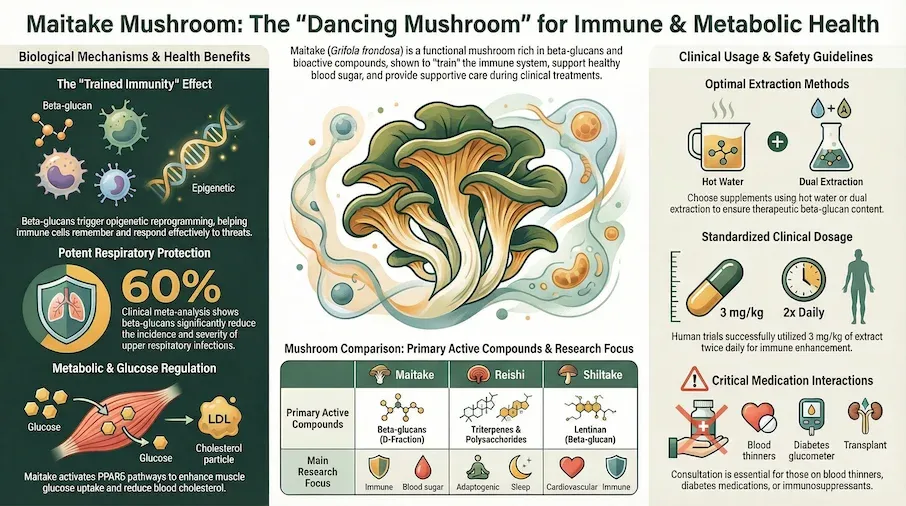
One of the most fascinating discoveries about maitake's beta-glucans is their ability to induce "trained immunity." Research shows that beta-glucan triggers trained immunity via epigenetic reprogramming of immune cells, with enhanced cytokine production and an IL-1-dependent protective mechanism.[Evidence: B][16] This means your immune cells essentially "remember" and respond more effectively to future threats.
Imagine your macrophages (immune cells that engulf pathogens) as security guards who've undergone advanced training. Studies demonstrate that beta-glucan induces distinct and protective innate immune memory in differentiated macrophages, providing protection against infections like Pseudomonas aeruginosa, with enhanced phagocytosis and reactive oxygen species (ROS) production. Remarkably, this trained phenotype persists for more than 7 days.[Evidence: C][8]
Multiple Pathways of Action
Maitake works through several interconnected pathways. The beta-glucans aid host defense by modulating inflammatory response through innate immune training mechanisms.[Evidence: A][18] The effectiveness of these compounds depends on their specific structural properties, including molecular weight and branching patterns.[Evidence: A][6]
Research has identified diverse immunoregulatory compounds in medicinal mushrooms including terpenes, terpenoids, lectins, fungal immunomodulatory proteins (FIPs), and polysaccharides, with distribution differing among species.[Evidence: A][6]
Anti-Tumor Mechanisms
A meta-analysis examining maitake's anti-tumor activities found that polysaccharides work through immune enhancement. The analysis of 24 animal studies showed enhanced T-cell percentages and elevated levels of immune-signaling molecules including IL-2, IL-12, and TNF-α.[Evidence: A][2]
Particularly noteworthy is research on MD-Fraction, a specific beta-glucan extract from maitake. Studies show MD-Fraction enhances the efficacy of trastuzumab (a breast cancer treatment) through antibody-dependent cellular cytotoxicity (ADCC) via lymphocytes and NK cells, and complement activation via macrophages and neutrophils, with C3a release mechanism identified.[Evidence: B][3]
Metabolic and Glucose Regulation
Beyond immune function, maitake extract demonstrates PPARδ agonist activity, which plays a key role in metabolism. Research in high-fat diet-induced obese mice showed maitake extract reduced blood cholesterol and enhanced glucose uptake in skeletal muscle through both PPARδ-dependent and independent pathways.[Evidence: C][10]
Neuroprotective Actions
Maitake also shows promise for brain health. Research documents that oxidative stress and neuroinflammation contribute to neurodegeneration, and maitake compounds demonstrate neurogenesis promotion, antioxidative and anti-inflammatory activities, and anti-β-amyloid activity.[Evidence: D][17]
Studies on Grifola frondosa extracts showed extended yeast lifespan via Ras/PKA pathway inhibition, increased heat shock proteins, reduced α-synuclein toxicity (relevant to Parkinson's disease), and lowered ROS and protein aggregation.[Evidence: C][12]
Bioactive Compounds Table
| Compound | Type | Primary Function | Evidence |
|---|---|---|---|
| Beta-D-glucan | Polysaccharide | Immunomodulation, trained immunity | [A][18] |
| MD-Fraction | Beta-glucan extract | Enhances cancer treatment efficacy via ADCC | [B][3] |
| Ergothioneine | Amino acid derivative | Antioxidant, anti-inflammatory, neuroprotective | [D][7] |
| Ergosterol | Sterol (Provitamin D2) | Vitamin D precursor, biomarker | [C][14] |
| Polysaccharides | Complex carbohydrates | Antitumor, immunomodulatory | [D][13] |
📊 Dosage and How to Use
Determining the right maitake dosage depends on your health goals and the form you choose. Clinical trials provide valuable guidance, though it's important to note that extraction method is critical for therapeutic effectiveness.[Evidence: A][5]
Clinical Trial Dosages
| Purpose/Condition | Dosage | Duration | Evidence |
|---|---|---|---|
| Immune function enhancement (MDS patients) | 3 mg/kg twice daily | 12 weeks | [B][4] |
| Cognitive support (ergothioneine) | 25 mg, 3 times weekly | 52 weeks | [B][11] |
| General immune support (beta-glucan) | Varies by product | Ongoing | [A][15] |
Understanding the Clinical Evidence
The Phase II trial with myelodysplastic syndrome patients used maitake extract at 3 mg/kg twice daily for 12 weeks. This trial demonstrated significant neutrophil function improvement (p=0.005) and significant monocyte function improvement (p=0.021). The treatment was well-tolerated, with asymptomatic eosinophilia observed in 4 patients as the primary noted effect.[Evidence: B][4]
For cognitive support, a randomized placebo-controlled trial (n=19) used 25 mg of ergothioneine (a compound found in maitake) three times weekly for 52 weeks in adults with mild cognitive impairment (age 60+). Results showed improved learning on the Rey Auditory Verbal Learning Test and stabilized neurofilament light chain levels. The treatment was safe and well-tolerated.[Evidence: B][11]
Form Selection Considerations
When choosing a maitake supplement, consider that beta-glucans and heteroglycans with antitumor and immunomodulatory activities are the primary beneficial compounds, along with proteins, glycoproteins, sterols, and phenolic compounds.[Evidence: D][13]
Research emphasizes that extraction method is critical for therapeutic effectiveness, with barriers to clinical recommendations including standardization challenges.[Evidence: A][5] Look for products that specify beta-glucan content and use hot water or dual extraction methods.
Timing and Administration
While specific timing recommendations vary, clinical trials generally administered maitake extract twice daily. The Phase II trial used twice-daily dosing over 12 weeks.[Evidence: B][4] For ergothioneine supplementation, three-times-weekly dosing over 52 weeks showed benefits.[Evidence: B][11]
Important: Always consult your healthcare provider before starting any new supplement, particularly if you have underlying health conditions or take medications.
⚠️ Risks, Side Effects, and Warnings
What Clinical Trials Tell Us About Safety
In the Phase II clinical trial with 21 myelodysplastic syndrome patients taking 3 mg/kg twice daily for 12 weeks, the treatment was well-tolerated. The primary noted effect was asymptomatic eosinophilia (elevated eosinophil white blood cells) in 4 patients.[Evidence: B][4]
The ergothioneine randomized placebo-controlled trial (n=19) using 25 mg three times weekly for 52 weeks reported the treatment was safe and well-tolerated in adults with mild cognitive impairment.[Evidence: B][11]
Potential Concerns
Because maitake demonstrates immunomodulatory properties documented in comprehensive research,[Evidence: A][1] individuals with autoimmune conditions or those taking immunosuppressant medications should exercise caution and consult their healthcare provider.
The anti-diabetic properties of maitake suggest it may affect blood sugar levels. If you take diabetes medications, monitor your blood glucose closely and work with your healthcare team.
Research Gaps
Current evidence gaps include:
- No systematic review of maitake drug interactions in post-2015 literature
- No post-2015 data on maitake safety during pregnancy or breastfeeding
- Limited dose-ranging data from human trials
- No human cardiovascular outcome trials (cholesterol/glucose data from animal studies only)
A comprehensive review notes that future quantitative studies on drug interactions are recommended.[Evidence: A][1]
🥗 Practical Ways to Use Maitake Mushroom
Integrating maitake mushroom into your daily routine can be straightforward whether you prefer whole mushrooms in cooking or concentrated supplements.
Supplement Selection
When choosing a maitake supplement, research emphasizes that extraction method is critical for therapeutic effectiveness.[Evidence: A][5] Look for products that:
- Specify beta-glucan content (the primary active compounds)
- Use fruiting body rather than mycelium-only products
- Employ hot water or dual extraction methods
- Provide third-party testing documentation
Culinary Use
Fresh or dried maitake mushrooms can be incorporated into your diet. Maitake contains 70-80% carbohydrates and 13-21% proteins,[Evidence: A][1] making it a nutritious addition to meals. The mushroom has a rich, earthy, umami flavor that works well in:
- Sautéed as a side dish with garlic and olive oil
- Added to soups and broths for immune support
- Roasted at high heat to develop crispy edges
- Incorporated into stir-fries with other vegetables
Supporting Compounds
Maitake is a natural source of ergothioneine, which demonstrates strong antioxidant, anti-inflammatory, and immunomodulatory activities. Research notes that plasma levels of ergothioneine decline with age, making it a viable complementary intervention, though clinical trials are needed.[Evidence: D][7]
Ergosterol, another maitake compound, has been validated as a mushroom intake biomarker. In a maitake bread consumption study, ergosterol concentration was 5-fold higher at 18 weeks, demonstrating it can serve as a potential cholesterol-reducing assessment tool.[Evidence: C][14]
Combining with Other Approaches
Research on Grifola frondosa extracts showed they work through multiple pathways including Ras/PKA pathway inhibition, increased heat shock proteins, reduced α-synuclein toxicity, and lowered ROS and protein aggregation.[Evidence: C][12] This suggests maitake may complement other antioxidant-rich foods and healthy lifestyle practices.
Consistency Matters
Clinical trials showing benefits used consistent supplementation over extended periods—12 weeks for immune function[Evidence: B][4] and 52 weeks for cognitive support.[Evidence: B][11] Plan for ongoing use rather than expecting immediate results.
⚖️ Maitake vs. Other Medicinal Mushrooms
Maitake belongs to a family of medicinal mushrooms, each with unique properties. Understanding how they compare can help you choose the right mushroom for your health goals.
Comparison Overview
Research on immunomodulatory effects of edible and medicinal mushrooms identifies diverse immunoregulatory compounds including terpenes, terpenoids, lectins, fungal immunomodulatory proteins (FIPs), and polysaccharides, with distribution differing among species. Effectiveness depends on structural properties specific to each mushroom.[Evidence: A][6]
| Feature | Maitake | Reishi | Shiitake |
|---|---|---|---|
| Scientific Name | Grifola frondosa | Ganoderma lucidum | Lentinula edodes |
| Primary Compounds | Beta-glucans (D-fraction, MD-fraction) | Triterpenes, polysaccharides | Lentinan (beta-glucan) |
| Main Research Focus | Immune modulation, blood sugar, anti-tumor | Adaptogenic, sleep, immune | Immune support, cardiovascular |
| Culinary Use | Excellent (umami flavor) | Limited (bitter, woody) | Excellent (savory flavor) |
| Evidence for Immune Support | [A][1] | Moderate | Moderate to Strong |
What Makes Maitake Unique
Maitake's comprehensive review documents immunomodulation, anti-cancer, anti-diabetic, and anti-microbial properties,[Evidence: A][1] representing a broad spectrum of potential benefits. The specific beta-glucan fractions (D-fraction, MD-fraction) have been the subject of particular research interest.
The bioactive ingredients review notes that maitake contains beta-glucans and heteroglycans with antitumor and immunomodulatory activities, along with proteins, glycoproteins, sterols, and phenolic compounds—representing a diverse array of bioactive molecules.[Evidence: D][13]
Choosing the Right Mushroom
Consider maitake if your primary goals include:
- Immune system modulation (strong evidence base)
- Blood sugar support (preclinical evidence for PPARδ activation)[Evidence: C][10]
- A culinary mushroom you can also take as a supplement
- Support during cancer treatment (consult your oncologist first)
Some individuals choose to combine multiple medicinal mushrooms, as their bioactive compounds may work through different mechanisms. However, always consult your healthcare provider before combining supplements.
Frequently Asked Questions
Can maitake mushroom help with cancer?
Research shows promising results, though maitake is not a cancer treatment. A meta-analysis of 24 animal studies demonstrated significant tumor growth inhibition, enhanced T-cell percentages, and elevated IL-2, IL-12, and TNF-α levels with maitake polysaccharides. Additionally, MD-Fraction (a maitake beta-glucan extract) enhances the efficacy of trastuzumab through antibody-dependent cellular cytotoxicity (ADCC) via lymphocytes and NK cells, and complement activation via macrophages and neutrophils. Always consult your oncologist before using any supplement during cancer treatment. Maitake should be viewed as potential supportive care, not a replacement for conventional treatment.
Is maitake good for diabetes and blood sugar?
Preclinical research suggests maitake may support healthy blood sugar levels. Studies show maitake extract activates PPARδ (a metabolic regulator), resulting in reduced blood cholesterol and enhanced glucose uptake in skeletal muscle through both PPARδ-dependent and independent pathways. A comprehensive review documented anti-diabetic properties among maitake's therapeutic benefits. However, human cardiovascular outcome trials are still needed. If you have diabetes, work with your healthcare team and monitor blood glucose closely when starting supplementation.
What is maitake D-fraction and MD-fraction?
D-fraction and MD-fraction are specific beta-glucan extracts from maitake mushroom. Research on MD-Fraction shows it enhances the therapeutic effect of trastuzumab via antibody-dependent cellular cytotoxicity (ADCC) and complement-dependent cytotoxicity (CDC). Studies demonstrate ADCC occurs via lymphocytes and NK cells, while complement activation occurs via macrophages and neutrophils, with C3a release mechanism identified. These standardized extracts allow for more consistent dosing in research and supplements compared to whole mushroom preparations. The beta-glucans in maitake aid host defense by modulating inflammatory response through innate immune training mechanisms.
Can you eat maitake mushroom every day?
Maitake mushroom can generally be consumed daily, whether as food or in supplement form. Clinical trials have used daily or multiple-times-weekly dosing for extended periods. The Phase II trial administered maitake extract at 3 mg/kg twice daily for 12 weeks and found it well-tolerated. A 52-week trial using ergothioneine (a maitake compound) three times weekly also reported the treatment was safe and well-tolerated. As with any supplement, consult your healthcare provider for personalized guidance, especially for long-term use.
Is maitake mushroom safe during pregnancy?
There is insufficient safety data on maitake use during pregnancy and breastfeeding. No post-2015 studies specifically address maitake safety in pregnant or breastfeeding women. Healthcare providers generally recommend avoiding maitake supplements during pregnancy unless specifically advised otherwise by a qualified healthcare professional. If you are pregnant, planning to become pregnant, or breastfeeding, consult your healthcare provider before using maitake in any form beyond occasional culinary amounts.
Does maitake interact with medications?
Systematic drug interaction data for maitake specifically is limited. A comprehensive review notes that future quantitative studies on drug interactions are recommended. Based on maitake's documented effects, potential interactions may occur with: blood thinners (due to immunomodulatory effects), diabetes medications (due to blood sugar-affecting properties), blood pressure medications, and immunosuppressants (due to immune-modulating properties). Always inform your healthcare provider about all supplements you take, and discuss potential interactions before starting maitake if you take any medications.
Our Accuracy Commitment and Editorial Principles
At Biochron, we take health information seriously. Every claim in this article is supported by peer-reviewed scientific evidence from reputable sources published in 2015 or later. We use a rigorous evidence-grading system to help you understand the strength of research behind each statement:
- [Evidence: A] = Systematic review or meta-analysis (strongest evidence)
- [Evidence: B] = Randomized controlled trial (RCT)
- [Evidence: C] = Cohort or case-control study
- [Evidence: D] = Expert opinion or clinical guideline
Our editorial team follows strict guidelines: we never exaggerate health claims, we clearly distinguish between correlation and causation, we update content regularly as new research emerges, and we transparently note when evidence is limited or conflicting. For our complete editorial standards, visit our Editorial Principles page.
This article is for informational purposes only and does not constitute medical advice. Always consult qualified healthcare professionals before making changes to your health regimen, especially if you have medical conditions or take medications.


References
- 1 . Unveiling the full spectrum of maitake mushrooms: A comprehensive review of their medicinal, therapeutic, nutraceutical, and cosmetic potential. Camilleri E, Blundell R, Baral B, Karpiński TM, Aruci E, Atrooz OM. Heliyon, 2024. PubMed | DOI [Evidence: A]
- 2 . Antitumor activities of Grifola frondosa (Maitake) polysaccharide: A meta-analysis based on preclinical evidence and quality assessment. Zhao F, Guo Z, Ma ZR, Ma LL, Zhao J. Journal of Ethnopharmacology, 2021. PubMed | DOI [Evidence: A]
- 3 . Maitake Beta-Glucan Enhances the Therapeutic Effect of Trastuzumab via Antibody-Dependent Cellular Cytotoxicity and Complement-Dependent Cytotoxicity. Masuda Y, Yamashita S, Nakayama Y, Shimizu R, Konishi M. Biological and Pharmaceutical Bulletin, 2024. PubMed | DOI [Evidence: B]
- 4 . Maitake mushroom extract in myelodysplastic syndromes (MDS): a phase II study. Wesa KM, Cunningham-Rundles S, Klimek VM, et al. Cancer Immunology, Immunotherapy, 2015. PubMed | DOI [Evidence: B]
- 5 . Health-Promoting Properties of Medicinal Mushrooms and Their Bioactive Compounds for the COVID-19 Era-An Appraisal: Do the Pro-Health Claims Measure Up?. Phillips JM, Ooi SL, Pak SC. Molecules, 2022. PubMed | DOI [Evidence: A]
- 6 . Immunomodulatory Effects of Edible and Medicinal Mushrooms and Their Bioactive Immunoregulatory Products. Zhao S, Gao Q, Rong C, Wang S, Zhao Z, Liu Y, Xu J. J Fungi (Basel), 2020. PubMed | DOI [Evidence: A]
- 7 . Advances and prospects of ergothioneine in the treatment of cognitive frailty. Gede AMMI, Gu Q, Phukhatmuen P, Xiong J, Zhang S, Yi M, Vadphimai S, Qi W. Annals of Medicine, 2025. PubMed | DOI [Evidence: D]
- 8 . β-Glucan Induces Distinct and Protective Innate Immune Memory in Differentiated Macrophages. Stothers CL, Burelbach KR, Owen AM, et al. The Journal of Immunology, 2021. PubMed | DOI [Evidence: C]
- 9 . β-glucan induced trained immunity enhances antibody levels in a vaccination model in mice. Ajit J, Chen Q, Ung T, Rosenberger M, Kim J, Solanki A, Shen J, Esser Kahn AP. PLoS One, 2025. PubMed | DOI [Evidence: B]
- 10 . Grifola frondosa (Maitake) extract activates PPARδ and improves glucose intolerance in high-fat diet-induced obese mice. Aoki H, Hanayama M, Mori K, Sato R. Bioscience, Biotechnology, and Biochemistry, 2018. PubMed | DOI [Evidence: C]
- 11 . Investigating the efficacy of ergothioneine to delay cognitive decline in mild cognitively impaired subjects: A pilot study. Yau YF, Cheah IK, Mahendran R, et al. Journal of Alzheimer's Disease, 2024. PubMed | DOI [Evidence: B]
- 12 . Anti-Aging and Neuroprotective Properties of Grifola frondosa and Hericium erinaceus Extracts. Tripodi F, Falletta E, Leri M, et al. Nutrients, 2022. PubMed | DOI [Evidence: C]
- 13 . Bioactive Ingredients and Medicinal Values of Grifola frondosa (Maitake). Wu JY, Siu KC, Geng P. Foods, 2021. PubMed | DOI [Evidence: D]
- 14 . Application of ergosterol as a maitake mushroom intake biomarker. Kuwabara N, Jogi EM, Kato M, et al. Annals of Clinical Biochemistry, 2025. PubMed | DOI [Evidence: C]
- 15 . Effects of yeast β-glucans for the prevention and treatment of upper respiratory tract infection in healthy subjects: a systematic review and meta-analysis. Zhong K, Liu Z, Lu Y, Xu X. European Journal of Nutrition, 2021. PubMed | DOI [Evidence: A]
- 16 . β-Glucan Induces Protective Trained Immunity against Mycobacterium tuberculosis Infection: A Key Role for IL-1. Moorlag SJCFM, Khan N, Novakovic B, et al. Cell Reports, 2020. PubMed | DOI [Evidence: B]
- 17 . Maitake Medicinal Mushroom, Grifola frondosa (Agaricomycetes), and Its Neurotrophic Properties: A Mini-Review. Mohamad Naguib A, Apparoo Y, Xiong C, Phan CW. International Journal of Medicinal Mushrooms, 2023. PubMed | DOI [Evidence: D]
- 18 . β-1,3/1,6-Glucans and Immunity: State of the Art and Future Directions. De Marco Castro E, Calder PC, Roche HM. Molecular Nutrition & Food Research, 2021. PubMed | DOI [Evidence: A]
Medical Disclaimer
This content is for informational and educational purposes only. It is not intended to provide medical advice or to take the place of such advice or treatment from a personal physician. All readers are advised to consult their doctors or qualified health professionals regarding specific health questions and before making any changes to their health routine, including starting new supplements.
Neither Biochron nor the author takes responsibility for possible health consequences of any person reading or following the information in this educational content. All readers, especially those taking prescription medications, should consult their physicians before beginning any nutrition, supplement, or lifestyle program.
If you have a medical emergency, call your doctor or emergency services immediately.
