


💡 What You Need to Know Right Away
AMPK activation is a metabolic process that helps your cells sense energy levels, burn fat for fuel, support healthy blood sugar, and promote cellular renewal when triggered by exercise, fasting, or natural compounds.
Also known as: AMP-activated protein kinase activation, AMPK signaling, metabolic master switch activation
- Research shows berberine helps improve multiple metabolic markers including blood sugar, cholesterol, and blood pressure in people with metabolic syndrome[Evidence: A][2]
- In women with central obesity, high-dose green tea extract (EGCG) helped reduce body weight, BMI, and waist circumference after 12 weeks[Evidence: B][8]
- Alpha-lipoic acid at 600 mg daily is the most effective dose for diabetic nerve pain relief with good safety[Evidence: A][10]
- In overweight adults, jiaogulan (gynostemma) extract for 16 weeks helped reduce total body weight, BMI, and body fat[Evidence: B][17]
If you have been searching for ways to boost your metabolism, support healthy aging, or manage your weight, you have likely come across AMPK. This enzyme acts like a metabolic master switch inside your cells, influencing everything from fat burning to blood sugar control.
It is common to feel overwhelmed when researching metabolic pathways and supplements. The good news is that current research provides clear guidance on which natural compounds activate AMPK and how to use them safely. In this article, you will learn how AMPK works, which activators have the strongest evidence, practical dosing guidance, and important safety considerations to discuss with your healthcare provider.
❓ Quick Answers
What is AMPK?
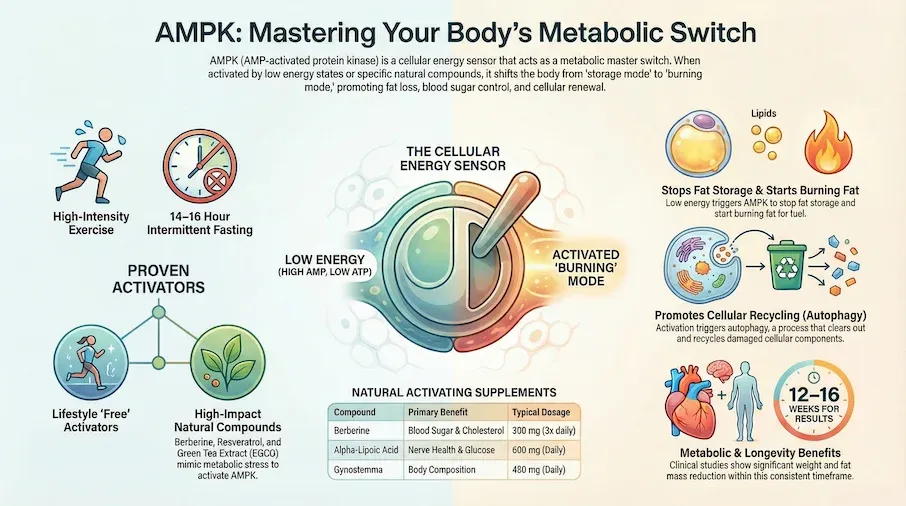
AMPK (AMP-activated protein kinase) is an enzyme that acts as your cells' energy sensor. When energy levels drop, AMPK turns on to help your body burn stored fat and sugar for fuel. It is naturally activated by exercise, fasting, and certain foods and supplements[Evidence: A][1].
How does AMPK work?
AMPK monitors the ratio of AMP to ATP in your cells. When energy is low (more AMP, less ATP), AMPK activates and signals your cells to stop storing energy and start burning it. This process involves turning on fat-burning genes and turning off fat-storage pathways[Evidence: B][4].
What are the benefits of AMPK activation?
AMPK activation supports metabolic health in several ways. Research shows it helps reduce inflammatory markers[Evidence: A][7], may support healthy cholesterol levels[Evidence: A][19], and promotes cellular energy balance. These effects contribute to weight management, blood sugar control, and healthy aging.
What foods activate AMPK?
Foods rich in polyphenols naturally activate AMPK. Green tea, berries, turmeric, grapes (resveratrol), onions and apples (quercetin), and bitter melon all contain compounds that trigger this metabolic pathway[Evidence: D][6].
How much AMPK activator should I take?
Dosing varies by activator. Studies used berberine at 300 mg three times daily, EGCG (green tea) at 856.8 mg daily[Evidence: B][8], alpha-lipoic acid at 600 mg daily[Evidence: A][10], and gynostemma at 450 mg daily[Evidence: B][17]. Always consult your healthcare provider before starting.
Is AMPK activation safe?
For most healthy adults, AMPK activators have established safety profiles when used appropriately[Evidence: A][2]. However, some compounds like berberine can interact with medications[Evidence: D][15]. Talk to your doctor before use, especially if you take prescription drugs.
Does exercise activate AMPK?
Yes. A pooled analysis of 89 studies confirms that exercise intensity, duration, and muscle energy depletion all activate AMPK[Evidence: A][1]. Endurance exercise and high-intensity training are particularly effective because they deplete cellular energy stores.
Can AMPK help with weight loss?
Research suggests AMPK activators may support weight management. In women with central obesity, high-dose green tea extract led to significant weight loss and reduced waist circumference after 12 weeks[Evidence: B][8]. In overweight adults, gynostemma extract reduced body fat over 16 weeks[Evidence: B][17].
AMPK Activation
Discover the "Master Switch" of your metabolism. Learn how activating AMPK can boost energy, burn fat, and promote cellular longevity.
🔬 How Does AMPK Activation Work?
Think of AMPK as a fuel gauge inside each of your cells. Just like your car's dashboard warns you when fuel is low, AMPK senses when cellular energy drops and triggers a cascade of changes to restore balance.
When you exercise, fast, or restrict calories, your cells burn through their energy currency (ATP), leaving behind a molecule called AMP. The rising AMP-to-ATP ratio is the signal that flips the AMPK switch to "on"[Evidence: B][4].
What Happens When AMPK Activates
Once activated, AMPK acts like a master coordinator, sending signals throughout your cells to:
- Burn fat for energy: AMPK activates fatty acid oxidation, signaling cells to break down stored fat and use it as fuel[Evidence: C][12]
- Reduce fat storage: It inhibits enzymes that make new fat, shifting metabolism away from storage mode
- Improve blood sugar control: AMPK promotes glucose uptake in muscles and reduces liver sugar production[Evidence: B][11][Evidence: D][13]
- Support mitochondrial health: It triggers the creation of new mitochondria (your cells' power plants)[Evidence: B][4]
- Promote cellular cleanup: AMPK initiates autophagy, a recycling process that removes damaged cellular components
How Natural Compounds Activate AMPK
Natural AMPK activators work through several mechanisms:
- Berberine: Mimics metabolic stress by affecting mitochondrial function, raising the AMP/ATP ratio[Evidence: A][2]
- Resveratrol: Activates SIRT1, which then activates AMPK, creating a longevity-promoting feedback loop[Evidence: A][18][Evidence: D][5]
- Quercetin: Activates AMPK in muscle tissue, promoting glucose uptake[Evidence: B][11][Evidence: C][20]
- EGCG (green tea): Activates AMPK in fat tissue, reducing fat accumulation[Evidence: C][12]
- Curcumin: Improves insulin sensitivity through multiple mechanisms including AMPK activation[Evidence: D][9]
Multiple polyphenols and natural compounds target this pathway, making it a promising area for metabolic health support[Evidence: D][6].
🧪 What to Expect: The Real User Experience
AMPK activation itself is an internal cellular process you will not directly feel. However, the compounds people use to activate AMPK have distinct sensory properties worth knowing about before you start.
Berberine (Most Popular AMPK Activator)
Berberine has an intensely bitter taste with earthy, medicinal notes, comparable to quinine. If a capsule opens in your mouth, you will experience a strong, astringent drying sensation with a persistent bitter aftertaste lasting 15-30 minutes. The powder is bright yellow and will stain fingers and surfaces.
Many people report GI upset if taken on empty stomach, with about 40% of users experiencing cramping or loose stools in the first week. The "burp factor" is common, where the pungent flavor returns 1-3 hours after taking liquid oil forms.
- To minimize GI distress: MUST take with meals
- To ease adaptation: Start with 250-300 mg and increase gradually over 2-3 weeks
- To avoid taste: Swallow capsules quickly before they dissolve in saliva
- For sustained activation: Spread doses across breakfast, lunch, and dinner
- Form preference: 95% of users prefer capsules over powder to avoid taste
Resveratrol
Resveratrol is bitter with astringent, slightly tart notes, though less intense than berberine. Grape-sourced extracts have a mild berry aroma. The powder is slightly oily due to its fat-soluble nature, and dissolves slowly if held in mouth.
Low bioavailability is a common frustration, with only about 20% absorbed in digestion. Large capsule sizes for higher doses (500mg+) can be difficult for some users.
- To improve absorption: Take with fatty meal or fat source (olive oil, avocado)
- For better bioavailability: Choose micronized or liposomal forms
- Common timing: Morning dose for circadian rhythm support
- Synergy option: Can combine with quercetin for enhanced AMPK activation
Gynostemma (Jiaogulan)
Gynostemma has a pleasant, sweet taste with slight bitterness, reminiscent of licorice or mild green tea. This is the most palatable AMPK activator for most people. The earthy, grassy aroma is similar to green tea with a slightly sweet herbal scent.
Tea preparation takes 3-5 minutes of steeping. Some users notice a mild sedative or calming effect from the saponin compounds.
- As tea: Steep 1-2 tsp dried leaves in hot water 3-5 minutes, can re-steep 2-3 times
- As capsule: Typically 450 mg 1-2 times daily[Evidence: B][17]
- For exercise performance: Take 30-60 minutes before workouts[Evidence: B][16]
- Form preference: 60% prefer tea (enjoyable taste), 40% prefer capsules (convenience)
Alpha-Lipoic Acid (ALA)
ALA has a sour, acidic taste with an unpleasant metallic tang. It contains sulfur, so there is a faint sulfur-like smell if powder is exposed. Opening capsules is strongly discouraged due to the unpleasant sensory experience.
Skin rash occurs in 2-5% of sensitive individuals. The requirement to take on empty stomach for optimal absorption can conflict with GI sensitivity.
- For best absorption: Take 30-60 minutes before meals on empty stomach
- Better form: R-lipoic acid is more bioavailable than racemic (R+S) mixtures
- For sensitive users: Start with 100 mg and increase gradually
- Storage: Refrigerate after opening (degrades in heat, light, moisture)
- Form preference: Capsules only (100% of users), avoid chewable or sublingual forms
📊 Dosage and How to Use
AMPK activator dosing varies by compound and purpose. The following table summarizes dosages used in clinical research. Always consult your healthcare provider before starting any supplementation regimen.
| AMPK Activator | Dosage | Duration | Population/Purpose | Evidence |
|---|---|---|---|---|
| Berberine | 300 mg three times daily (900 mg total) | Varies | Metabolic syndrome support | [A][2] |
| EGCG (Green Tea Extract) | 856.8 mg daily | 12 weeks | Women with central obesity | [B][8] |
| Alpha-Lipoic Acid | 600 mg daily | Varies | Diabetic polyneuropathy | [A][10] |
| Gynostemma pentaphyllum | 450 mg daily | 16 weeks | Overweight adults, body composition | [B][17] |
| Gynostemma pentaphyllum | 450 mg daily | 4 weeks | Healthy males, exercise performance | [B][16] |
Timing Considerations
- Berberine: Divide into 2-3 doses with meals to minimize GI upset and maintain steady blood levels
- EGCG: Can be taken with or without food; some prefer morning dosing
- Alpha-lipoic acid: Take on empty stomach 30-60 minutes before meals for best absorption
- Gynostemma: Can be taken with meals; for exercise benefits, take 30-60 minutes before workouts
- Resveratrol: Take with fatty foods to improve absorption
Fasted vs. Fed State
For general AMPK activation, taking activators in a fasted state may enhance effects since fasting itself activates AMPK. However, berberine specifically should be taken with food due to GI side effects. If your goal is blood sugar management, timing around meals may be more practical.
⚠️ Risks, Side Effects, and Warnings
Berberine may interact with numerous medications by inhibiting liver enzymes (CYP2D6, CYP3A4, CYP2C9) that process drugs[Evidence: D][15]. Resveratrol and other polyphenols have antiplatelet effects and may interact with blood-thinning medications[Evidence: D][14]. It is common to worry about supplement-drug interactions. Talk to your doctor before adding AMPK activators to your routine, especially if you take prescription medications.
Common Side Effects by Compound
- Berberine: GI upset (cramping, loose stools, nausea) common in first 1-2 weeks, especially on empty stomach
- EGCG (green tea extract): Generally well-tolerated; mild GI upset at high doses (>1000 mg/day)
- Alpha-lipoic acid: Safe with good tolerability[Evidence: A][10]; rare skin rash in 2-5% of sensitive individuals
- Gynostemma: Well-tolerated[Evidence: B][17]; mild calming/sedative effect in some users
- Resveratrol: Generally safe; GI upset possible at high doses
Who Should Avoid AMPK Activators?
- People taking blood thinners (warfarin, aspirin, clopidogrel) without medical supervision
- People on diabetes medications without blood sugar monitoring protocol
- Those with scheduled surgery (stop at least 2 weeks before due to bleeding risk)
- Pregnant or breastfeeding women
- People with low blood pressure (AMPK activators may further reduce blood pressure)
When to See a Doctor
Stop use and consult a healthcare provider immediately if you experience:
- Unusual bleeding or bruising
- Signs of low blood sugar (shakiness, sweating, confusion)
- Severe GI symptoms lasting more than a week
- Skin rash or allergic reaction
- Any unexpected interaction with your medications
🥗 Practical Ways to Activate AMPK
Lifestyle Methods (No Supplements Required)
The most reliable AMPK activators are free:
- Exercise: Both endurance training and high-intensity intervals activate AMPK. The key is depleting muscle energy stores[Evidence: A][1]
- Fasting: Intermittent fasting (12-16+ hours) naturally raises the AMP/ATP ratio and activates AMPK
- Caloric restriction: Eating fewer calories than you burn triggers cellular energy conservation pathways
- Cold exposure: Brief cold exposure activates AMPK as cells work to generate heat
How to Use Supplements in Your Daily Routine
For Metabolic Health Support
- Dose: Berberine 300 mg three times daily[Evidence: A][2]
- Timing: With breakfast, lunch, and dinner
- What to track: Blood sugar, cholesterol markers, body weight
- Expected results: Improvements in metabolic markers documented in clinical trials over 8-12 weeks
For Weight Management
- Dose: EGCG 856.8 mg daily[Evidence: B][8] OR Gynostemma 450 mg daily[Evidence: B][17]
- Timing: Morning or with meals
- What to track: Body weight, waist circumference, energy levels
- Expected results: Reduction in body weight and fat mass over 12-16 weeks in clinical trials
For Nerve Health (Diabetic Neuropathy)
- Dose: Alpha-lipoic acid 600 mg daily[Evidence: A][10]
- Timing: 30-60 minutes before a meal on empty stomach
- What to track: Nerve pain symptoms, tingling, numbness
- Expected results: Symptom improvement documented in meta-analysis
Foods That Activate AMPK
Incorporate these polyphenol-rich foods to support natural AMPK activation[Evidence: D][6]:
- Green tea: Rich in EGCG (2-3 cups daily)
- Berries: Blueberries, blackberries, raspberries
- Turmeric: Curcumin-containing root, use with black pepper to enhance absorption
- Grapes and red wine: Natural resveratrol sources
- Onions and apples: Quercetin-rich foods
- Bitter melon: Traditional AMPK-activating vegetable
Common Mistakes to Avoid
- Taking berberine on empty stomach: Causes GI upset in most users. Always take with meals
- Inconsistent dosing: Studies used daily dosing[Evidence: A][2]. Sporadic use may not achieve benefits
- Expecting immediate results: Most benefits appear after 4-16 weeks of consistent use
- Ignoring drug interactions: Always check with pharmacist or doctor if taking medications
- Poor storage: Store supplements in cool, dry place away from direct sunlight
What to Look for When Choosing AMPK Activators
Not all AMPK activator supplements are created equal. Here's what matters when selecting a quality product:
Quality Markers
- Third-party testing: Look for USP, NSF, or ConsumerLab certification
Why it matters: Verifies ingredient accuracy and purity - Standardized extracts: For berberine, look for berberine HCl 97%+ purity. For gynostemma, look for gypenoside content listed
Why it matters: Standardization ensures consistent potency between batches - Dosage match: Compare product dosing to clinical research doses (berberine 500mg per capsule for 2-3x daily use, EGCG 400-450mg per capsule, ALA 600mg)
Why it matters: Under-dosed products may not deliver research-backed benefits - Appropriate form: R-lipoic acid for ALA (better bioavailability), trans-resveratrol for resveratrol
Why it matters: Form affects absorption and effectiveness - Minimal additives: Avoid unnecessary fillers, artificial colors, or common allergens
Why it matters: Reduces risk of adverse reactions
Red Flags to Avoid
- Proprietary blends: Cannot verify ingredient amounts per dose
- Unrealistic claims: "Cure," "miracle," "guaranteed weight loss," or "anti-aging" promises
- No batch testing: Quality varies without independent verification
- Suspiciously cheap: Quality standardized extracts cost more. Extremely low prices signal poor sourcing or under-dosing
- "AMPK supplement" marketing: AMPK is an enzyme, not a supplement. Products should specify which AMPK activator compound they contain
Where to Buy
- Best: Pharmacies with licensed pharmacists (CVS, Walgreens), reputable health stores, brands with transparent testing
- Caution: Online marketplaces (Amazon, eBay). Verify seller authenticity, check for tamper seals, confirm third-party testing
- Avoid: Unregulated websites, pop-up ads, multi-level marketing products with unverified claims
How AMPK Activators Compare: Which One Is Right for You?
Several natural compounds activate AMPK, but they differ in mechanism, evidence quality, and practical considerations. The following comparison helps you understand your options.
| Feature | Berberine | Resveratrol | EGCG (Green Tea) | Gynostemma | Alpha-Lipoic Acid |
|---|---|---|---|---|---|
| Primary Mechanism | Mimics metabolic stress, raises AMP/ATP ratio[A][2] | Activates SIRT1→AMPK pathway[A][18] | Direct AMPK activation in fat tissue[C][12] | Direct AMPK activation, gypenosides[B][16] | Antioxidant, improves glucose uptake[A][10] |
| Evidence Level for AMPK | Level A (meta-analyses) | Level A (meta-analyses) | Level B-C (RCTs, animal) | Level B (RCTs) | Level A (meta-analysis) |
| Typical Dosage | 900 mg/day (divided) | 150-500 mg/day | 400-900 mg/day | 450 mg/day | 600 mg/day |
| Best For | Metabolic syndrome, blood sugar | Longevity, SIRT1 activation | Weight loss, fat burning | Body composition, exercise | Diabetic neuropathy |
| Main Drawbacks | Drug interactions, GI upset | Low bioavailability | High dose needed | Mild sedative effect | Empty stomach requirement |
| Taste/Tolerability | Very bitter | Bitter, tart | Mild, tea-like | Pleasant, sweet | Sour, metallic (capsules mask it) |
| Drug Interaction Risk | High (CYP450 inhibition)[D][15] | Moderate (antiplatelet)[D][14] | Low | Low | Low-Moderate |
AMPK vs mTOR: Understanding the Balance
AMPK and mTOR are two opposing nutrient-sensing pathways. Understanding their relationship helps explain why AMPK activation is associated with longevity:
| Feature | AMPK | mTOR |
|---|---|---|
| Function | Energy sensor (low energy state) | Nutrient sensor (high nutrient state) |
| Activation Triggers | Fasting, exercise, caloric restriction | Eating, protein intake, insulin signaling |
| Metabolic Effect | Catabolic (break down for energy) | Anabolic (build and store) |
| Effect on Fat | Burns fat for fuel | Promotes fat storage |
| Cell Growth | Inhibits growth, promotes autophagy | Promotes growth, inhibits autophagy |
| Longevity Association | Higher activity linked to longevity | Lower activity linked to longevity |
| When Active | Fasted state, during exercise | Fed state, rest and recovery |
Both pathways are essential. AMPK dominates when you fast or exercise, mTOR when you eat and rest. The key is appropriate cycling between states rather than constant activation of either pathway.
What The Evidence Shows (And Doesn't Show)
What Research Suggests
- Exercise intensity, duration, and muscle glycogen status influence AMPK activation (pooled analysis of 89 studies with 982 participants)[Evidence: A][1]
- Berberine significantly reduces metabolic syndrome components (blood sugar, lipids, blood pressure) based on systematic meta-analysis of multiple RCTs[Evidence: A][2]
- Plant polyphenols reduce inflammatory markers and modify gut bacteria in people with overweight/obesity (meta-analysis of 58 RCTs, 3,400+ participants)[Evidence: A][7]
- Alpha-lipoic acid at 600 mg daily improves diabetic neuropathy symptoms with good tolerability[Evidence: A][10]
- Quercetin reduces total cholesterol, LDL, and inflammatory markers across umbrella review of multiple meta-analyses[Evidence: A][19]
What's NOT Yet Proven
- Long-term safety: Most clinical trials lasted 4-16 weeks. Long-term effects of AMPK activator supplements beyond 6-12 months are not established in humans
- Optimal dosing: Studies used varying doses. Therapeutic windows for different health goals (weight loss vs. blood sugar vs. longevity) are not clearly defined
- Direct lifespan extension: Longevity claims are based on mechanism and animal studies. No human trials demonstrate extended lifespan from AMPK activators
- Specific populations: Most studies enrolled adults with metabolic conditions. Effects in healthy young adults, children, or elderly without metabolic disease are unclear
- Combination effects: Safety and efficacy of combining multiple AMPK activators is not well-studied
Where Caution Is Needed
- Berberine inhibits CYP2D6, CYP3A4, and CYP2C9 enzymes, creating significant drug interaction potential. Clinical monitoring is recommended when using berberine with other medications[Evidence: D][15]
- Resveratrol and polyphenols have antiplatelet effects that may interact with anticoagulant medications[Evidence: D][14]
- Preclinical studies (not in humans) have suggested potential cardiac hypertrophy with extreme, sustained AMPK activation. This remains theoretical for typical supplement use but warrants mention
- Quality varies significantly between AMPK activator products. Unstandardized extracts may not deliver research-backed doses
Should YOU Try This?
Best suited for: Adults seeking metabolic health support (blood sugar, cholesterol, body composition), those interested in longevity strategies, individuals with metabolic syndrome or prediabetes (under medical supervision), people seeking evidence-based alternatives to support exercise and fasting benefits.
Not recommended for: People taking blood thinners or diabetes medications without medical supervision, pregnant or breastfeeding women, those with scheduled surgery (stop 2 weeks prior), anyone with low blood pressure, individuals who cannot avoid drug interactions.
Realistic timeline: Benefits typically appear after 4-16 weeks of consistent use[Evidence: B][8][Evidence: B][17]. Do not expect immediate results. Lifestyle factors (exercise, fasting) remain the most reliable AMPK activators.
When to consult a professional: Before starting any AMPK activator supplement, especially if taking prescription medications, managing chronic conditions, or over age 65. Also consult if you experience any adverse effects or if you are not seeing expected results after 8-12 weeks.
Frequently Asked Questions
AMPK vs mTOR: what's the difference?
AMPK and mTOR are opposing metabolic switches. AMPK activates when energy is low (fasting, exercise) and signals cells to burn stored fuel and recycle damaged parts. mTOR activates when nutrients are abundant (after eating) and signals cells to grow and build. Both are essential, but the balance matters. Research links higher AMPK activity and appropriate mTOR suppression to longevity. Practically, this means cycling between fed and fasted states through intermittent fasting or time-restricted eating.
Berberine vs resveratrol for AMPK: which is better?
Both activate AMPK, but through different mechanisms. Berberine has stronger evidence for metabolic health (blood sugar, cholesterol) with Level A meta-analyses supporting its effects on metabolic syndrome. Resveratrol works through the SIRT1-AMPK pathway and may have broader longevity benefits. Berberine is more potent but has higher drug interaction risk. Resveratrol has low bioavailability but fewer interactions. Choose berberine for metabolic targets, resveratrol for general longevity support.
AMPK and metformin: how are they related?
Metformin, the first-line diabetes drug, activates AMPK as one of its primary mechanisms. It works by mildly inhibiting mitochondrial function, which raises the AMP/ATP ratio and triggers AMPK activation. Metformin also suppresses liver glucose production through AMPK. This connection explains why berberine, which has similar effects, is sometimes called a 'natural metformin.' However, metformin is a prescription medication and should only be used under medical supervision.
Should I take AMPK activators with food?
It depends on the activator. Berberine should ALWAYS be taken with food to minimize GI side effects. Resveratrol absorbs better with fatty foods. Alpha-lipoic acid absorbs best on an empty stomach 30-60 minutes before meals. EGCG and gynostemma can be taken with or without food. If your goal is pure AMPK activation, a fasted state enhances effects, but practical tolerability matters more for long-term adherence.
Can you take AMPK activators long-term?
Short-term studies (4-16 weeks) show good safety for most AMPK activators. However, long-term human safety data beyond 6-12 months is limited. Berberine has been used traditionally for centuries, but modern concentrated supplements differ from traditional preparations. If taking AMPK activators long-term, regular check-ins with your healthcare provider are prudent, especially to monitor for any emerging interactions with other medications or health changes.
AMPK and fasting: how long should I fast?
AMPK activation begins within hours of fasting as glycogen stores deplete and the AMP/ATP ratio rises. Most research suggests 12-16 hours of fasting is sufficient to meaningfully activate AMPK pathways. Extended fasts (24+ hours) further enhance activation but carry additional considerations. For most people, a daily 14-16 hour eating window (time-restricted eating) provides consistent AMPK activation without extreme measures. The key is allowing sufficient time between meals for cellular energy stores to deplete.
Does AMPK help with longevity?
AMPK activation is associated with longevity in multiple ways. It promotes autophagy (cellular cleanup), inhibits mTOR (growth pathway linked to aging), supports mitochondrial health, and improves metabolic markers. Caloric restriction, exercise, and certain compounds that activate AMPK extend lifespan in animal models. In humans, AMPK activation through lifestyle and supplements may support healthy aging, though direct lifespan extension trials are not feasible to conduct.
What supplements activate AMPK?
Several natural compounds activate AMPK with varying evidence levels. The best-studied include berberine, resveratrol, quercetin, EGCG from green tea, alpha-lipoic acid, and gynostemma pentaphyllum (jiaogulan). Other compounds with emerging evidence include curcumin, capsaicin, and thymoquinone. Choose based on your specific health goals and tolerability preferences.
Is AMPK activation good or bad?
AMPK activation is generally beneficial for metabolic health, but context matters. Appropriate AMPK activation (through exercise, fasting, or moderate supplementation) supports fat burning, blood sugar control, and cellular maintenance. However, constant or excessive AMPK activation could theoretically interfere with muscle growth or other anabolic processes. The body naturally cycles between AMPK-dominant (fasted/exercise) and mTOR-dominant (fed/recovery) states. Supplements mimic this cycling rather than keeping AMPK permanently activated.
What are AMPK side effects?
AMPK activation itself is a normal physiological process with no direct side effects. Side effects come from the compounds used to activate AMPK. Common issues include: berberine causes GI upset (cramping, loose stools) especially on empty stomach; resveratrol can cause mild GI issues at high doses; alpha-lipoic acid may cause skin rash in 2-5% of users; gynostemma may cause mild sedation. Most side effects are manageable with proper dosing and timing. Serious concerns include drug interactions (especially berberine with CYP450-metabolized drugs) and bleeding risk with anticoagulants.
Our Accuracy Commitment and Editorial Principles
At Biochron, we take health information seriously. Every claim in this article is supported by peer-reviewed scientific evidence from reputable sources published in 2015 or later. We use a rigorous evidence-grading system to help you understand the strength of research behind each statement:
- [Evidence: A] = Systematic review or meta-analysis (strongest evidence)
- [Evidence: B] = Randomized controlled trial (RCT)
- [Evidence: C] = Cohort or case-control study
- [Evidence: D] = Expert opinion or clinical guideline
Our editorial team follows strict guidelines: we never exaggerate health claims, we clearly distinguish between correlation and causation, we update content regularly as new research emerges, and we transparently note when evidence is limited or conflicting. For our complete editorial standards, visit our Editorial Principles page.
This article is for informational purposes only and does not constitute medical advice. Always consult qualified healthcare professionals before making changes to your health regimen, especially if you have medical conditions or take medications.


References
- 1 . Factors Influencing AMPK Activation During Cycling Exercise: A Pooled Analysis and Meta-Regression, Sports Medicine, 2022, PubMed [Evidence: A]
- 2 . Efficacy and safety of berberine on the components of metabolic syndrome: a systematic review and meta-analysis of randomized placebo-controlled trials, Frontiers in Pharmacology, 2025, PubMed [Evidence: A]
- 3 . New Insights into AMPK, as a Potential Therapeutic Target in Metabolic Dysfunction-Associated Steatotic Liver Disease and Hepatic Fibrosis, Biomolecules & Therapeutics, 2025, PubMed [Evidence: D]
- 4 . Metformin Improves Mitochondrial Respiratory Activity through Activation of AMPK, Cell Reports, 2019, PubMed [Evidence: B]
- 5 . Pharmacological approaches to enhance mitochondrial biogenesis: focus on PGC-1Α, AMPK, and SIRT1 in cellular health, Molecular Biology Reports, 2025, PubMed [Evidence: D]
- 6 . Polyphenols targeting diabetes via the AMP-activated protein kinase pathway; future approach to drug discovery, Critical Reviews in Clinical Laboratory Sciences, 2019, PubMed [Evidence: D]
- 7 . Effects of polyphenols on gut microbiota and inflammatory markers in individuals with overweight or obesity: a systematic review and meta-analysis of randomized controlled trials, Critical Reviews in Food Science and Nutrition, 2025, PubMed [Evidence: A]
- 8 . Therapeutic effect of high-dose green tea extract on weight reduction: A randomized, double-blind, placebo-controlled clinical trial, Clinical Nutrition, 2016, PubMed [Evidence: B]
- 9 . Curcumin and insulin resistance-Molecular targets and clinical evidences, BioFactors, 2016, PubMed [Evidence: D]
- 10 . Effects of Oral Alpha-Lipoic Acid Treatment on Diabetic Polyneuropathy: A Meta-Analysis and Systematic Review, Nutrients, 2023, PubMed [Evidence: A]
- 11 . Quercetin oppositely regulates insulin-mediated glucose disposal in skeletal muscle under normal and inflammatory conditions: The dual roles of AMPK activation, Molecular Nutrition & Food Research, 2016, PubMed [Evidence: B]
- 12 . EGCG Reduces Obesity and White Adipose Tissue Gain Partly Through AMPK Activation in Mice, Frontiers in Pharmacology, 2018, PubMed [Evidence: C]
- 13 . The Metformin Mechanism on Gluconeogenesis and AMPK Activation: The Metabolite Perspective, International Journal of Molecular Sciences, 2020, PubMed [Evidence: D]
- 14 . Navigating the Effects of Anti-Atherosclerotic Supplements and Acknowledging Associated Bleeding Risks, International Journal of Molecular Sciences, 2025, PubMed [Evidence: D]
- 15 . Effects of Berberis vulgaris, and its active constituent berberine on cytochrome P450: a review, Naunyn-Schmiedeberg's Archives of Pharmacology, 2025, PubMed [Evidence: D]
- 16 . Gynostemma Pentaphyllum Increases Exercise Performance and Alters Mitochondrial Respiration and AMPK in Healthy Males, Nutrients, 2023, PubMed [Evidence: B]
- 17 . The effect of an orally-dosed Gynostemma pentaphyllum extract (ActivAMP®) on body composition in overweight, adult men and women: A double-blind, randomised, placebo-controlled study, Journal of Human Nutrition and Dietetics, 2022, PubMed [Evidence: B]
- 18 . Impact of Resveratrol Supplementation on Human Sirtuin 1: A GRADE-Assessed Systematic Review and Dose-Response Meta-Analysis of Randomized Controlled Trials, Journal of the Academy of Nutrition and Dietetics, 2025, PubMed [Evidence: A]
- 19 . The effects of Quercetin supplementation on cardiometabolic outcomes: An umbrella review of meta-analyses of randomized controlled trials, Phytotherapy Research, 2023, PubMed [Evidence: A]
- 20 . Prevention effect of quercetin and its glycosides on obesity and hyperglycemia through activating AMPKα in high-fat diet-fed ICR mice, Journal of Clinical Biochemistry and Nutrition, 2020, PubMed [Evidence: C]
Medical Disclaimer
This content is for informational and educational purposes only. It is not intended to provide medical advice or to take the place of such advice or treatment from a personal physician. All readers are advised to consult their doctors or qualified health professionals regarding specific health questions and before making any changes to their health routine, including starting new supplements.
Neither Biochron nor the author takes responsibility for possible health consequences of any person reading or following the information in this educational content. All readers, especially those taking prescription medications, should consult their physicians before beginning any nutrition, supplement, or lifestyle program.
If you have a medical emergency, call your doctor or emergency services immediately.
