


💡 What You Need to Know Right Away
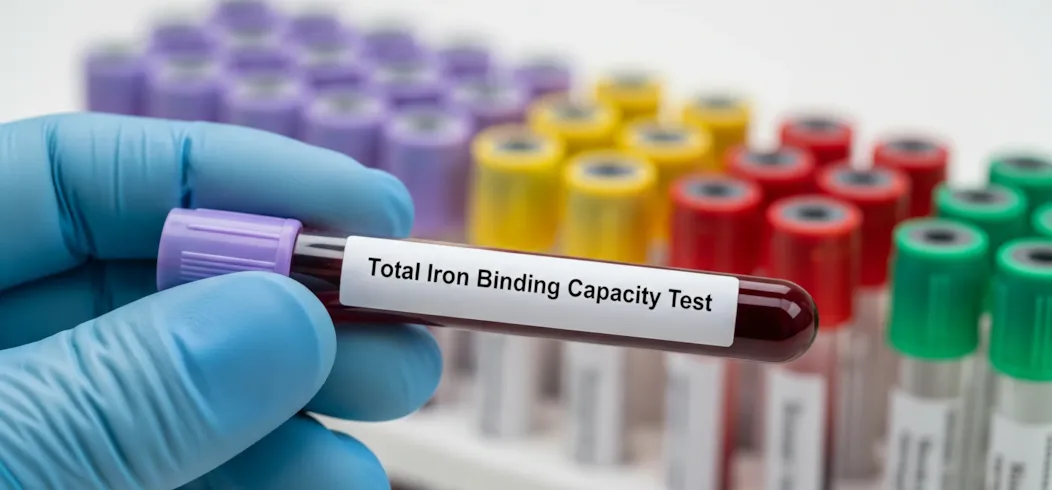
A TIBC test is a blood test that measures your blood's ability to bind and transport iron throughout your body, helping doctors diagnose iron deficiency anemia, iron overload, and other conditions affecting how your body handles iron.
Also known as: Total Iron-Binding Capacity, Iron Binding Capacity, IBC, Serum Iron-Binding Capacity, Siderophilin
- Combined testing is best: Research shows that using both transferrin saturation (from TIBC) and ferritin testing together provides better diagnostic information than either test alone[Evidence: A][6]
- TIBC alone has limits: Early research suggests TIBC correctly identified iron deficiency in about 6 out of 10 cases, while ferritin was more accurate at 8 out of 10 cases[Evidence: C][1]
- Normal saturation level: In healthy people, about one-third of the iron-carrying protein is filled with iron, while about two-thirds remains available to bind more iron[Evidence: D][5]
- High TIBC pattern: High TIBC with low ferritin and low serum iron typically indicates iron deficiency anemia, where your body is making more iron-transport proteins because iron stores are running low
If your doctor ordered a TIBC test, you're probably wondering what this blood test will reveal about your iron levels. It's common to feel anxious about medical tests, especially when you're not sure what the results will mean for your health.
The good news is that the TIBC test is a simple, safe blood draw that provides valuable information about how your body transports and uses iron. This test is particularly helpful when your doctor suspects you might have too little iron (causing fatigue and weakness) or too much iron (which can damage organs over time).
In this guide, you'll learn exactly what the TIBC test measures, what your results mean, how to prepare for the test, and when to talk to your doctor about follow-up care. We've translated the clinical findings into plain language so you can feel informed and confident about your health decisions.
❓ Quick Answers
What is a TIBC test?
A TIBC test is a blood test that measures how much iron your blood can carry by checking the level of transferrin, the main protein that transports iron. Your doctor uses this test alongside serum iron and ferritin to get a complete picture of your iron status and diagnose conditions like iron deficiency anemia or iron overload[Evidence: D][5].
Why do I need a TIBC test?
Your doctor may order a TIBC test if you have symptoms of iron problems, such as fatigue, weakness, pale skin, or shortness of breath. Research shows that combining transferrin saturation with ferritin testing provides better diagnostic information for conditions like iron deficiency, especially in people with chronic inflammatory diseases[Evidence: A][6].
What does high TIBC mean?
High TIBC usually means your body is making more iron-transport proteins because your iron stores are running low. This pattern is typically seen in iron deficiency anemia, pregnancy (due to increased iron demands), or chronic blood loss. When TIBC is high and ferritin is low, it strongly suggests your body needs more iron[Evidence: B][7].
What does low TIBC mean?
Low TIBC can indicate iron overload conditions like hemochromatosis, chronic inflammation, liver disease, or malnutrition. Clinical guidelines recommend using transferrin saturation levels above 45% in females or above 50% in males, combined with elevated ferritin, to help diagnose hereditary hemochromatosis[Evidence: D][3].
What is normal TIBC range?
Normal TIBC range is typically 250-400 mcg/dL for adults, though reference ranges may vary slightly between laboratories. Your transferrin saturation (calculated by dividing serum iron by TIBC) should normally be around 20-50%. Studies suggest that transferrin saturation below 20% combined with ferritin below 100-300 µg/L indicates iron deficiency[Evidence: B][7].
How do I prepare for a TIBC test?
Preparation for a TIBC test is simple. Stop taking iron supplements 24 hours before the test, as they can affect results. Wear short sleeves or loose sleeves that roll up easily. Stay well-hydrated, which makes the blood draw easier. Clinical guidelines note that fasting is not required for optimal diagnostic performance[Evidence: D][3].
Do I need to fast for a TIBC test?
Fasting is generally not required for the TIBC test. The 2022 European guidelines for hemochromatosis confirm that fasting is not required for optimal diagnostic performance of iron studies[Evidence: D][3]. However, some labs may still request a morning fasting sample, so check with your specific laboratory or doctor for their preference.
Is TIBC test safe?
Yes, the TIBC test is very safe. It involves a simple blood draw from a vein in your arm, which takes about 5-10 minutes. Common minor effects include brief discomfort from the needle, slight bruising at the site (20-30% of people), and occasional lightheadedness (5-10% of people), which passes quickly. Serious complications are extremely rare.
TIBC Test
Understanding your body's ability to transport iron is crucial for diagnosing anemia and other metabolic conditions. Explore how this simple blood test reveals hidden health insights.
🔬 How Does the TIBC Test Work?
Think of transferrin as a taxi service for iron in your blood. Just like taxis carry passengers around a city, transferrin proteins pick up iron from your digestive system and deliver it to cells throughout your body that need it. The TIBC test measures how many "empty taxi seats" are available to carry iron.
When your iron stores are low, your body makes more transferrin proteins to capture every available iron molecule, like calling extra taxis during rush hour. This is why TIBC increases in iron deficiency. Conversely, when you have plenty of iron, your body doesn't need as many transport proteins, so TIBC stays normal or decreases.
In healthy people, about one-third of the iron-carrying protein (transferrin) is filled with iron, while about two-thirds remains available to bind more iron[Evidence: D][5]. This balance ensures your body can respond quickly if it needs to absorb more iron from food.
The Iron Panel Relationship
TIBC is most useful when interpreted alongside other iron tests. The formula used is: Transferrin Saturation = (Serum Iron ÷ TIBC) × 100[Evidence: D][5]. Early research suggests TIBC alone accurately predicted transferrin levels in most cases, with about 94% accuracy[Evidence: C][2].
Research across 35 clinical guidelines confirms that ferritin and transferrin saturation levels are the primary diagnostic markers used to define iron deficiency[Evidence: A][8]. Studies suggest that in women without inflammation, TIBC-related testing (UIBC) showed about 83% accuracy for detecting empty iron stores[Evidence: B][10].
🧪 What to Expect: The Real User Experience
During the Procedure
During the TIBC blood draw, you'll sit in a comfortable chair while a phlebotomist ties a tourniquet around your upper arm. This creates mild tightness for about 30-60 seconds while they locate a vein. The room is typically at normal room temperature (68-72°F), and you'll feel a brief cool sensation when the alcohol swab cleans your skin.
The needle insertion feels like a brief sharp prick lasting 2-3 seconds. Most people describe it as similar to a mosquito bite. During the blood collection (30-60 seconds), you may feel a dull ache at the site. The entire procedure, from sitting down to bandaging, takes only 5-10 minutes.
What You'll Feel After
After the blood draw, you might notice mild bruising at the needle site, which affects about 20-30% of people and typically resolves within 3-5 days. About 5-10% of people experience lightheadedness, especially if they've been fasting. This usually passes within 5-10 minutes. Some people notice mild soreness at the puncture site for 1-2 days.
How to Make It Easier
- Stay hydrated: Drink water before your test, which makes veins easier to find and reduces lightheadedness
- Wear appropriate clothing: Choose short sleeves or loose sleeves that roll up easily above the elbow
- Look away if anxious: Many people find looking away during needle insertion helps reduce anxiety
- Bring a snack: If you've been fasting or feel prone to lightheadedness, have a snack available for afterward
- Tell the phlebotomist: If you have difficult veins or a history of fainting, inform them before the draw
- Apply pressure afterward: Hold pressure on the site for 3-5 minutes after needle removal to prevent bruising
📊 Preparation and Normal Ranges
How to Prepare for Your TIBC Test
Preparing for a TIBC test is straightforward. Clinical guidelines note that fasting is not required for optimal diagnostic performance[Evidence: D][3]. However, follow these guidelines for the most accurate results:
- Stop iron supplements: Avoid iron supplements for 24 hours before the test
- Inform your doctor: Tell your doctor about all medications you take, as some can affect results
- Stay hydrated: Drink plenty of water to make the blood draw easier
- Timing: Morning samples may be preferred by some labs, though fasting is not required
Normal TIBC Reference Ranges
| Population | Normal TIBC Range | Normal Transferrin Saturation | Notes |
|---|---|---|---|
| Adults (General) | 250-400 mcg/dL | 20-50% | Reference ranges may vary by lab |
| Adult Females (Hemochromatosis Screening) | Normal to low if elevated iron | >45% indicates evaluation needed[Evidence: D][3] | With ferritin >200 μg/L |
| Adult Males (Hemochromatosis Screening) | Normal to low if elevated iron | >50% indicates evaluation needed[Evidence: D][3] | With ferritin >300 μg/L |
| Pregnant Women | May be elevated | Varies by trimester | TIBC increases during pregnancy due to higher iron demands[Evidence: B][12] |
Pregnancy-Specific Guidelines
Clinical guidelines recommend checking for anemia in the first trimester and again at 24-28 weeks[Evidence: D][11]. During pregnancy:
- Anemia defined as hemoglobin below 11.0 g/dL in first trimester[Evidence: D][11]
- Anemia defined as hemoglobin below 10.5-11.0 g/dL in second and third trimesters[Evidence: D][11]
- TIBC levels naturally increase during pregnancy due to higher iron demands[Evidence: B][12]
- Serum ferritin remains the primary diagnostic marker for iron stores in pregnancy[Evidence: B][12]
⚠️ Risks, Side Effects, and Safety
The TIBC test is a routine blood draw with minimal risks. Most people tolerate the procedure well with only brief discomfort. It's normal to feel anxious about blood tests, but understanding what to expect can help ease concerns.
Possible Side Effects
- Bruising at needle site: Affects 20-30% of people, resolves in 3-5 days
- Lightheadedness or dizziness: Affects 5-10% of people, especially if fasted. Resolves within 5-10 minutes
- Soreness at puncture site: Mild discomfort lasting 1-2 days
- Hematoma (blood pooling under skin): Less than 5% of people, more common in those taking blood thinners
- Vasovagal syncope (fainting): 1-3% of people, usually those prone to fainting during blood draws
- Infection at site: Less than 1%, extremely rare with proper technique
Special Considerations for Result Interpretation
Studies suggest that in people with chronic inflammatory conditions, diagnosis may be more challenging because inflammation affects iron test results[Evidence: B][9]. Specifically:
- Studies suggest that transferrin saturation is less affected by inflammation than ferritin, making it more reliable when inflammation is present[Evidence: B][7]
- In people with ulcerative colitis and low inflammation markers, transferrin saturation levels below 16% correctly identified iron deficiency in about 8 out of 10 cases[Evidence: B][4]
- When inflammation levels are elevated, the threshold shifts to 11% for detecting iron deficiency[Evidence: B][4]
🥗 Practical Ways to Use Your TIBC Results
Understanding Result Patterns
Your TIBC results are most meaningful when viewed alongside other iron panel tests. Here's how to interpret common patterns:
| Condition | TIBC | Serum Iron | Ferritin | Transferrin Saturation |
|---|---|---|---|---|
| Iron Deficiency Anemia | High (>450 mcg/dL) | Low (<60 mcg/dL) | Low (<30 ng/mL) | Low (<20%)[Evidence: B][7] |
| Hemochromatosis (Iron Overload) | Low to normal | High (>150 mcg/dL) | High (>300 ng/mL) | Very high (>45-50%)[Evidence: D][3] |
| Anemia of Chronic Disease | Low to normal | Low | Normal to high (>100 ng/mL) | Low to normal (15-35%) |
| Normal Iron Status | 250-400 mcg/dL | 60-170 mcg/dL | 30-300 ng/mL | 20-50% |
What to Do After Receiving Results
- Schedule a follow-up: Discuss results with your doctor, especially if values are outside normal ranges
- Request the full panel: If only TIBC was ordered, ask about adding ferritin and serum iron for a complete picture
- Track trends: Single results matter less than patterns over time, so keep records of your iron tests
- Don't self-treat: Avoid starting iron supplements without medical guidance, as too much iron can be harmful
Common Mistakes to Avoid
- Taking iron supplements before the test: This can falsely elevate serum iron and alter transferrin saturation calculations
- Interpreting TIBC in isolation: TIBC is most useful as part of a complete iron panel, not as a standalone test
- Ignoring inflammation: If you have chronic inflammatory conditions, discuss with your doctor how this affects result interpretation
- Self-diagnosing iron problems: Many conditions affect iron tests. Let your doctor interpret results in context of your health history
What to Look for When Choosing a TIBC Test Provider
The quality of your test results depends on the lab and healthcare provider. Here's what to consider:
Lab Quality Markers
- CLIA certification: Clinical Laboratory Improvement Amendments (CLIA) accreditation required Why it matters: Federal quality standards ensure accurate results
- CAP accreditation: College of American Pathologists certification (higher standard than CLIA) Why it matters: Rigorous proficiency testing and inspections
- Turnaround time: Most labs provide TIBC results within 24-48 hours Why it matters: Faster results enable quicker treatment decisions
- Insurance acceptance: Verify in-network status before testing Why it matters: Out-of-network labs can cost 3-5x more
Questions to Ask Your Provider
- Will the full iron panel be ordered (TIBC, serum iron, ferritin, transferrin saturation)?
- Do I need to fast or prepare in any way?
- When will results be available?
- Who will explain my results?
- What's the cost if my insurance doesn't cover it?
Red Flags
- No CLIA certification: Unlicensed labs lack quality oversight
- Unusually cheap pricing: May indicate unaccredited lab or limited test panel
- Pressure to add-on unnecessary tests: Unnecessary tests inflate costs without medical benefit
- No result explanation provided: You should receive guidance on what results mean
How TIBC Compares to Other Iron Tests: What to Know
TIBC is just one of several tests used to evaluate iron status. Understanding how these tests differ helps you have informed conversations with your doctor about which tests you need.
| Test | What It Measures | High Result Indicates | Low Result Indicates |
|---|---|---|---|
| TIBC | Blood's capacity to bind and transport iron | Iron deficiency, pregnancy, chronic blood loss | Iron overload, chronic disease, liver disease, malnutrition |
| Ferritin | Iron storage levels in the body | Iron overload, inflammation, liver disease | Iron deficiency (more sensitive than TIBC)[Evidence: C][1] |
| Serum Iron | Amount of iron circulating in blood | Iron overload, hemochromatosis, recent iron intake | Iron deficiency, chronic disease |
| Transferrin Saturation (TSAT) | Percentage of transferrin bound to iron (calculated from serum iron ÷ TIBC) | >45-50% suggests iron overload[Evidence: D][3] | <20% suggests iron deficiency[Evidence: B][7] |
| UIBC | Unsaturated (available) iron-binding capacity | Iron deficiency (more empty binding sites) | Iron overload (fewer empty binding sites) |
Which Test Is Most Accurate?
Research shows that no single test is best for all situations:
- For iron deficiency without inflammation: Ferritin is more accurate than TIBC. In people being tested for iron deficiency, ferritin testing was more accurate than TIBC, correctly identifying iron deficiency in 8 out of 10 cases vs. 6 out of 10 for TIBC[Evidence: C][1]
- For iron deficiency with inflammation: Studies suggest that transferrin saturation is less affected by inflammatory processes than serum ferritin, making TSAT more reliable[Evidence: B][7]
- Combined testing is best: Research shows that using both transferrin saturation and ferritin testing together provides better diagnostic information than either test alone[Evidence: A][6]
What The Evidence Shows (And Doesn't Show)
What Research Suggests
- Research shows that combining transferrin saturation with ferritin testing provides better diagnostic information for iron deficiency than using either test alone, and this combination is recommended as first-line testing for chronic inflammatory diseases[Evidence: A][6]
- Medical guidelines across 35 countries consistently use ferritin and transferrin saturation levels as the primary diagnostic markers for iron deficiency[Evidence: A][8]
- Studies suggest transferrin saturation is less affected by inflammation than ferritin, making it more reliable when inflammation is present[Evidence: B][7]
- In people with ulcerative colitis and low inflammation, transferrin saturation below 16% correctly identified iron deficiency in about 8 out of 10 cases[Evidence: B][4]
- Early research suggests TIBC alone has moderate diagnostic accuracy: sensitivity 64.5%, specificity 42.8%[Evidence: C][1]
What's NOT Yet Proven
- TIBC as a standalone test: Evidence does not support using TIBC alone for diagnosing iron deficiency. Ferritin showed 80% sensitivity vs. TIBC's 64.5%[Evidence: C][1]
- Universal thresholds: Optimal cutoff values vary by population (healthy vs. inflammatory disease vs. pregnant). No single threshold applies to everyone
- Pediatric-specific data: Most studies focus on adults. Limited 2015+ evidence exists for TIBC interpretation in children
- Head-to-head comparisons: Direct comparative studies of TIBC vs. newer markers like soluble transferrin receptor are limited in certain populations
Where Caution Is Needed
- Inflammatory conditions: Ferritin can be falsely elevated by inflammation, making TSAT more reliable, but interpretation still requires clinical context[Evidence: B][7]
- Chronic disease populations: Studies suggest that in people with chronic inflammatory conditions, diagnosis may be more challenging[Evidence: B][9]
- Crohn's disease: Studies found no ferritin or TSAT threshold had good diagnostic performance in Crohn's disease; alternative markers may be needed[Evidence: B][4]
- Lab variability: Reference ranges vary between laboratories. Always compare results to the specific lab's reference range
Should YOU Get This Test?
Best suited for: People with symptoms of iron deficiency (fatigue, weakness, pale skin) or iron overload (joint pain, abdominal pain, bronze skin), those with chronic inflammatory diseases, pregnant women, and individuals with family history of hemochromatosis.
Not recommended as sole test for: Diagnosing iron deficiency without other iron panel markers. TIBC alone has limited diagnostic accuracy and should be part of a complete iron panel.
Realistic expectations: Results typically available within 24-48 hours. Interpretation requires context from other iron tests and your clinical history.
When to consult a professional: Before any testing to ensure appropriate test selection for your symptoms. After results to understand what they mean for your specific situation. Before starting iron supplements, as excess iron can be harmful.
Frequently Asked Questions
What is the difference between TIBC and ferritin?
TIBC and ferritin measure different aspects of iron status. TIBC measures your blood's capacity to transport iron (how many 'empty seats' are available on iron-transport proteins), while ferritin measures how much iron your body has stored. When iron stores are low, TIBC increases (more transport capacity) and ferritin decreases (less stored iron). In people being tested for iron deficiency, ferritin was more accurate than TIBC, correctly identifying iron deficiency in 8 out of 10 cases compared to 6 out of 10 for TIBC. Your doctor typically orders both tests together for a complete picture.
What is the difference between TIBC and UIBC?
TIBC (Total Iron-Binding Capacity) represents the total amount of iron your blood can carry, while UIBC (Unsaturated Iron-Binding Capacity) represents only the portion not currently bound to iron. The formula is: TIBC = Serum Iron + UIBC. Some labs measure UIBC directly and calculate TIBC, while others measure TIBC directly. In women without inflammation, UIBC testing showed about 83% accuracy for detecting empty iron stores. For practical purposes, both provide similar clinical information.
How long does a TIBC test take?
The blood draw itself takes only 5-10 minutes. This includes checking in, preparing your arm, the actual needle insertion (2-3 seconds), blood collection (30-60 seconds), and bandaging. After the sample reaches the laboratory, processing typically takes 24-48 hours. Most people receive their results within 1-2 business days, though this can vary by laboratory. If you're anxious about the procedure, the actual needle time is very brief, lasting less than one minute.
What does a TIBC test show?
A TIBC test shows your blood's total capacity to bind and transport iron by measuring transferrin, the main iron-transport protein. When combined with serum iron, it allows calculation of transferrin saturation, which indicates what percentage of your iron-transport capacity is being used. Early research suggests this test accurately predicted transferrin levels in about 94% of cases. TIBC helps diagnose iron deficiency anemia, iron overload (hemochromatosis), and helps distinguish between different types of anemia.
Can a TIBC test detect anemia?
TIBC helps detect and classify anemia, particularly distinguishing iron deficiency anemia from other types. High TIBC with low serum iron and low ferritin strongly suggests iron deficiency anemia. However, TIBC alone has limitations. Early research suggests it correctly identified iron deficiency in about 6 out of 10 cases. That's why doctors typically order a complete iron panel (TIBC, serum iron, ferritin) plus a complete blood count (CBC) to accurately diagnose anemia and determine its cause.
What is TIBC in an iron panel?
In an iron panel, TIBC provides the denominator for calculating transferrin saturation (Serum Iron ÷ TIBC × 100). A typical iron panel includes serum iron (circulating iron), TIBC or transferrin (transport capacity), ferritin (storage), and calculated transferrin saturation (percentage of capacity used). Research across 35 clinical guidelines confirms that ferritin and transferrin saturation levels are the primary diagnostic markers for iron deficiency. Together, these tests provide a comprehensive view of iron status.
Is the TIBC test covered by insurance?
TIBC testing is typically covered by health insurance when ordered for a valid medical reason, such as investigating symptoms of anemia, fatigue, or suspected iron disorders. Coverage depends on your specific insurance plan, deductible status, and whether the lab is in-network. The TIBC test has CPT code 83540, which you can use to check coverage with your insurer. If paying out-of-pocket, costs typically range from $20-50 for the TIBC test alone, or $50-150 for a complete iron panel. Check with your lab and insurance provider for specific costs.
What medications affect the TIBC test?
Several medications can affect TIBC results. Iron supplements taken within 24 hours can elevate serum iron and alter transferrin saturation. Oral contraceptives and estrogen therapy can increase TIBC levels. ACTH (adrenocorticotropic hormone) may also affect results. Chloramphenicol can decrease TIBC. Always tell your doctor about all medications, supplements, and vitamins you're taking before the test. Your doctor may advise stopping certain supplements temporarily, but never stop prescription medications without medical guidance.
How does TIBC change during pregnancy?
Studies suggest that during pregnancy, TIBC levels increase naturally due to the body's higher iron demands. This is a normal physiological response as the body prepares to support the growing fetus. Clinical guidelines recommend checking for anemia in the first trimester and again at 24-28 weeks. Serum ferritin remains the primary diagnostic marker for iron stores in pregnancy. Pregnant women should discuss iron testing and supplementation with their healthcare provider.
When should I get a TIBC test?
Consider asking your doctor about TIBC testing if you experience symptoms of iron problems: fatigue, weakness, pale skin, shortness of breath, dizziness, cold hands and feet, brittle nails, or unusual cravings for ice or dirt (pica). TIBC is also useful if you have conditions that affect iron absorption (celiac disease, inflammatory bowel disease) or are at risk for iron overload (family history of hemochromatosis). Studies suggest transferrin saturation testing becomes particularly important when inflammatory conditions complicate diagnosis.
Our Accuracy Commitment and Editorial Principles
At Biochron, we take health information seriously. Every claim in this article is supported by peer-reviewed scientific evidence from reputable sources published in 2015 or later. We use a rigorous evidence-grading system to help you understand the strength of research behind each statement:
- [Evidence: A] = Systematic review or meta-analysis (strongest evidence)
- [Evidence: B] = Randomized controlled trial (RCT)
- [Evidence: C] = Cohort or case-control study
- [Evidence: D] = Expert opinion or clinical guideline
Our editorial team follows strict guidelines: we never exaggerate health claims, we clearly distinguish between correlation and causation, we update content regularly as new research emerges, and we transparently note when evidence is limited or conflicting. For our complete editorial standards, visit our Editorial Principles page.
This article is for informational purposes only and does not constitute medical advice. Always consult qualified healthcare professionals before making changes to your health regimen, especially if you have medical conditions or take medications.


References
- 1 . Diagnostic Accuracy of Serum Iron and Total Iron Binding Capacity (TIBC) in Iron Deficiency State, Asif N et al., Journal of the College of Physicians and Surgeons Pakistan, 2016, PubMed [Evidence: C]
- 2 . Iron studies and transferrin, a source of test ordering confusion highly amenable to clinical decision support, Huang R et al., Clinica Chimica Acta, 2020, PubMed [Evidence: C]
- 3 . EASL Clinical Practice Guidelines on haemochromatosis, European Association for the Study of the Liver, Journal of Hepatology, 2022, PubMed [Evidence: D]
- 4 . Comparative accuracy of ferritin, transferrin saturation and soluble transferrin receptor for the diagnosis of iron deficiency in inflammatory bowel disease, Daude S et al., Alimentary Pharmacology & Therapeutics, 2020, PubMed [Evidence: B]
- 5 . Iron-Binding Capacity, Faruqi A et al., StatPearls [Internet], 2024, PubMed [Evidence: D]
- 6 . Using transferrin saturation as a diagnostic criterion for iron deficiency: A systematic review, Cacoub P et al., Critical Reviews in Clinical Laboratory Sciences, 2019, PubMed [Evidence: A]
- 7 . How to diagnose iron deficiency in chronic disease: A review of current methods and potential marker for the outcome, Rohr M et al., European Journal of Medical Research, 2023, PubMed [Evidence: B]
- 8 . Systematic review of guidelines for the diagnosis and treatment of iron deficiency anemia using intravenous iron across multiple indications, Numan S et al., Current Medical Research and Opinion, 2020, PubMed [Evidence: A]
- 9 . Iron deficiency anaemia revisited, Cappellini MD et al., Journal of Internal Medicine, 2020, PubMed [Evidence: B]
- 10 . Diagnosing empty iron stores in women: unbound iron binding capacity (UIBC) versus soluble transferrin receptor (sTFR), Åsberg A et al., Scandinavian Journal of Clinical and Laboratory Investigation, 2021, PubMed [Evidence: B]
- 11 . Iron Deficiency Anemia in Pregnancy, James AH, Obstetrics and Gynecology, 2021, PubMed [Evidence: D]
- 12 . Iron deficiency anaemia in pregnancy: A contemporary review, Benson CS et al., Obstetric Medicine, 2021, PubMed [Evidence: B]
Medical Disclaimer
This content is for informational and educational purposes only. It is not intended to provide medical advice or to take the place of such advice or treatment from a personal physician. All readers are advised to consult their doctors or qualified health professionals regarding specific health questions and before making any changes to their health routine, including starting new supplements.
Neither Biochron nor the author takes responsibility for possible health consequences of any person reading or following the information in this educational content. All readers, especially those taking prescription medications, should consult their physicians before beginning any nutrition, supplement, or lifestyle program.
If you have a medical emergency, call your doctor or emergency services immediately.
