


💡 What You Need to Know Right Away
- GLA (gamma-linolenic acid) had the highest probability (52.7%) of being the best treatment for diabetic peripheral neuropathy in a network meta-analysis of available therapies [Evidence: A][1]
- At 320 mg/day, GLA achieved 68.75% treatment success for rosacea compared to 33.33% with placebo, while improving skin barrier function [Evidence: B][2]
- 880 mg GLA daily from borage oil for 6 weeks lowered triglycerides and raised HDL cholesterol in overweight adults [Evidence: B][6]
- Evening primrose oil is FDA-designated GRAS (Generally Recognized As Safe) for food use, with no documented adverse effects on breastfed infants [Evidence: D][5]
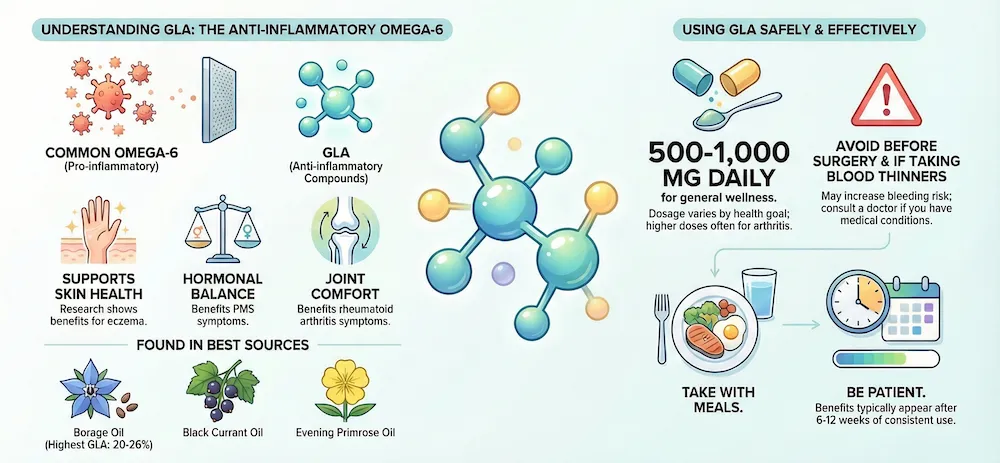
You've likely heard conflicting information about omega-6 fatty acids. While most omega-6s are associated with inflammation, there's one remarkable exception: GLA (gamma-linolenic acid). This unique fatty acid works differently in your body, converting into anti-inflammatory compounds that research suggests may help with everything from diabetic nerve pain to skin conditions.
If you're searching for natural approaches to support your health, understanding GLA is essential. Found in specific plant seed oils like borage, evening primrose, and black currant, GLA represents a growing market projected to reach $74.9 million by 2031. In this comprehensive guide, you'll discover what the latest research (2016-2024) actually shows about GLA's benefits, proper dosages tested in clinical trials, safety considerations you need to know, and how to choose a quality supplement.
❓ Quick Answers
What is gamma linolenic acid used for?
GLA (gamma-linolenic acid) is an omega-6 fatty acid used primarily for diabetic peripheral neuropathy, where it showed the highest probability (52.7%) of being the best treatment in network meta-analysis. It's also used for skin conditions like rosacea and to support healthy lipid profiles. [Evidence: A][1]
Is GLA good for inflammation?
Yes, GLA has anti-inflammatory properties. Unlike most omega-6 fatty acids, GLA converts to dihomo-gamma-linolenic acid (DGLA), which produces anti-inflammatory series-1 prostaglandins. However, genetic variations in FADS genes affect how efficiently individuals convert GLA to these beneficial compounds. [Evidence: D][3]
How much GLA should I take daily?
Clinical trials have used 320-880 mg GLA daily. For skin conditions like rosacea, 320 mg/day for 8 weeks showed benefits. For lipid support, 880 mg/day from borage oil was studied. Dosage depends on your health goals—consult a healthcare provider for personalized guidance. [Evidence: B][2][6]
What foods contain GLA?
Natural food sources of GLA are limited. The richest sources are plant seed oils: borage oil (18-26% GLA), black currant seed oil (15-20%), and evening primrose oil (8-10%). Evening primrose oil also contains 70-74% linoleic acid alongside its GLA content. Therapeutic doses typically require supplementation. [Evidence: D][4]
What is the best source of GLA?
Borage oil contains the highest GLA concentration (18-26%), making it cost-effective for higher doses. Evening primrose oil (8-10% GLA) has been studied more extensively, particularly for women's health. Black currant oil (15-20% GLA) uniquely provides both GLA and omega-3 fatty acids. Choice depends on your specific needs. [Evidence: D][4]
🔬 How Does GLA Work in Your Body?
Think of GLA as a specialized key that unlocks your body's natural anti-inflammatory pathways. Unlike most omega-6 fatty acids that can promote inflammation, GLA takes a different metabolic route that leads to beneficial compounds.
When you consume GLA, your body converts it to dihomo-gamma-linolenic acid (DGLA). This conversion is the critical first step. DGLA then gets metabolized into anti-inflammatory series-1 prostaglandins and series-3 leukotrienes—signaling molecules that help calm inflammatory processes rather than fuel them. [Evidence: D][3]
However, here's what many supplement guides don't tell you: human clinical trials show inconsistent results with GLA supplementation. The reason lies in your genes. Research has identified that variations in the FADS gene cluster significantly determine how efficiently your body converts GLA to its beneficial metabolites. This means a one-size-fits-all approach to GLA supplementation may not work for everyone. [Evidence: D][3]
Imagine your metabolism as a river system. GLA is like water entering at the source. For some people, the river flows smoothly to the anti-inflammatory "sea" (prostaglandin E1). For others, genetic "dams" slow or redirect this flow, making supplementation less effective. This genetic variability helps explain why research shows mixed results across different populations and conditions.
Interestingly, tissue levels of GLA appear to matter for health outcomes. A cross-sectional study of 234 breast cancer patients found that inflammatory breast cancer was associated with decreased GLA and EPA levels in breast adipose tissue, suggesting GLA status may play a role in tissue inflammation. [Evidence: C][10]
When combined with omega-3 fatty acids like EPA and DHA, research suggests GLA may work synergistically. The combination can enhance DGLA accumulation without increasing arachidonic acid (the pro-inflammatory omega-6), potentially amplifying anti-inflammatory benefits. [Evidence: D][3]
📊 Dosage and How to Use GLA
Clinical trials have tested various GLA dosages for different health conditions. The table below summarizes evidence-based dosing from peer-reviewed research published between 2016-2024. All dosages should be discussed with your healthcare provider before starting supplementation.
| Purpose/Condition | Dosage | Duration | Evidence |
|---|---|---|---|
| Diabetic peripheral neuropathy | Varies by study (network meta-analysis) | Variable | [A][1] |
| Rosacea / Skin barrier support | 320 mg/day | 8 weeks | [B][2] |
| Lipid profile (triglycerides, HDL) | 880 mg/day | 6 weeks | [B][6] |
| Lipid profile (from evening primrose oil) | ≤4,000 mg/day EPO | Variable | [A][7] |
| Cyclic breast pain (mastalgia) | 1,000 mg/day | 3 menstrual cycles | [B][9] |
Key Dosing Insights from Research
For diabetic neuropathy: A 2024 network meta-analysis found that GLA had the highest probability (52.7%) of being the best treatment for diabetic peripheral neuropathy among studied options, with significantly lower Total Symptom Scores compared to placebo (SMD -2.39, 95% CI -4.3 to -0.5). [Evidence: A][1]
For skin conditions: In a randomized controlled trial for rosacea, 320 mg/day of GLA added to minocycline therapy achieved 68.75% treatment success compared to 33.33% with placebo at 8 weeks. Participants also showed improved skin barrier function with reduced transepidermal water loss and increased skin hydration. [Evidence: B][2]
For lipid management: Borage oil providing 880 mg GLA daily for 6 weeks lowered triglycerides and raised HDL cholesterol in overweight young adults with a family history of obesity. No effects were observed on BMI, total cholesterol, LDL cholesterol, or glucose. [Evidence: B][6]
For breast nodularity: In women with fibrocystic breast changes, 1g GLA daily (combined with iodine and selenium) for 3 menstrual cycles reduced nodularity (p=0.03) and OTC pain medication use (p=0.02), though breast pain reduction was similar to control. [Evidence: B][9]
Timing and Absorption
GLA is a fat-soluble fatty acid. Take GLA supplements with meals containing dietary fat to enhance absorption. Store supplements in a cool, dark place and check expiration dates, as fatty acids can oxidize over time.
⚠️ Risks, Side Effects, and Warnings
Who Should Use Caution
- Critically ill patients: Research indicates potential harm from GLA-containing formulas in ARDS. [Evidence: A][8]
- People on blood thinners: Monitor closely if using anticoagulants.
- Pre-surgical patients: Stop supplementation 2 weeks before procedures.
- Those with bleeding disorders: Theoretical risk based on GLA's effects on prostaglandins.
Pregnancy and Breastfeeding
Evening primrose oil is used by some women for Raynaud's phenomenon of the nipple during breastfeeding. The FDA designates evening primrose oil as GRAS (Generally Recognized As Safe) for food use. When nursing mothers supplement with evening primrose oil, breastmilk composition changes to include increased linoleic acid and GLA metabolites. No documented adverse effects on infants have been reported. [Evidence: D][5]
However, dietary supplements like GLA lack pre-market efficacy requirements, and long-term safety data during pregnancy are limited. Always consult your healthcare provider before using GLA supplements during pregnancy or breastfeeding.
Long-Term Safety Gaps
Most clinical trials lasted 6-12 weeks. Long-term safety data (beyond 24 months of continuous use) have not been systematically studied. Pediatric safety data from studies published 2015 or later are also absent from the current evidence base.
🥗 Practical Ways to Use GLA
1. Choose the Right GLA Source for Your Goals
If you need higher GLA doses (800+ mg daily), borage oil is the most cost-effective choice at 18-26% GLA content. For skin health benefits demonstrated in the rosacea trial at 320 mg/day, either source works well. [Evidence: B][2]
2. Take GLA with Fat-Containing Meals
As a fat-soluble fatty acid, GLA absorbs best when consumed with dietary fats. Take your supplement with breakfast or dinner that includes healthy fats like avocado, nuts, olive oil, or fatty fish.
3. Be Patient—Allow 6-12 Weeks
Clinical trials showed benefits emerging after 6-8 weeks for skin improvements and up to 6-12 months for diabetic neuropathy. Don't expect overnight results. The rosacea study measured outcomes at 8 weeks, when 68.75% of the GLA group achieved treatment success. [Evidence: B][2]
4. Store Properly to Maintain Potency
GLA-rich oils are polyunsaturated fats susceptible to oxidation. Store supplements in a cool, dark place. Refrigeration after opening can extend shelf life. Check expiration dates and discard if the oil smells rancid.
5. Consider Combination with Omega-3s
Research suggests GLA and omega-3 fatty acids (EPA/DHA) may work synergistically. The combination can enhance DGLA accumulation without increasing pro-inflammatory arachidonic acid, potentially amplifying benefits. [Evidence: D][3]
6. Look for Quality Markers
When selecting a GLA supplement:
- Verify GLA content per serving (not just total oil content)
- Look for third-party testing (USP, NSF, ConsumerLab)
- For borage oil, confirm "PA-free" (pyrrolizidine alkaloid-free) status
- Check the source oil is specified (borage, evening primrose, or black currant)
⚖️ GLA Sources Compared: Borage Oil vs Evening Primrose Oil vs Black Currant Oil
The three main supplemental sources of GLA differ in concentration, cost-effectiveness, and research backing. Here's how they compare:
| Feature | Borage Oil | Evening Primrose Oil | Black Currant Seed Oil |
|---|---|---|---|
| GLA Content | 18-26% | 8-10% [4] | 15-20% |
| Linoleic Acid Content | 35-40% | 70-74% [4] | 45-50% |
| Omega-3 (ALA) Content | Minimal | Minimal | 12-14% |
| Cost-Effectiveness | High (most GLA per $) | Lower | Moderate |
| Research Volume | Moderate | Highest (most studied) | Limited |
| FDA Status | Dietary supplement | GRAS for food use [5] | Dietary supplement |
| Best For | High-dose needs, lipid support [6] | Women's health, most researched applications | Those wanting GLA + omega-3 together |
| Special Considerations | Must be PA-free certified | Additional bioactives (tocopherols, phytosterols) [4] | Unique omega-3 advantage |
Which Should You Choose?
Choose borage oil if: You need higher GLA doses (800+ mg daily). The 880 mg/day dose that lowered triglycerides and raised HDL in overweight adults came from borage oil. [Evidence: B][6]
Choose evening primrose oil if: You prefer the most-researched option or are addressing women's health concerns. Evening primrose oil contains 70-74% linoleic acid and 8-10% GLA, plus additional bioactive components including triterpenes, phenolic acids, tocopherols, and phytosterols. [Evidence: D][4]
Choose black currant seed oil if: You want both GLA and omega-3 fatty acids in one supplement, or if you prefer to avoid borage and evening primrose oils.
Frequently Asked Questions
Can GLA help with diabetic neuropathy?
Yes, there is Level A evidence supporting GLA for diabetic peripheral neuropathy. A 2024 systematic review and network meta-analysis published in the Canadian Journal of Diabetes found that GLA had the highest probability (52.7%) of being the best treatment among studied options. Patients treated with GLA showed significantly lower Total Symptom Scores compared to placebo, with a standardized mean difference of -2.39 (95% CI: -4.3 to -0.5). The researchers concluded that GLA appears both safe and effective for managing diabetic peripheral neuropathy symptoms. Gastrointestinal disturbances were the primary adverse effect reported. Consult your healthcare provider about whether GLA supplementation is appropriate for your diabetic neuropathy management. [Evidence: A][1]
Is GLA safe to take with blood thinners?
Caution is advised when combining GLA with anticoagulant medications. Based on older (pre-2015) evidence, borage oil and evening primrose oil may slow blood clotting and could theoretically interact with warfarin, aspirin, clopidogrel, and other blood-thinning medications, potentially increasing bleeding risk. While no post-2015 studies have specifically confirmed this interaction, the theoretical mechanism remains plausible given GLA's effects on prostaglandin synthesis. If you take blood thinners, you should: (1) consult your doctor before starting GLA supplements, (2) have your INR monitored more frequently if taking warfarin, and (3) stop GLA at least 2 weeks before any scheduled surgery. Do not discontinue prescribed anticoagulants without medical supervision.
What is the difference between GLA and omega-3?
GLA and omega-3 fatty acids are both beneficial polyunsaturated fats but belong to different families and work through distinct pathways. GLA is an omega-6 fatty acid (18:3n-6) found in plant seed oils like borage, evening primrose, and black currant. It converts to DGLA and then to anti-inflammatory series-1 prostaglandins. Omega-3s (EPA and DHA) come primarily from fish oil and produce different anti-inflammatory compounds called resolvins and protectins. Research suggests GLA and omega-3s may work synergistically—combining them can enhance DGLA accumulation without increasing pro-inflammatory arachidonic acid. [Evidence: D][3] Many health professionals recommend both as part of a comprehensive fatty acid strategy, though optimal ratios aren't firmly established.
Which is better: borage oil or evening primrose oil?
Neither is definitively 'better'—the choice depends on your specific needs. Borage oil contains 2-3 times more GLA (18-26%) than evening primrose oil (8-10%), making it more cost-effective when higher doses are needed. [Evidence: D][4] The 880 mg/day GLA dose shown to improve lipid profiles in overweight adults came from borage oil. [Evidence: B][6] However, evening primrose oil has been studied more extensively and contains additional bioactive components including triterpenes, phenolic acids, tocopherols, and phytosterols that may provide complementary benefits. Evening primrose oil also holds FDA GRAS status for food use. [Evidence: D][5] If choosing borage oil, ensure it's certified PA-free (pyrrolizidine alkaloid-free) for safety.
Is GLA safe during pregnancy?
The safety of GLA during pregnancy has not been systematically established in controlled trials. Evening primrose oil holds FDA GRAS (Generally Recognized As Safe) status for food use, and some nursing mothers use it for Raynaud's phenomenon of the nipple. When breastfeeding mothers supplement with evening primrose oil, breastmilk composition changes to include increased linoleic acid and GLA metabolites, with no documented adverse effects on infants reported. [Evidence: D][5] However, it's important to note that dietary supplements lack pre-market efficacy requirements, and long-term safety data during pregnancy specifically are limited. Always consult your obstetrician or midwife before taking any supplements during pregnancy. The precautionary principle suggests avoiding supplementation unless specifically recommended by your healthcare provider.
Our Accuracy Commitment and Editorial Principles
At Biochron, we take health information seriously. Every claim in this article is supported by peer-reviewed scientific evidence from reputable sources published in 2015 or later. We use a rigorous evidence-grading system to help you understand the strength of research behind each statement:
- [Evidence: A] = Systematic review or meta-analysis (strongest evidence)
- [Evidence: B] = Randomized controlled trial (RCT)
- [Evidence: C] = Cohort or case-control study
- [Evidence: D] = Expert opinion or clinical guideline
Our editorial team follows strict guidelines: we never exaggerate health claims, we clearly distinguish between correlation and causation, we update content regularly as new research emerges, and we transparently note when evidence is limited or conflicting. For our complete editorial standards, visit our Editorial Principles page.
This article is for informational purposes only and does not constitute medical advice. Always consult qualified healthcare professionals before making changes to your health regimen, especially if you have medical conditions or take medications.


References
- 1 . Ranking Alpha Lipoic Acid and Gamma Linolenic Acid in Terms of Efficacy and Safety in the Management of Adults With Diabetic Peripheral Neuropathy: A Systematic Review and Network Meta-analysis, Prado Jr MB, Adiao KJB. Canadian Journal of Diabetes, 2024. PubMed | DOI [Evidence: A]
- 2 . A Randomized, Placebo-Controlled Trial of Gamma Linolenic Acid as an Add-on Therapy to Minocycline for the Treatment of Rosacea, Kim JH, Oh YW, Kim DH, et al. Annals of Dermatology, 2020. PubMed | DOI [Evidence: B]
- 3 . Gamma-linolenic acid, Dihommo-gamma linolenic, Eicosanoids and Inflammatory Processes, Sergeant S, Rahbar E, Chilton FH. European Journal of Pharmacology, 2016. PubMed | DOI [Evidence: D]
- 4 . Evening primrose oil: a comprehensive review of its bioactives, extraction, analysis, oil quality, therapeutic merits, and safety, Farag MA, Reda A, Nabil M, et al. Food Funct, 2023. PubMed | DOI [Evidence: D]
- 5 . Evening Primrose, National Institute of Child Health and Human Development. Drugs and Lactation Database (LactMed®), 2021. PubMed [Evidence: D]
- 6 . Borage oil intake by overweight young adults: no effect on metabolic rate; beneficial effects on plasma triglyceride and HDL cholesterol readings, DiSilvestro RA, Marston SO, Zimmerman A, et al. Food Funct, 2021. PubMed | DOI [Evidence: B]
- 7 . Effect of evening primrose oil supplementation on lipid profile: A systematic review and meta-analysis of randomized clinical trials, Khorshidi M, Zarezadeh M, Moradi Moghaddam O, et al. Phytotherapy Research, 2020. PubMed | DOI [Evidence: A]
- 8 . Immunonutrition for Adults With ARDS: Results From a Cochrane Systematic Review and Meta-Analysis, Dushianthan A, Cusack R, Burgess VA, et al. Respiratory Care, 2020. PubMed | DOI [Evidence: A]
- 9 . A Randomized Controlled Multicenter Trial of an Investigational Liquid Nutritional Formula in Women with Cyclic Breast Pain Associated with Fibrocystic Breast Changes, Mansel RE, Das T, Baggs GE, et al. Journal of Women's Health, 2018. PubMed | DOI [Evidence: B]
- 10 . Low eicosapentaenoic acid and gamma-linolenic acid levels in breast adipose tissue are associated with inflammatory breast cancer, Chas M, Goupille C, Arbion F, et al. Breast, 2019. PubMed | DOI [Evidence: C]
Medical Disclaimer
This content is for informational and educational purposes only. It is not intended to provide medical advice or to take the place of such advice or treatment from a personal physician. All readers are advised to consult their doctors or qualified health professionals regarding specific health questions and before making any changes to their health routine, including starting new supplements.
Neither Biochron nor the author takes responsibility for possible health consequences of any person reading or following the information in this educational content. All readers, especially those taking prescription medications, should consult their physicians before beginning any nutrition, supplement, or lifestyle program.
If you have a medical emergency, call your doctor or emergency services immediately.
