


💡 What You Need to Know Right Away
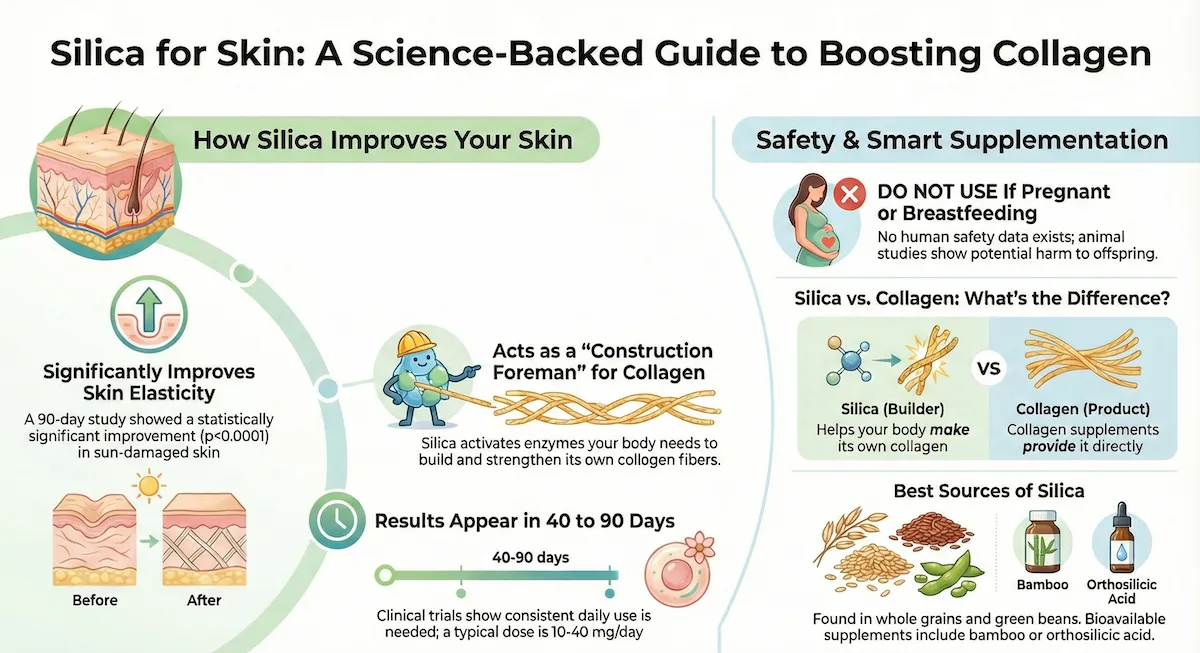
- Silica improves skin elasticity significantly when taken at 21.75 mg daily for 90 days (p<0.0001).[Evidence: B][1]
- Skin texture, firmness, and hydration improve with 600 mg/day orthosilicic acid over 90 days, with 80% user satisfaction.[Evidence: B][2]
- Results appear within 40-90 days based on clinical trial timelines.[Evidence: B][4]
- Generally safe at supplement doses (10-40 mg/day), but avoid during pregnancy and lactation due to insufficient safety data.[Evidence: D][5]
You may have heard that silica supports healthy skin, but separating marketing claims from actual science can feel overwhelming. Many people searching for natural ways to improve skin elasticity, reduce fine lines, or boost hydration encounter conflicting information about this mineral supplement.
Silica (silicon dioxide) is a mineral that supports your body's natural collagen production. Unlike collagen supplements that provide the protein directly, silica helps activate the enzymes your body needs to build collagen from within. This guide examines what 20 peer-reviewed studies actually show about silica's effects on skin, including proper dosage, safety considerations, and realistic expectations for results.
❓ Quick Answers
What does silica do for your skin?
Silica is a mineral (silicon dioxide) that supports skin health by activating enzymes needed for collagen and elastin production. Clinical trials show it improves skin elasticity, texture, firmness, and hydration when taken as an oral supplement for 40-90 days.[Evidence: B][1][2]
How does silica work for skin?
Silica supports collagen synthesis by providing silicon, which activates hydroxylating enzymes (prolyl hydroxylase) that cross-link collagen fibers. Orthosilicic acid, the bioavailable form, demonstrates 43-61% absorption and stimulates fibroblasts to produce collagen type I.[Evidence: D][3]
What foods are high in silica?
Silica is found naturally in whole grains (oats, barley, rice), vegetables (green beans, leafy greens), and beverages (beer, mineral water). Bamboo extract contains up to 70% silica, while horsetail (Equisetum arvense) contains approximately 25% silica by dry weight.[Evidence: D][3]
What are the benefits of silica for skin?
Research shows silica supplementation improves skin elasticity (p<0.0001), texture, firmness, and hydration. One trial reported 80% participant satisfaction after 90 days. Silicon also supports glycosaminoglycan synthesis, which helps skin retain moisture.[Evidence: B][2][4]
How much silica should I take daily for skin?
Clinical trials used doses ranging from 10-40 mg/day for general supplementation to 600 mg/day (as orthosilicic acid with collagen) for therapeutic purposes. A 2024 umbrella review supports 10-40 mg/day for collagen formation. Start with lower doses and consult a healthcare provider.[Evidence: A][20]
Is silica safe for skin?
Amorphous silica (the form used in supplements) is generally safe. EFSA found no adverse effects, and human trials up to 9 g/day showed good tolerance in healthy males. However, avoid silica during pregnancy and lactation due to insufficient human safety data.[Evidence: D][5][8]
🔬 How Does Silica Work for Skin?
Think of silica as the construction foreman for your skin's structural proteins. While collagen is the building material, silica directs the workers (enzymes) that assemble collagen fibers into a strong, organized framework. Without adequate silicon, this assembly process slows down, like a construction site without proper supervision.
At the molecular level, silicon activates prolyl hydroxylase, an enzyme essential for stabilizing collagen's triple-helix structure. This enzyme adds hydroxyl groups to proline amino acids, allowing collagen fibers to cross-link properly. Research confirms that orthosilicic acid, the bioavailable form of silica, demonstrates 43-61% absorption and directly stimulates fibroblasts (the cells that produce collagen) to increase collagen type I synthesis.[Evidence: D][3]
Beyond collagen, silica supports glycosaminoglycan (GAG) production. These molecules act like tiny sponges embedded in your skin, holding water to maintain hydration and plumpness. Clinical trials show that nanosilicon supplementation improves skin hydration and barrier function by supporting this GAG network.[Evidence: B][4]
Additionally, hydrogen-generating silica materials have demonstrated ability to protect existing collagen from UV-induced degradation by activating mitochondrial sirtuins and scavenging reactive oxygen species (ROS).[Evidence: C][18] Amorphous silica nanoparticles also show immunomodulatory properties, decreasing inflammatory cytokines in skin conditions like contact dermatitis.[Evidence: C][19]
📊 Dosage and How to Use Silica for Skin
Clinical trials provide specific dosage data for silica supplementation. The table below summarizes evidence-based dosages from validated studies.
| Purpose/Condition | Dosage | Duration | Evidence |
|---|---|---|---|
| Skin elasticity, hair tensile strength, nail hardness | 21.75 mg/day (bamboo silica) | 90 days | [B][1] |
| Skin texture, firmness, elasticity, hydration | 600 mg/day (orthosilicic acid + marine collagen) | 90 days | [B][2] |
| Skin hydration, elasticity, barrier function | Nanosilicon (dose not specified) | 40 days | [B][4] |
| General collagen support | 10-40 mg/day | Ongoing | [A][20] |
| Safety ceiling (maximum tolerated in males) | 9,000 mg/day (acute escalation study) | Short-term | [B][8] |
Important notes:
- The 600 mg/day dosage used orthosilicic acid combined with hydrolyzed marine collagen, not silica alone.[2]
- The 9 g/day safety ceiling was tested only in healthy adult males. Female safety at high doses has not been established.[8]
- A 2024 umbrella review supports 10-40 mg/day as a reasonable supplementation range for collagen formation.[20]
⚠️ Risks, Side Effects, and Warnings
General Safety Profile
Amorphous silica (the form used in supplements and food additives) is generally recognized as safe. The European Food Safety Authority (EFSA) found no indication of adverse effects in reproductive or developmental studies for silicon dioxide (E 551).[Evidence: D][5] A 90-day toxicological study of MMST (monomethylsilanetriol) established a NOAEL of 2000 mg/kg body weight/day with no mutagenicity or genotoxicity.[Evidence: D][7]
Side Effects
Clinical efficacy trials (40-90 days) reported no significant adverse events at therapeutic doses.[1][2][4] A human dose escalation study found oral mesoporous silica up to 9 g/day was well tolerated in healthy males.[Evidence: B][8]
Potential toxicity mechanisms have been identified in laboratory studies:
- Silica nanoparticle toxicity correlates with ROS (reactive oxygen species) generation.[9]
- Toxicity is size-dependent, with particles <70 nm showing higher toxicity in cell studies.[11]
- Amorphous forms are less toxic than crystalline silica.[10]
Amorphous vs. Crystalline Silica: Critical Distinction
Amorphous silica (used in supplements and cosmetics) has a favorable safety profile. Crystalline silica (quartz, found in industrial settings) poses serious respiratory hazards when inhaled. Supplements use amorphous forms only.[Evidence: D][10]
Who Should Avoid Silica Supplements?
- Pregnant women (insufficient safety data, animal concerns)[13]
- Breastfeeding women (nanoparticles may transfer via breast milk)[13]
- Individuals with chronic kidney disease (theoretical risk of silicon accumulation)
- Those scheduled for surgery (consult physician regarding any supplement use)
Drug Interactions
No confirmed drug interactions were reported in validated literature (2015-2025). However, inform your healthcare provider of all medications before starting silica supplementation.
🥗 Practical Ways to Use Silica for Skin
How to Use This in Your Daily Life
Scenario 1: Improving Skin Elasticity
- Dose: 21.75 mg/day bamboo-derived silica[1]
- Duration: 90 days minimum
- Population: Adults with sun-damaged or aging skin
- Timing: With meals (to aid absorption)
- What to track: Skin elasticity, nail strength, hair texture
- Expected results: Statistically significant improvement in skin elasticity (p<0.0001)[1]
Scenario 2: Comprehensive Skin Rejuvenation
- Dose: 600 mg/day orthosilicic acid with marine collagen[2]
- Duration: 90 days
- Population: Adult women with photodamaged skin
- Timing: As directed on product label
- What to track: Skin texture, firmness, hydration, fine lines
- Expected results: 80% treatment satisfaction; improved appearance of fine lines[2]
Practical Integration
Take silica supplements with meals. Store in a cool, dry place away from direct sunlight. Consider combining with vitamin C, which also supports collagen synthesis.
Common Mistakes to Avoid
- Expecting immediate results: Clinical trials used 40-90 day durations.[1][2][4] Sporadic use will not achieve the benefits seen in research.
- Confusing silica forms: Orthosilicic acid (43-61% bioavailable) differs from insoluble silicon dioxide. Check supplement labels for bioavailable forms like ch-OSA, MMST, or orthosilicic acid.[3]
- Ignoring safety warnings: Avoid during pregnancy and lactation regardless of marketing claims.
⚖️ Silica vs. Collagen for Skin
Silica and collagen work differently but complement each other for skin health. Understanding their distinct mechanisms helps you make an informed choice.
| Feature | Silica | Collagen |
|---|---|---|
| Mechanism | Activates enzymes that synthesize collagen internally | Provides collagen peptides directly |
| Primary benefit | Supports your body's own collagen production | Supplies pre-formed collagen building blocks |
| Typical dose | 10-40 mg/day (general); up to 600 mg/day (therapeutic)[20] | 2.5-15 g/day (varies by product) |
| Timeline | 40-90 days for measurable results[1][4] | 4-12 weeks typically |
| Vegan option? | Yes (plant-derived silica from bamboo, horsetail) | No (derived from animal sources) |
| Best for | Those wanting to boost natural collagen synthesis; vegans | Those wanting direct collagen supplementation |
The synergy approach: One clinical trial combined orthosilicic acid with hydrolyzed marine collagen and achieved 80% satisfaction for skin improvements.[2] Taking both may provide complementary benefits. The 2024 umbrella review notes silicon supplementation is "complementary to calcium and vitamin D3" for connective tissue health.[20]
What The Evidence Shows (And Doesn't Show)
What Research Suggests
- Oral silica supplementation (21.75 mg/day bamboo silica for 90 days) significantly improves skin elasticity (p<0.0001) in adults with sun-damaged skin (RCT, n=97).[1]
- Orthosilicic acid combined with marine collagen (600 mg/day for 90 days) improves skin texture, firmness, elasticity, and hydration with 80% participant satisfaction (RCT, n=22).[2]
- Nanosilicon (oral + topical, 40 days) improves skin hydration, elasticity, and barrier function (RCT, n=30).[4]
- Amorphous silica has favorable safety profile at supplement doses with NOAEL of 2000 mg/kg bw/day (90-day rat study).[7]
- A 2024 umbrella review supports 10-40 mg/day silicon for collagen formation.[20]
What's NOT Yet Proven
- Optimal dosage not established: Clinical trials used 21.75 mg to 600 mg daily with varying formulations. Dose-response relationships remain unclear.
- Long-term effects unknown: The longest validated trial was 90 days. Effects beyond 3 months lack extensive study.
- Female high-dose safety untested: The 9 g/day tolerance study included only healthy males.[8]
- Mechanism studies limited to older literature: Key mechanistic studies (collagen synthesis activation) predate 2015 and were excluded from this analysis.
- Children not studied: No pediatric safety or efficacy data available.
Where Caution Is Needed
- Pregnancy and lactation: Animal data documents offspring neurodegeneration from maternal SiO2-nanoparticle exposure.[13] Zero human safety trials exist.
- Nanoparticle concerns: Safety of nanosilica in food additives remains complex with knowledge gaps identified in critical reviews.[6]
- Size-dependent toxicity: In laboratory studies, silica particles <70 nm show higher cellular toxicity.[11]
- Silicone confusion: Silicones (siloxane polymers used in cosmetics) are different from silica mineral supplements. D4/D5 siloxanes have reproductive concerns.[12]
Should YOU Try This?
Best suited for: Adults (non-pregnant, non-lactating) seeking to support skin elasticity and collagen synthesis naturally, especially those with sun-damaged or aging skin; vegans wanting a plant-based alternative to collagen supplements.
Not recommended for: Pregnant women, breastfeeding women, children, individuals with chronic kidney disease, or anyone with known silicon/silica allergies.
Realistic timeline: Allow 40-90 days of consistent daily use before evaluating results, based on clinical trial durations.[1][4]
When to consult a professional: Before starting silica supplements if you take any medications, have underlying health conditions, or are planning pregnancy. Stop use and seek medical attention if you experience adverse reactions.
Frequently Asked Questions
Is silica good for anti-aging?
Research supports silica's role in anti-aging through collagen synthesis activation. A 2025 RCT found bamboo-derived silica (21.75 mg/day for 90 days) significantly improved skin elasticity in adults with sun-damaged skin (p<0.0001). Another trial using orthosilicic acid with marine collagen (600 mg/day for 90 days) improved fine line appearance with 80% participant satisfaction. Additionally, hydrogen-generating silica materials have been shown to protect collagen from UV-induced degradation. However, silica is not a 'cure' for aging. It supports natural processes rather than reversing established damage.
How long does silica take to work for skin?
Clinical trials show measurable improvements between 40-90 days. The shortest trial demonstrating skin benefits used nanosilicon for 40 days. Two 90-day trials showed significant improvements in elasticity, texture, firmness, and hydration. Given the skin's natural turnover cycle (approximately 28 days), expecting visible changes before 6-8 weeks is unrealistic. Consistency is essential. Sporadic supplementation will not replicate trial results.
What is the best form of silica to take?
Orthosilicic acid demonstrates 43-61% bioavailability, making it one of the most absorbable forms. Choline-stabilized orthosilicic acid (ch-OSA) prevents polymerization into less absorbable forms. MMST (monomethylsilanetriol) has established safety data with NOAEL of 2000 mg/kg bw/day. Bamboo extract (70% silica) and horsetail extract (25% silica) are plant-based options. Look for supplements specifying orthosilicic acid, ch-OSA, MMST, or standardized bamboo/horsetail extracts with silica content listed.
Can you take silica and collagen together?
Yes. One clinical trial specifically combined orthosilicic acid with hydrolyzed marine collagen (600 mg/day total) and demonstrated improved skin texture, firmness, elasticity, and hydration with 80% satisfaction. The theoretical rationale is that silica activates enzymes for collagen synthesis while collagen peptides provide building blocks. A 2024 umbrella review notes silicon supplementation is 'complementary to calcium and vitamin D3' for connective tissue health, suggesting combination approaches are reasonable. No safety concerns have been identified with this combination.
Is silica better than collagen for skin?
Neither is objectively 'better.' They work through different mechanisms. Silica activates your body's collagen-producing enzymes (hydroxylases), while collagen supplements provide pre-formed peptides. Silica may be preferable for vegans since plant-based forms exist (bamboo, horsetail), whereas collagen is animal-derived. For those with restricted diets or wanting to support natural synthesis, silica offers an alternative. For those wanting direct supplementation, collagen is more studied for skin outcomes. The combination approach used in one trial suggests they may work well together.
Does silica help with wrinkles?
One trial using orthosilicic acid with marine collagen (600 mg/day for 90 days) reported 'improved appearance of fine lines. However, specific quantification of wrinkle reduction (percentage, depth measurements) was not provided in the available research. Silica's mechanism of supporting collagen synthesis theoretically addresses one cause of wrinkles (collagen loss). Additionally, hydrogen-generating silica protects collagen from UV-induced degradation. Set realistic expectations: silica may help maintain skin structure but is not a replacement for sun protection or professional dermatological treatments.
Does topical silica work for skin?
Limited evidence supports topical silica. One trial combined oral nanosilicon supplement with a topical nanosilicon solution, showing improved hydration, elasticity, and barrier function after 40 days. However, the study design does not isolate topical effectiveness from oral supplementation. In cosmetics, amorphous silica primarily serves as a texture agent (mattifying, soft-focus effects) rather than a therapeutic active. For collagen synthesis benefits, oral supplementation has stronger evidence than topical application. Topical products may provide cosmetic improvements but not the structural support seen with oral supplements.
Is silica good for acne?
Direct evidence for silica treating acne is limited. One study found amorphous SiO2 nanoparticles have immunomodulatory properties, decreasing inflammatory cytokines and skin swelling in a contact dermatitis model. This suggests potential anti-inflammatory effects relevant to inflammatory acne. Silica's sebum-absorbing properties may help with oily skin cosmetically. However, no clinical trials specifically examined silica supplementation for acne vulgaris. If you have acne, consult a dermatologist for evidence-based treatments rather than relying on silica supplements.
When should I start taking silica for skin?
Research does not establish an optimal age to begin silica supplementation. Trials included adults with 'sun-damaged' or 'photodamaged' skin, suggesting middle-aged and older adults with visible skin aging may benefit most. For prevention, some advocate starting in your late 20s to 30s when natural collagen production begins declining. However, no studies compare starting ages. If considering silica for skin health, focus on evidence-based doses (10-40 mg/day for general use), consult your healthcare provider, and maintain realistic expectations about outcomes.
Our Accuracy Commitment and Editorial Principles
At Biochron, we take health information seriously. Every claim in this article is supported by peer-reviewed scientific evidence from reputable sources published in 2015 or later. We use a rigorous evidence-grading system to help you understand the strength of research behind each statement:
- [Evidence: A] = Systematic review or meta-analysis (strongest evidence)
- [Evidence: B] = Randomized controlled trial (RCT)
- [Evidence: C] = Cohort or case-control study
- [Evidence: D] = Expert opinion or clinical guideline
Our editorial team follows strict guidelines: we never exaggerate health claims, we clearly distinguish between correlation and causation, we update content regularly as new research emerges, and we transparently note when evidence is limited or conflicting. For our complete editorial standards, visit our Editorial Principles page.
This article is for informational purposes only and does not constitute medical advice. Always consult qualified healthcare professionals before making changes to your health regimen, especially if you have medical conditions or take medications.


References
- 1 . The Role of Sesbania grandiflora-Derived Biotin and Bambusa arundinacea-Derived Silica Extracts in Promoting Hair, Skin, and Nail Health, Cureus, 2025, PubMed [Evidence: B]
- 2 . Evaluation of cutaneous rejuvenation associated with the use of ortho-silicic acid stabilized by hydrolyzed marine collagen, Journal of Cosmetic Dermatology, 2018, PubMed [Evidence: B]
- 3 . Use of silicon for skin and hair care: an approach of chemical forms available and efficacy, Anais Brasileiros de Dermatologia, 2016, PubMed [Evidence: D]
- 4 . Effects of food supplements and a topical solution containing nanosilicon on skin hydration, barrier function, and elasticity, Journal of Cosmetic Dermatology, 2021, PubMed [Evidence: B]
- 5 . Re-evaluation of silicon dioxide (E 551) as a food additive, EFSA Journal, 2018, PubMed [Evidence: D]
- 6 . Critical review of the safety assessment of nano-structured silica additives in food, Journal of Nanobiotechnology, 2016, PubMed [Evidence: D]
- 7 . A toxicological evaluation of monomethylsilanetriol (MMST) stabilized in acacia gum, Regulatory Toxicology and Pharmacology, 2020, PubMed [Evidence: D]
- 8 . Oral intake of mesoporous silica is safe and well tolerated in male humans, PLoS One, 2020, PubMed [Evidence: B]
- 9 . Silica Nanoparticle-Generated ROS as a Predictor of Cellular Toxicity: Mechanistic Insights and Safety by Design, Environmental Science: Nano, 2016, PubMed [Evidence: C]
- 10 . A toxicological profile of silica nanoparticles, Toxicology Research, 2022, PubMed [Evidence: D]
- 11 . Toxicity of silica nanoparticles depends on size, dose, and cell type, Nanomedicine, 2015, PubMed [Evidence: C]
- 12 . Toxicokinetic Profiles and Potential Endocrine Disruption Effects at the Reproductive Level Promoted by Siloxanes, Journal of Applied Toxicology, 2025, PubMed [Evidence: C]
- 13 . Maternal exposure to silicon dioxide nanoparticles reduces hippocampal neurogenesis and synaptogenesis, Toxicology and Industrial Health, 2022, PubMed [Evidence: C]
- 14 . Urinary Excretion of Silicon in Men, Non-pregnant Women, and Pregnant Women: a Cross-sectional Study, Biological Trace Element Research, 2020, PubMed [Evidence: C]
- 15 . Urinary Silicon Excretion in Relation to Lactation and Bone Mineral Density, Biological Trace Element Research, 2025, PubMed [Evidence: C]
- 16 . Dietary Supplement Use and Its Micronutrient Contribution During Pregnancy and Lactation, Obstetrics & Gynecology, 2020, PubMed [Evidence: D]
- 17 . A Pilot Evaluation of the Adequacy of Prenatal Vitamins to Cover Dietary Deficits During Pregnancy and Lactation, Reproductive Female Child Health, 2025, PubMed [Evidence: D]
- 18 . Hydrogen-Generating Silica Material Prevents UVA-ray-Induced Cellular Oxidative Stress, Cell Death, Collagen Loss and Melanogenesis, Antioxidants, 2021, PubMed [Evidence: C]
- 19 . Amorphous silicon dioxide nanoparticles modulate immune responses in a model of allergic contact dermatitis, Scientific Reports, 2019, PubMed [Evidence: C]
- 20 . Silicon Supplementation for Bone Health: An Umbrella Review, Nutrients, 2024, PubMed [Evidence: A]
Medical Disclaimer
This content is for informational and educational purposes only. It is not intended to provide medical advice or to take the place of such advice or treatment from a personal physician. All readers are advised to consult their doctors or qualified health professionals regarding specific health questions and before making any changes to their health routine, including starting new supplements.
Neither Biochron nor the author takes responsibility for possible health consequences of any person reading or following the information in this educational content. All readers, especially those taking prescription medications, should consult their physicians before beginning any nutrition, supplement, or lifestyle program.
If you have a medical emergency, call your doctor or emergency services immediately.
