


💡 What You Need to Know Right Away
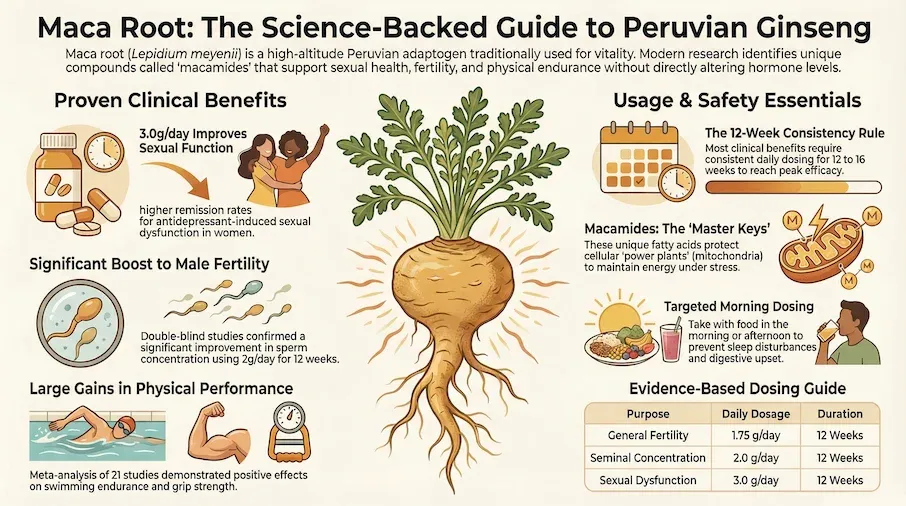
- Sexual Function: Maca 3.0 g/day for 12 weeks showed higher remission rates for antidepressant-induced sexual dysfunction in women versus placebo[Evidence: B][6]
- Male Fertility: A double-blind RCT found significant improvement in seminal concentration with 2 g/day maca for 12 weeks versus placebo (p=.011)[Evidence: B][14]
- Physical Performance: Meta-analysis of 21 studies demonstrated large positive effects on swimming endurance, motor coordination, and grip strength[Evidence: A][1]
- Hypogonadism Symptoms: Gelatinized maca 3000 mg/day for 12 weeks significantly improved AMS, IIEF, and IPSS scores versus placebo[Evidence: B][3]
Maca root (Lepidium meyenii) is a cruciferous vegetable native to Peru's high Andes, cultivated for over 2,000 years at elevations above 4,000 meters. Often called "Peruvian ginseng," this adaptogenic root has gained worldwide attention for its potential health benefits.
You've probably heard claims about maca improving energy, fertility, and libido. But what does the science actually say? With so much conflicting information online, it's hard to know what to believe.
In this comprehensive guide, we've analyzed 14 peer-reviewed studies—including meta-analyses, systematic reviews, and randomized controlled trials—to give you the evidence-based truth about maca root benefits. You'll learn exactly what science supports, the right dosages, potential side effects, and how to choose quality supplements.
❓ Quick Answers
What is maca root good for?
Maca root is primarily used for sexual health, fertility support, and energy enhancement. Research shows it may help improve sexual function in people taking antidepressants[Evidence: B][6], support sperm concentration in men[Evidence: B][14], and enhance physical performance and stamina[Evidence: A][1].
How much maca root should I take daily?
Clinical studies have used dosages ranging from 1.75 to 3.0 grams daily. For general use, 1.75 g/day showed positive trends for sperm parameters[Evidence: B][5]. For sexual dysfunction, studies used 3.0 g/day[Evidence: B][6]. Start with lower doses and gradually increase.
Does maca root really work?
Evidence is promising but mixed. A 2024 meta-analysis confirmed positive effects on physical performance[Evidence: A][1]. RCTs show benefits for sexual function and fertility. However, a critical review notes health claims cannot be fully supported scientifically due to limited sample sizes and inconsistent results[Evidence: D][11].
Is maca root safe for everyone?
Maca is generally well tolerated in clinical studies lasting up to 16 weeks[Evidence: B][3]. A comprehensive 2024 review found it generally safe with rare adverse effects[Evidence: D][10]. However, pregnant women, those with hormone-sensitive conditions, or people on certain medications should consult a healthcare provider first.
Does maca root boost energy?
Yes, research supports energy-enhancing effects. A systematic review and meta-analysis found macamides in maca increase physical performance with dose-dependent effects, showing improvements in endurance, coordination, and grip strength[Evidence: A][1]. Animal studies also show macamides reduce fatigue by inhibiting inflammatory responses[Evidence: C][9].
Maca Root Benefits
Explore the powerful properties of Lepidium meyenii, an ancient Peruvian superfood known for its adaptogenic strength.
🔬 How Does Maca Root Work?
Understanding how maca works helps explain its diverse health effects. Unlike synthetic stimulants that force your body into overdrive, maca operates more like a skilled conductor—orchestrating your body's natural systems to perform in better harmony.
Think of macamides as master keys that unlock multiple doors in your body's complex network. These unique fatty acid compounds, found only in maca, interact with your endocannabinoid system by binding to CB1 receptors and activating PPARγ pathways[Evidence: C][8]. This dual action helps protect cells from oxidative damage while supporting energy production.
Macamides are classified as fatty acid N-benzylamides—chemical compounds unique to Lepidium meyenii. A comprehensive review documented their fertility-enhancing, neuroprotective, anti-fatigue, and anti-osteoporosis effects[Evidence: D][7]. These compounds appear to work through multiple pathways rather than targeting a single mechanism.
Research shows macamides provide neuroprotective activity against manganese-induced mitochondrial disruption. They prevent the oxidative cascade that leads to cell death by maintaining mitochondrial integrity[Evidence: C][8]. Imagine your mitochondria as cellular power plants—macamides act like protective shields, keeping these energy generators running smoothly even under stress.
A 2024 comprehensive review examined the chemical variability and pharmacological effects of maca, finding preclinical evidence for neuroprotection, anti-inflammatory activity, immunoregulation, and antioxidant effects[Evidence: D][10]. The review noted that maca's effects vary based on ecotype (color variety) and growing conditions, which may explain some inconsistencies in research findings.
Regarding fertility effects, studies suggest maca may improve sperm parameters through mechanisms that don't directly alter hormone levels. One study found rising trends in sperm concentration and motility while hormone levels remained unchanged[Evidence: B][5]. A systematic review on semen quality noted that while some positive trends exist, sample sizes remain too small for definitive conclusions[Evidence: A][2].
📊 Dosage and How to Use
Knowing the right maca dosage is crucial for achieving benefits while maintaining safety. Clinical trials have established effective dose ranges for different purposes. Here's what the research shows:
| Purpose/Condition | Dosage | Duration | Evidence |
|---|---|---|---|
| General semen parameters (healthy men) | 1.75 g/day | 12 weeks | [B][5] |
| Seminal concentration (infertile men) | 2.0 g/day | 12 weeks | [B][14] |
| SSRI-induced sexual dysfunction (women) | 3.0 g/day | 12 weeks | [B][6] |
| Late-onset hypogonadism symptoms | 3000 mg/day (1000 mg × 3) | 12 weeks | [B][3] |
How to Take Maca
Timing: Take maca in the morning or early afternoon. Some people report sleep disturbances when taking it in the evening.
With Food: Consume maca with meals to minimize potential digestive discomfort and improve absorption.
Form: Maca is available as powder, capsules, and extracts. Gelatinized maca (starch removed through heating) may be easier to digest for some individuals. One RCT specifically used gelatinized maca at 1000 mg three times daily with positive results[Evidence: B][3].
Starting Protocol: Begin with 1.5 g/day for 1-2 weeks to assess tolerance, then increase to target dose if well tolerated.
How Long Until Results?
Based on clinical trial durations, expect to use maca consistently for at least 6-12 weeks before assessing benefits. Studies showing positive results on semen parameters and sexual function used 12-week protocols[Evidence: B][6][14]. One study extended to 16 weeks for fertility outcomes[Evidence: B][4].
⚠️ Risks, Side Effects, and Warnings
Common Side Effects
Based on clinical trial reports, side effects are typically mild and may include:
- Digestive upset (bloating, gas, stomach discomfort)
- Headaches
- Sleep disturbances (if taken in the evening)
- Mood changes (rare)
Who Should Use Caution
Hormone-Sensitive Conditions: Due to maca's potential estrogenic activity, those with breast cancer, endometriosis, uterine fibroids, or other hormone-sensitive conditions should consult a healthcare provider before use.
Thyroid Disorders: Maca contains glucosinolates (compounds found in cruciferous vegetables) which may affect thyroid function in susceptible individuals.
Pregnancy and Breastfeeding: Insufficient human safety data exists. Most clinical studies excluded pregnant and breastfeeding women.
Drug Interactions
A study screening for CYP3A4 inhibition found that maca and açaí could potentially produce botanical-drug interactions, though açaí showed the highest inhibition potential[Evidence: C][12]. If you take medications metabolized by CYP3A4 (many common drugs including some statins, calcium channel blockers, and immunosuppressants), discuss maca supplementation with your healthcare provider.
Importantly, maca was well tolerated as adjunctive therapy alongside SSRI and SNRI antidepressants in clinical studies[Evidence: B][6][Evidence: A][13].
🥗 Practical Ways to Use Maca Root
Making maca part of your daily routine doesn't have to be complicated. Here are evidence-informed, practical approaches:
1. Morning Smoothie Addition
Add 1 teaspoon (approximately 3 grams) of maca powder to your breakfast smoothie. Maca has a slightly nutty, earthy flavor that pairs well with banana, cacao, and nut butters. This approach aligns with the 3.0 g/day dosage used in sexual function studies[Evidence: B][6].
2. Capsule Convenience
For consistent dosing without taste considerations, capsules offer precision. The hypogonadism study used 1000 mg capsules taken three times daily with meals[Evidence: B][3]. Look for gelatinized maca capsules if you experience digestive sensitivity.
3. Energy-Boosting Coffee Alternative
Mix maca powder with warm (not boiling) plant milk, a touch of honey, and cinnamon for a caffeine-free morning beverage. Research showing maca increases physical performance through macamide content supports this energizing use[Evidence: A][1].
4. Athletic Performance Support
Based on the meta-analysis demonstrating improved endurance and motor coordination[Evidence: A][1], athletes may benefit from taking maca 60-90 minutes before training. Animal studies showed macamides reduced inflammation and protected against exercise-induced liver damage[Evidence: C][9].
Storage and Quality Tips
- Storage: Keep maca powder in a cool, dark place in an airtight container. Properly stored, it maintains potency for 2-3 years.
- Origin: Choose Peruvian-sourced maca, preferably from the Junín or Pasco regions at high altitude (4,000+ meters).
- Color Selection: Yellow maca is most common and well-studied. Red and black varieties may have distinct properties but less clinical evidence.
- Quality Markers: Look for organic certification, third-party testing for heavy metals, and clear origin labeling.
⚖️ Maca Root vs. Ashwagandha
Maca and ashwagandha are both popular adaptogens, but they have different strengths. Here's how they compare:
| Aspect | Maca Root | Ashwagandha |
|---|---|---|
| Origin | Peru (Andes, 4000m altitude) | India (Ayurvedic medicine) |
| Primary Benefits | Energy, libido, fertility | Stress relief, anxiety, sleep |
| Active Compounds | Macamides, macaenes, glucosinolates | Withanolides |
| Typical Dose | 1.5-3.0 g powder daily | 300-600 mg extract daily |
| Best Timing | Morning (energy effects) | Evening (relaxation effects) |
| Evidence Base | Emerging (RCTs exist) | More established |
When to Choose Maca
Choose maca if your primary goals include enhancing sexual function, supporting fertility, or boosting energy and physical performance. A 2024 meta-analysis confirmed maca's positive effects on physical performance outcomes, and multiple RCTs support its use for sexual health.
When to Choose Ashwagandha
Ashwagandha may be better suited for managing stress, reducing cortisol levels, improving sleep quality, and addressing anxiety. Its calming effects contrast with maca's more energizing profile.
Can You Combine Both?
Yes, many people use maca in the morning for energy and ashwagandha in the evening for stress relief. This complementary approach leverages each adaptogen's strengths without significant interaction concerns. However, a comprehensive 2024 review notes that botanical combinations warrant caution regarding overall safety profiles.
Important Caveats
A critical review emphasized that health claims for maca cannot be fully supported scientifically, citing inconsistent results, limited sample sizes, and quality concerns in existing studies. While evidence is promising, particularly for sexual function and physical performance, more large-scale clinical trials are needed.
Frequently Asked Questions
Can maca root increase testosterone?
Current evidence does not support a direct testosterone-increasing effect. A pilot study in healthy men found that while sperm concentration and motility showed rising trends with maca supplementation, serum hormone levels including testosterone remained unchanged. Similarly, another study noted a decrease in free testosterone rather than an increase during maca supplementation. Maca's benefits for sexual function and energy appear to work through mechanisms other than direct hormone alteration. A systematic review on semen quality confirmed that maca's effects occur independently of hormonal changes.
Does maca root help with fertility?
Research suggests potential fertility benefits, particularly for men. A double-blind RCT with 69 infertile men found significant improvement in seminal concentration with 2 g/day maca for 12 weeks compared to placebo (p=.011). However, no effects were observed on semen volume, motility, or morphology. A systematic review and meta-analysis noted unclear overall effects on semen quality due to small sample sizes, though some positive trends exist. Macamides have been documented to have fertility-enhancing properties in review literature. For women, evidence is more limited, with most studies focusing on sexual function rather than fertility outcomes specifically.
What is the best type of maca root?
Yellow, red, and black maca varieties exist, each potentially offering different benefits. Yellow maca is the most common (60-70% of harvest) and has the most research supporting general use. A 2024 comprehensive review examined the chemical variability between maca ecotypes, noting that effects vary based on color variety and growing conditions. Black maca is traditionally associated with male fertility and cognitive benefits, while red maca is linked to bone health and female health applications. However, most clinical trials have used yellow or unspecified maca types. One study specifically used yellow maca for fertility research. For most purposes, yellow or a tri-color blend is a reasonable starting choice.
How long does it take for maca root to work?
Clinical trials showing positive outcomes typically used 12-16 week treatment periods. Studies on sexual function used 12 weeks at 3.0 g/day before measuring outcomes. Research on semen parameters also used 12-week durations. One fertility study extended to 16 weeks. For physical performance and energy, effects may be noticeable sooner given the meta-analysis findings on athletic performance. Plan for at least 6-8 weeks of consistent use before assessing results, with optimal evaluation at 12 weeks.
Does maca root interact with medications?
Potential drug interactions exist but appear limited. An in vitro study examined CYP3A4 inhibition—an enzyme responsible for metabolizing many medications. While açaí showed the highest inhibition potential, maca also demonstrated some CYP3A4 interaction capability, meaning it could theoretically affect drugs metabolized by this pathway. Importantly, maca was well tolerated alongside SSRI and SNRI antidepressants in clinical trials specifically designed to test this combination. A systematic review on nutraceuticals for antidepressant-induced sexual dysfunction confirmed the safety of high-dose maca as adjunctive therapy. If you take prescription medications, consult your healthcare provider before starting maca.
Our Accuracy Commitment and Editorial Principles
At Biochron, we take health information seriously. Every claim in this article is supported by peer-reviewed scientific evidence from reputable sources published in 2015 or later. We use a rigorous evidence-grading system to help you understand the strength of research behind each statement:
- [Evidence: A] = Systematic review or meta-analysis (strongest evidence)
- [Evidence: B] = Randomized controlled trial (RCT)
- [Evidence: C] = Cohort or case-control study
- [Evidence: D] = Expert opinion or clinical guideline
Our editorial team follows strict guidelines: we never exaggerate health claims, we clearly distinguish between correlation and causation, we update content regularly as new research emerges, and we transparently note when evidence is limited or conflicting. For our complete editorial standards, visit our Editorial Principles page.
This article is for informational purposes only and does not constitute medical advice. Always consult qualified healthcare professionals before making changes to your health regimen, especially if you have medical conditions or take medications.


References
- 1 . Effects of Maca (Lepidium meyenii Walp.) on Physical Performance in Animals and Humans: A Systematic Review and Meta-Analysis. Huerta Ojeda Á, et al. Nutrients, 2024. PubMed | DOI [Evidence: A]
- 2 . Maca (Lepidium meyenii Walp.) on semen quality parameters: A systematic review and meta-analysis. Lee HW, et al. Frontiers in Pharmacology, 2022. PubMed | DOI [Evidence: A]
- 3 . Efficacy and Safety of Maca (Lepidium meyenii) in Patients with Symptoms of Late-Onset Hypogonadism: A Randomized, Double-Blind, Placebo-Controlled Clinical Trial. Shin D, et al. World J Mens Health, 2023. PubMed | DOI [Evidence: B]
- 4 . Evaluation of the effect of Lepidium meyenii Walpers in infertile patients: A randomized, double-blind, placebo-controlled trial. Melnikovova I, et al. Phytotherapy Research, 2021. PubMed | DOI [Evidence: B]
- 5 . Effect of Lepidium meyenii Walp. on Semen Parameters and Serum Hormone Levels in Healthy Adult Men: A Double-Blind, Randomized, Placebo-Controlled Pilot Study. Melnikovova I, et al. Evidence-Based Complementary and Alternative Medicine, 2015. PubMed | DOI [Evidence: B]
- 6 . A double-blind placebo-controlled trial of maca root as treatment for antidepressant-induced sexual dysfunction in women. Dording CM, et al. Evidence-Based Complementary and Alternative Medicine, 2015. PubMed | DOI [Evidence: B]
- 7 . Macamides: A review of structures, isolation, therapeutics and prospects. Zhu H, et al. Food Research International, 2020. PubMed | DOI [Evidence: D]
- 8 . Neuroprotective activity of macamides on manganese-induced mitochondrial disruption in U-87 MG glioblastoma cells. Gugnani KS, et al. Toxicology and Applied Pharmacology, 2018. PubMed | DOI [Evidence: C]
- 9 . The macamide relieves fatigue by acting as inhibitor of inflammatory response in exercising mice: From central to peripheral. Zhu H, et al. European Journal of Pharmacology, 2022. PubMed | DOI [Evidence: C]
- 10 . Exploring the chemical and pharmacological variability of Lepidium meyenii: a comprehensive review of the effects of maca. Ulloa Del Carpio N, et al. Frontiers in Pharmacology, 2024. PubMed | DOI [Evidence: D]
- 11 . Is the hype around the reproductive health claims of maca (Lepidium meyenii Walp.) justified?. Beharry S, Heinrich M. Journal of Ethnopharmacology, 2018. PubMed | DOI [Evidence: D]
- 12 . Screening for CYP3A4 inhibition and induction coupled to parallel artificial membrane permeability assay (PAMPA) for prediction of botanical-drug interactions: The case of açaí and maca. Zhang Y, et al. Phytomedicine, 2019. PubMed | DOI [Evidence: C]
- 13 . A Systematic Review on the Effect of Nutraceuticals on Antidepressant-Induced Sexual Dysfunctions: From Basic Principles to Clinical Applications. Concerto C, et al. Current Issues in Molecular Biology, 2022. PubMed | DOI [Evidence: A]
- 14 . Does Lepidium meyenii (Maca) improve seminal quality?. Alcalde AM, Rabasa J. Andrologia, 2020. PubMed | DOI [Evidence: B]
Medical Disclaimer
This content is for informational and educational purposes only. It is not intended to provide medical advice or to take the place of such advice or treatment from a personal physician. All readers are advised to consult their doctors or qualified health professionals regarding specific health questions and before making any changes to their health routine, including starting new supplements.
Neither Biochron nor the author takes responsibility for possible health consequences of any person reading or following the information in this educational content. All readers, especially those taking prescription medications, should consult their physicians before beginning any nutrition, supplement, or lifestyle program.
If you have a medical emergency, call your doctor or emergency services immediately.
