


💡 What You Need to Know Right Away
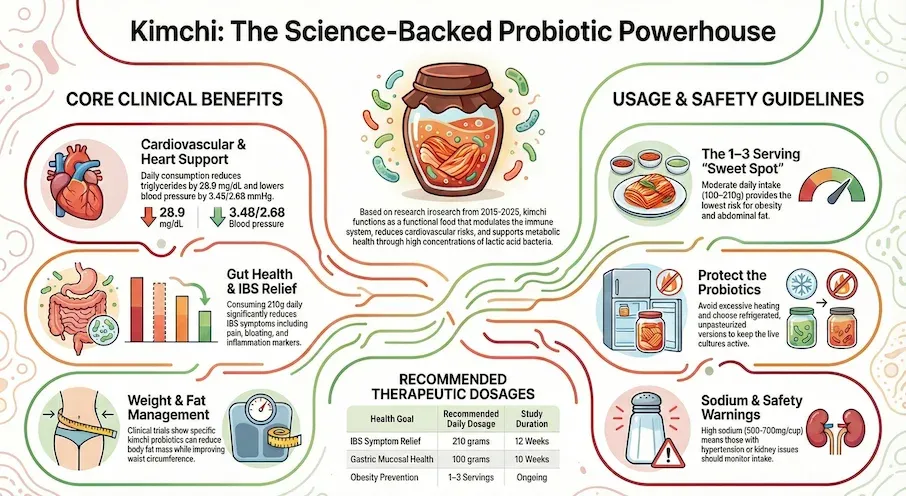
- Heart health boost: A 2025 meta-analysis of 5 intervention studies found kimchi consumption reduced triglycerides by 28.9 mg/dL and lowered blood pressure by 3.48/2.68 mmHg.[Evidence: A][1]
- Immune system enhancement: Single-cell RNA sequencing revealed kimchi enhances antigen-presenting cell function and accelerates CD4+ T cell differentiation toward protective phenotypes.[Evidence: B][2]
- Weight management support: A 12-week randomized controlled trial showed Lactobacillus sakei from kimchi reduced body fat mass by 0.2 kg compared to a 0.6 kg gain in the placebo group.[Evidence: B][3]
- Digestive symptom relief: Consuming 210g of kimchi daily for 12 weeks significantly improved IBS symptoms including pain, bloating, and defecation patterns while reducing TNF-α inflammation markers.[Evidence: B][4]
Have you noticed kimchi appearing everywhere—from restaurant menus to health food aisles? This spicy, tangy Korean fermented vegetable isn't just a culinary trend. Scientists are discovering that this centuries-old food may hold remarkable benefits for your gut, immune system, and metabolic health.
If you've been curious about whether kimchi lives up to the hype, you're not alone. With the global kimchi market reaching $4.19 billion in 2024 and growing at 5.9% annually, millions are turning to this probiotic-rich food for its potential health effects.
In this comprehensive guide, we've analyzed 13 peer-reviewed studies published between 2015-2025 to bring you the most current, evidence-based understanding of kimchi benefits. You'll discover exactly how kimchi affects your body, how much to eat, potential risks, and practical ways to incorporate it into your daily routine. Whether you're a fermented food enthusiast or just getting started, this guide gives you the science-backed answers you need.
❓ Quick Answers
What are the benefits of eating kimchi?
Kimchi provides multiple health benefits backed by research. A 2025 meta-analysis found it reduces fasting blood glucose, triglycerides (-28.9 mg/dL), and blood pressure (-3.48/-2.68 mmHg).[Evidence: A][1] It also supports immune function, aids weight management, and improves digestive symptoms through its probiotic content.
Is it OK to eat kimchi every day?
Yes, daily kimchi consumption appears safe and beneficial for most people. Research indicates that 1-3 servings per day is associated with lower obesity risk in men, with baechu kimchi showing 10% lower obesity odds.[Evidence: C][12] However, a J-shaped association suggests consuming more than 5 servings daily may reduce benefits.
Does kimchi have probiotics?
Yes, kimchi contains abundant probiotics. Lactic acid bacteria (LAB) in kimchi reach concentrations of 9-10 log CFU/g, which is comparable to commercial probiotic supplements.[Evidence: D][10] The dominant probiotic genera include Leuconostoc, Weissella, and Lactobacillus, each contributing antioxidant and anti-inflammatory properties.
Is kimchi good for your gut?
Research strongly supports kimchi's gut health benefits. A 12-week randomized controlled trial found that consuming 210g of kimchi daily improved IBS symptoms including pain, bloating, and defecation patterns.[Evidence: B][4] The treatment also increased beneficial Bifidobacterium while reducing harmful fecal enzymes.
Does kimchi boost the immune system?
Yes, recent breakthrough research confirms kimchi's immune-modulating effects. A 2025 study using single-cell RNA sequencing found that 12 weeks of kimchi consumption enhanced antigen-presenting cell function, increased antigen uptake, and upregulated MHC class II expression.[Evidence: B][2] This accelerated CD4+ T cell differentiation toward both effector and regulatory phenotypes.
Kimchi
Discover the science-backed health benefits of Korea's most famous fermented delicacy. A spicy, crunchy, and nutrient-dense addition to your daily life.
🔬 How Does Kimchi Work in Your Body?
Understanding how kimchi delivers its health benefits requires looking at two key mechanisms: its probiotic bacteria and its bioactive compounds.
The Probiotic Powerhouse
Think of the lactic acid bacteria in kimchi as a team of skilled maintenance workers for your gut. Just like maintenance crews keep a building running smoothly—fixing problems, cleaning up waste, and ensuring all systems function properly—these beneficial bacteria maintain your intestinal health by crowding out harmful microbes and supporting your gut barrier.
During fermentation, kimchi develops high concentrations of beneficial bacteria, reaching 9-10 log CFU/g (colony-forming units per gram).[Evidence: D][10] The primary probiotic species include Lactobacillus plantarum, Lactobacillus sakei, Leuconostoc mesenteroides, and Weissella species. Research has identified at least 5 distinct LAB strains from kimchi that activate vitamin D receptor-autophagy pathways, enhancing cellular defense mechanisms and increasing ATG16L1 expression.[Evidence: C][9]
Anti-Inflammatory Mechanisms
Lactobacillus plantarum isolated from kimchi acts like a skilled diplomat in your immune system, calming overactive inflammatory responses. Laboratory research demonstrates this strain increases interleukin-10 (IL-10) secretion by antigen-presenting cells, which diminishes STAT5 phosphorylation in Th2 cells and modulates allergic-type immune responses.[Evidence: C][6]
Cardiovascular Protection
Kimchi's anti-atherosclerotic effects operate through multiple pathways. A review of the mechanisms found that bioactive compounds including 3-(4'-hydroxyl-3',5'-dimethoxyphenyl)propionic acid increase nitric oxide (NO) production while decreasing reactive oxygen species (ROS).[Evidence: D][5] This dual action supports blood vessel health and reduces oxidative stress.
Metabolic Effects
The metabolic benefits of kimchi appear stronger with fermentation. An 8-week randomized controlled trial comparing fresh versus fermented kimchi in obese women found that fermented kimchi produced superior improvements in blood pressure, body fat, glucose, and cholesterol levels.[Evidence: B][11] The fermentation process generates additional bioactive metabolites that fresh vegetables lack.
Gut-Immune Connection
Perhaps most remarkably, kimchi influences immune function through gut microbiota changes. A 10-week clinical trial demonstrated that fermented kimchi consumption altered fecal microbiota composition, increasing Akkermansia muciniphila and Bifidobacterium populations while regulating colon adenoma formation.[Evidence: C][7]
📊 Dosage and How to Use Kimchi
Determining the right amount of kimchi depends on your health goals. Research provides clear guidance on effective doses tested in clinical studies.
Research-Backed Dosages
| Purpose/Condition | Dosage | Duration | Evidence |
|---|---|---|---|
| IBS symptom relief | 210 g/day | 12 weeks | [B][4] |
| Body fat reduction (L. sakei) | 5×10⁹ CFU/day | 12 weeks | [B][3] |
| Gastric health/H. pylori | 100 g/day | 10 weeks | [C][13] |
| General health/obesity prevention | 1-3 servings/day | Ongoing | [C][12] |
Optimal Serving Range
A large cross-sectional analysis of 115,726 Korean adults found a J-shaped association between kimchi consumption and obesity. Consuming 1-3 servings per day was associated with the lowest obesity risk, with baechu (napa cabbage) kimchi showing 10% lower obesity odds and kkakdugi (radish kimchi) showing 8-11% lower abdominal obesity.[Evidence: C][12]
However, consuming more than 5 servings daily may reduce these benefits, suggesting a "sweet spot" of moderate consumption.
Fermented vs. Fresh
Research clearly favors fermented over fresh kimchi for metabolic benefits. In an 8-week randomized trial comparing both forms, fermented kimchi produced greater improvements in blood pressure, body fat percentage, fasting glucose, and cholesterol levels compared to fresh kimchi.[Evidence: B][11]
Practical Serving Sizes
- One serving: Approximately 80-100g (about ½ cup)
- Recommended daily intake: 100-210g (½ to 1 cup)
- Maximum studied dose: 210g per day in clinical trials
When to Eat Kimchi
While no studies specifically address optimal timing, traditional Korean meals incorporate kimchi throughout the day. For digestive benefits, consuming kimchi with meals may help support digestion. If you're new to fermented foods, start with smaller amounts (50g) and gradually increase to allow your gut microbiome to adjust.
⚠️ Risks, Side Effects, and Warnings
Who Should Limit or Avoid Kimchi
- People on sodium-restricted diets
- Those with histamine intolerance or mast cell disorders
- Individuals with severe immunocompromised conditions (consult physician)
- People following a low-FODMAP diet for IBS (high-FODMAP vegetables)
- Those taking blood thinners (consult physician about vitamin K content)
Drug Interaction Considerations
While no specific drug interactions were identified in the reviewed literature from 2015-2025, general precautions apply:
- Vitamin K: Kimchi contains vitamin K from cabbage, which may interact with anticoagulant medications like warfarin.
- MAO inhibitors: Fermented foods may contain tyramine, which can interact with monoamine oxidase inhibitors.
Important: Consult your healthcare provider before adding significant amounts of kimchi to your diet if you take prescription medications, are pregnant or breastfeeding, or have chronic health conditions.
Pregnancy Considerations
An integrative review of fermented food consumption during pregnancy found potential benefits including reduced atopic dermatitis risk in infants, reduced allergic proctocolitis, improved infant sleep duration, and increased birth weight.[Evidence: D][8] However, pregnant women should discuss fermented food consumption with their healthcare provider.
🥗 Practical Ways to Use Kimchi
Incorporating kimchi into your daily routine doesn't require dramatic changes to your eating habits. Here are evidence-informed strategies to maximize benefits.
1. Start Gradually
If you're new to fermented foods, begin with 50g (about ¼ cup) daily for the first week. This allows your gut microbiome to adjust without overwhelming digestive discomfort. Gradually increase to 100-210g over 2-3 weeks.
2. Choose Properly Fermented Kimchi
To receive probiotic benefits, select kimchi that:
- Is stored in the refrigerated section (not shelf-stable)
- Contains live cultures (check label or bubbling activity)
- Has NOT been pasteurized (heat destroys probiotics)
- Is fermented, not vinegar-pickled (different process)
3. Pair with Meals for Better Tolerance
Eating kimchi with other foods may improve digestibility and reduce potential digestive discomfort. Traditional Korean meals serve kimchi as a side dish (banchan) with rice and other foods, which may buffer its acidic nature.
4. Don't Heat Excessively
While kimchi can be added to cooked dishes like stews and fried rice, prolonged high heat kills probiotic bacteria. For maximum probiotic benefit, add kimchi at the end of cooking or serve it as a fresh side dish. Cooking does preserve fiber and some nutrients.
Easy Ways to Add Kimchi
- Breakfast: Top scrambled eggs or avocado toast with a small serving
- Lunch: Add to grain bowls, salads, or sandwiches
- Dinner: Serve as a traditional side dish with any protein and vegetables
- Snack: Eat directly from the jar (use clean utensils to prevent contamination)
Storage Tips
- Keep refrigerated at all times (below 4°C/39°F)
- Ensure kimchi stays submerged in its liquid to prevent mold
- Use clean utensils to avoid introducing harmful bacteria
- Properly stored kimchi lasts 3-6 months, developing deeper flavor over time
⚖️ Kimchi vs. Sauerkraut: Which Is Better?
Both kimchi and sauerkraut are fermented cabbage products with probiotic benefits, but they differ in key ways. Understanding these differences can help you choose based on your preferences and health goals.
| Feature | Kimchi | Sauerkraut |
|---|---|---|
| Main Ingredient | Napa cabbage (Brassica rapa), radish | Green cabbage (Brassica oleracea) |
| Additional Ingredients | Garlic, ginger, red pepper (gochugaru), scallions, fish sauce | Salt only (traditional) |
| Flavor Profile | Spicy, tangy, umami-rich, complex | Sour, tangy, simple |
| Probiotic Bacteria | Leuconostoc, Weissella, Lactobacillus (9-10 log CFU/g)[10] | Lactobacillus, Leuconostoc (similar levels) |
| Bioactive Compounds | Capsaicin, allicin, gingerol, higher total phenols | Sulforaphane precursors |
| Cardiovascular Research | Meta-analysis: BP reduction -3.48/-2.68 mmHg, TG -28.9 mg/dL[1] | Limited specific clinical research |
| Sodium Content | ~500-700mg per cup | ~900mg per cup (often higher) |
| Calorie Content | ~22-23 calories per cup | ~27 calories per cup |
Key Differences
Kimchi offers additional bioactive compounds from its spices that sauerkraut lacks. The capsaicin from red pepper, allicin from garlic, and gingerol from ginger each contribute their own health properties. Review evidence suggests kimchi's anti-atherosclerotic effects come partly from these additional compounds, particularly 3-(4'-hydroxyl-3',5'-dimethoxyphenyl)propionic acid which increases nitric oxide production.[Evidence: D][5]
The Verdict
Both fermented vegetables provide valuable probiotics and may support gut health. Choose kimchi if you enjoy bold flavors and want the additional benefits of its spice compounds. Choose sauerkraut if you prefer milder flavors or follow a nightshade-free diet. Including both in your diet provides the widest variety of beneficial bacteria and compounds.
Frequently Asked Questions
How much kimchi should you eat a day for optimal health?
Research suggests 1-3 servings (approximately 100-210g or ½ to 1 cup) daily provides the best health outcomes. A large cross-sectional study of 115,726 Korean adults found this range was associated with the lowest obesity risk, with baechu kimchi showing 10% lower obesity odds. Interestingly, consuming more than 5 servings per day showed a J-shaped association, suggesting diminishing benefits at very high intakes. For therapeutic purposes like IBS relief, clinical trials used 210g daily for 12 weeks with positive results. Start with smaller amounts if you're new to fermented foods and gradually increase.
Is kimchi good for weight loss and reducing body fat?
Evidence supports kimchi's role in weight management. A 12-week randomized controlled trial found that Lactobacillus sakei CJLS03, a probiotic strain derived from kimchi, reduced body fat mass by 0.2 kg while the placebo group gained 0.6 kg—a significant difference. The treatment group also showed waist circumference 0.8 cm smaller than placebo. Additionally, fermented kimchi outperformed fresh kimchi for body fat reduction in obese women over 8 weeks. Kimchi is also low in calories (22-23 per cup) while being filling due to its fiber content.
What are the potential side effects of eating kimchi?
Most people tolerate kimchi well, but some may experience: temporary bloating and gas when first introducing it (as gut bacteria adjust); headaches or flushing in those with histamine intolerance (fermented foods contain biogenic amines); increased sodium intake concerning for those with hypertension or heart conditions (500-700mg sodium per cup). An integrative review also notes caution for severely immunocompromised individuals regarding fermented food consumption. Starting with small amounts and gradually increasing allows your digestive system to adapt. Those on blood thinners should be aware of vitamin K content from cabbage.
Can kimchi help prevent or treat colon cancer?
Preliminary research is promising but not definitive. A 10-week clinical trial found that fermented kimchi consumption altered fecal microbiota composition in ways that regulated colon adenoma (precancerous polyp) formation and advancement. The treatment increased beneficial bacteria including Akkermansia muciniphila and Bifidobacterium, which are associated with improved gut barrier function. Additionally, Lactobacillus plantarum from kimchi has demonstrated anti-inflammatory mechanisms that may be relevant to cancer prevention by increasing IL-10 secretion. However, these are observational and mechanistic studies—large-scale cancer prevention trials have not been conducted.
Does kimchi help with H. pylori and gastric health?
A clinical trial specifically investigated kimchi's effects on H. pylori-associated chronic atrophic gastritis. Consuming 100g of kimchi daily for 10 weeks led to improved pepsinogen I/II ratios (a marker of gastric mucosal health) and decreased inflammation markers in volunteers with various gastric conditions. The microbiota changes associated with fermented kimchi intake appeared to contribute to either amelioration or rejuvenation of gastric tissue damaged by H. pylori. While promising, this research suggests supportive benefits rather than treatment—conventional H. pylori eradication therapy remains the standard of care.
Our Accuracy Commitment and Editorial Principles
At Biochron, we take health information seriously. Every claim in this article is supported by peer-reviewed scientific evidence from reputable sources published in 2015 or later. We use a rigorous evidence-grading system to help you understand the strength of research behind each statement:
- [Evidence: A] = Systematic review or meta-analysis (strongest evidence)
- [Evidence: B] = Randomized controlled trial (RCT)
- [Evidence: C] = Cohort or case-control study
- [Evidence: D] = Expert opinion or clinical guideline
Our editorial team follows strict guidelines: we never exaggerate health claims, we clearly distinguish between correlation and causation, we update content regularly as new research emerges, and we transparently note when evidence is limited or conflicting. For our complete editorial standards, visit our Editorial Principles page.
This article is for informational purposes only and does not constitute medical advice. Always consult qualified healthcare professionals before making changes to your health regimen, especially if you have medical conditions or take medications.


References
- 1 . Effects of Fermented Kimchi Consumption on Anthropometric and Blood Cardiometabolic Indicators: A Systematic Review and Meta-Analysis of Intervention Studies and Prospective Cohort Studies. Ahn S, Mofrad MD, Nosal BM, Chun OK, Joung H. Nutrition Reviews, 2025. PubMed | DOI [Evidence: A]
- 2 . Single-cell RNA sequencing reveals that kimchi dietary intervention modulates human antigen-presenting and CD4⁺ T cells. Lee W, Moon HR, Choi H, et al. NPJ Science of Food, 2025. PubMed | DOI [Evidence: B]
- 3 . Effect of Lactobacillus sakei, a Probiotic Derived from Kimchi, on Body Fat in Koreans with Obesity: A Randomized Controlled Study. Lim S, Moon JH, Shin CM, Jeong D, Kim B. Endocrinology and Metabolism, 2020. PubMed | DOI [Evidence: B]
- 4 . Kimchi improves irritable bowel syndrome: results of a randomized, double-blind placebo-controlled study. Kim HY, Park ES, Choi YS, et al. Food and Nutrition Research, 2022. PubMed | DOI [Evidence: B]
- 5 . Beneficial Effects of Kimchi, a Korean Fermented Vegetable Food, on Pathophysiological Factors Related to Atherosclerosis. Kim HJ, Noh JS, Song YO. Journal of Medical Food, 2018. PubMed | DOI [Evidence: D]
- 6 . Lactobacillus plantarum isolated from kimchi regulates inflammation by increasing interleukin-10 secretion by antigen-presenting cells, leading to diminishing of STAT5 phosphorylation in Th2 cells. Hyung KE, Yoo HK, Ham JE, et al. Journal of Food Science, 2024. PubMed | DOI [Evidence: C]
- 7 . Fecal microbiota changes with fermented kimchi intake regulated either formation or advancement of colon adenoma. Park JM, Lee WH, Seo H, et al. Journal of Clinical Biochemistry and Nutrition, 2021. PubMed | DOI [Evidence: C]
- 8 . The effects of fermented food consumption in pregnancy on neonatal and infant health: An integrative review. Coşkun Erçelik H, Kaya V. Journal of Pediatric Nursing, 2024. PubMed | DOI [Evidence: D]
- 9 . Lactic Acid Bacteria Isolated From Korean Kimchi Activate the Vitamin D Receptor-autophagy Signaling Pathways. Lu R, Shang M, Zhang YG, et al. Inflammatory Bowel Diseases, 2020. PubMed | DOI [Evidence: C]
- 10 . Does kimchi deserve the status of a probiotic food? Cha J, Kim YB, Park SE, et al. Critical Reviews in Food Science and Nutrition, 2024. PubMed | DOI [Evidence: D]
- 11 . Contrasting effects of fresh and fermented kimchi consumption on gut microbiota composition and gene expression related to metabolic syndrome in obese Korean women. Han K, Bose S, Wang JH, et al. Molecular Nutrition and Food Research, 2015. PubMed | DOI [Evidence: B]
- 12 . Association between kimchi consumption and obesity based on BMI and abdominal obesity in Korean adults: a cross-sectional analysis of the Health Examinees study. Jung H, Yun YR, Hong SW, Shin S. BMJ Open, 2024. PubMed | DOI [Evidence: C]
- 13 . Microbiota changes with fermented kimchi contributed to either the amelioration or rejuvenation of Helicobacter pylori-associated chronic atrophic gastritis. Park JM, Lee WH, Seo H, et al. Journal of Clinical Biochemistry and Nutrition, 2021. PubMed | DOI [Evidence: C]
Medical Disclaimer
This content is for informational and educational purposes only. It is not intended to provide medical advice or to take the place of such advice or treatment from a personal physician. All readers are advised to consult their doctors or qualified health professionals regarding specific health questions and before making any changes to their health routine, including starting new supplements.
Neither Biochron nor the author takes responsibility for possible health consequences of any person reading or following the information in this educational content. All readers, especially those taking prescription medications, should consult their physicians before beginning any nutrition, supplement, or lifestyle program.
If you have a medical emergency, call your doctor or emergency services immediately.
