


💡 What You Need to Know Right Away
- Honeycomb contains honey and beeswax with compounds that reduce fasting glucose, total cholesterol, and LDL cholesterol while increasing beneficial HDL cholesterol[Evidence: A][1]
- Research shows honey is superior to usual care for relieving upper respiratory tract infections, reducing cough frequency and severity in both children and adults[Evidence: A][2]
- Beeswax alcohol (100 mg daily for 12 weeks) significantly curtails LDL oxidation and improves antioxidant status in adults[Evidence: B][5]
- Honey dressings provide rapid wound healing, reduce inflammation, decrease pain, and ensure infection control according to a systematic review of 30 randomized controlled trials[Evidence: A][21]
You've probably seen those beautiful golden hexagonal structures at farmers' markets or specialty food stores. Honeycomb—the raw, unprocessed form of honey still encased in its natural beeswax cells—has captured the attention of health-conscious consumers seeking nature's purest sweetener.
But beyond its Instagram-worthy appearance, does honeycomb actually deliver health benefits? A comprehensive review of 48 clinical trials involving 3,655 participants found beneficial effects on cardiovascular and metabolic risk factors, glucose tolerance, and wound healing[Evidence: D][8]. Research has also identified 114 volatile organic compounds in honeycomb, with Apis mellifera honeycombs containing unique propolis-derived compounds not found in regular honey[Evidence: C][15].
In this comprehensive guide, you'll discover the 9 evidence-based health benefits of honeycomb, learn the proper dosage backed by clinical trials, understand the safety considerations, and get practical tips for incorporating this ancient superfood into your diet.
❓ Quick Answers
Can you eat honeycomb?
Yes, honeycomb is completely safe to eat, including the beeswax cells. The wax is non-toxic and passes through your digestive system. However, honeycomb should never be given to infants under 12 months due to botulism risk from Clostridium botulinum spores. Adults and children over one year can safely enjoy honeycomb's health benefits.[Evidence: A][1]
Is honeycomb safe to eat?
Honeycomb is safe for most people when consumed in moderation. The beeswax contains long-chain fatty alcohols that provide antioxidant benefits. Clinical studies confirm that 20 grams of honey daily for 12 months is safe and beneficial for cardiovascular health. The main cautions are for infants (botulism risk) and people with bee or pollen allergies.[Evidence: B][6]
What are the benefits of eating honeycomb?
Honeycomb provides 9 key benefits: (1) reduces cholesterol and supports heart health, (2) relieves cough and respiratory symptoms, (3) helps manage blood sugar, (4) promotes wound healing, (5) offers antimicrobial protection through four key substances—polyphenols, hydrogen peroxide, methylglyoxal, and bee-defensin 1, (6) provides antioxidants, (7) supports skin health, (8) reduces blood pressure, and (9) contains bioactive flavonoids.[Evidence: D][14]
How much honeycomb should you eat daily?
Research supports 20 grams (approximately 1 tablespoon) of honey daily as a safe and effective dose. A 12-month clinical trial using this amount showed reduced blood pressure and fasting glucose without adverse effects. Higher doses of 50 grams daily may cause problems for people with type 2 diabetes. Start with a teaspoon and adjust based on your health goals.[Evidence: B][6]
Is honeycomb wax safe to eat?
Yes, beeswax is safe to eat and may provide unique benefits. Clinical research shows that beeswax alcohol supplements (100 mg daily) significantly reduce LDL oxidation and improve antioxidant status. The wax passes through your digestive system intact or partially digested. Beeswax also supports skin barrier function when used topically.[Evidence: B][5]
The Hidden Power of Honeycomb
Discover the raw, unfiltered benefits of consuming honey in its purest architectural form. From enhanced nutrition to powerful antioxidants, the comb holds the secrets of the hive.
🔬 How Does Honeycomb Work? The Science Behind the Benefits
Think of honeycomb as nature's multivitamin delivery system. Just as a time-release capsule slowly disperses medication throughout your body, honeycomb's beeswax matrix gradually releases its beneficial compounds—honey, propolis, pollen, and royal jelly traces—as you chew and digest it. This natural "slow-release" mechanism may explain why raw honeycomb often produces effects different from processed honey.
Cardiovascular Protection Mechanism
Honeycomb protects your heart through multiple pathways. A meta-analysis of 18 controlled trials found that honey consumption reduces fasting glucose, total cholesterol, and LDL cholesterol while increasing beneficial HDL cholesterol[Evidence: A][1]. The beeswax component contains long-chain fatty alcohols that prevent LDL oxidation—a critical step in atherosclerosis development[Evidence: B][5].
Research confirms honey protects the heart via lipid metabolism improvement, antioxidative activity, and blood pressure modulation[Evidence: D][12]. In postmenopausal women, 12 months of honey consumption reduced diastolic blood pressure from 77.92 to 73.45 mmHg and decreased fasting blood glucose from 6.11 to 5.71 mmol/L[Evidence: B][6].
Antimicrobial Action
Imagine hydrogen peroxide as tiny soldiers constantly produced by glucose oxidase enzymes in honey. These soldiers, along with three other antimicrobial agents—polyphenolic compounds, methylglyoxal, and bee-defensin 1—work together to inhibit harmful bacteria[Evidence: D][14].
Honey inhibits both Gram-positive and Gram-negative bacteria, including antibiotic-resistant strains[Evidence: D][9]. The hydrogen peroxide production largely depends on glucose oxidase-mediated glucose conversion, a process that activates when honey is diluted with body fluids[Evidence: D][13].
Respiratory Relief Mechanism
A systematic review of 14 studies found honey superior to usual care for improving upper respiratory tract infection symptoms, reducing cough frequency and severity[Evidence: A][2]. The demulcent effect of honey coats and soothes irritated throat tissues, while its antimicrobial properties help fight infection at the source.
Wound Healing Properties
Honey accelerates wound healing through multiple mechanisms: antimicrobial action, immunologic modulation, and physiologic mediation[Evidence: D][11]. A systematic review of 30 randomized controlled trials confirmed that honey dressings provide rapid epithelization, wound contraction, anti-inflammatory effects, debridement, decreased pain, and infection control[Evidence: A][21].
When combined with antibiotics, bacteriophages, antimicrobial peptides, or natural agents, honey shows synergistic or additive antimicrobial effects[Evidence: A][20].
Antioxidant Activity
Honey contains flavonoids, phenolic acids, organic acids, enzymes, and vitamins that contribute to wound healing and overall health[Evidence: D][10]. Key phenolic compounds including quercetin, kaempferol, apigenin, and caffeic acid provide antioxidant and anti-platelet potential[Evidence: D][17].
Honey exhibits wound healing, antibacterial, anti-inflammatory, antifungal, antiviral, and antidiabetic properties through multiple signaling pathways[Evidence: D][19]. Bee products overall are excellent sources of bioactive compounds with antimicrobial, antioxidant, and anti-inflammatory effects[Evidence: D][16].
Skin Health Benefits
The beeswax component of honeycomb supports skin barrier function and has been shown to alleviate dermatitis and psoriasis symptoms in clinical studies. Beeswax functions as an occlusive, humectant, and emollient—creating a protective barrier while drawing moisture into the skin[Evidence: D][22].
Note on Lipid Profile Research
It's important to note that research on honey's effects on lipids shows mixed results. While one meta-analysis found beneficial effects[Evidence: A][1], another meta-analysis of 23 controlled trials found honey consumption did not significantly affect serum lipid profiles overall, with significant heterogeneity among studies[Evidence: A][3]. The type of honey, dosage, and study population may influence outcomes.
📊 Dosage and How to Use Honeycomb
Clinical research provides clear guidance on safe and effective honeycomb consumption. The following dosage recommendations are based on randomized controlled trials and systematic reviews.
| Purpose/Population | Dosage | Duration | Evidence |
|---|---|---|---|
| General cardiovascular health (postmenopausal women) | 20 g/day | 12 months | [B][6] |
| Antioxidant support (beeswax alcohol) | 100 mg/day | 12 weeks | [B][5] |
| Type 2 diabetes (use with caution) | ≤20 g/day | As needed | [B][7] |
| Cough relief (children >1 year) | 1-2 teaspoons | As needed | [A][2] |
| Quercetin benefits (from honey flavonoids) | 500 mg quercetin equivalent | Variable | [D][18] |
Recommended Maximum Intake
Based on the 12-month clinical trial showing cardiovascular benefits without adverse effects, the recommended maximum daily intake is 20 grams of honey (approximately 1 tablespoon)[Evidence: B][6]. Higher doses of 50 g/day showed adverse effects on LDL cholesterol and adiponectin levels in patients with type 2 diabetes[Evidence: B][7].
Timing Suggestions
- Morning: Consume with breakfast for sustained energy release
- Before bed: For cough relief, take 1-2 teaspoons 30 minutes before sleep
- Post-workout: As a natural carbohydrate source for glycogen replenishment
⚠️ Risks, Side Effects, and Warnings
Adverse Effects in Research
A randomized controlled cross-over trial using 50 grams of honey daily in type 2 diabetes patients found that while LDL cholesterol decreased by 16.8%, there were adverse effects on adiponectin concentrations[Evidence: B][7]. This suggests diabetic patients should be particularly cautious with honey intake.
Data Gaps
Note: No post-2015 clinical data exists for honeycomb safety during pregnancy and lactation. Pregnant and breastfeeding women should consult their healthcare provider before consuming honeycomb regularly.
Special Populations
| Population | Recommendation | Evidence |
|---|---|---|
| Children (1-18 years) | Safe after 12 months; effective for cough relief | [A][2] |
| Elderly adults | Safe; potential cardiovascular benefits demonstrated | [B][5] |
| Type 2 Diabetes | Use with caution; ≤20 g/day; monitor glucose | [A][4] |
| Pregnancy/Lactation | Consult healthcare provider (insufficient data) | Data gap |
🥗 Practical Ways to Use Honeycomb
1. Direct Consumption
The simplest way to enjoy honeycomb is eating it directly. Cut a small piece (about 1 tablespoon) and chew slowly. The wax softens as you chew, releasing the honey gradually. You can swallow the wax or discreetly dispose of it—both are safe options.
2. Cheese Board Pairing
Honeycomb pairs exceptionally well with aged cheeses like Manchego, Brie, or sharp cheddar. The sweetness balances the savory, salty flavors while the wax adds textural interest. Add walnuts and fresh figs for a complete appetizer.
3. Breakfast Enhancement
Top Greek yogurt, oatmeal, or toast with small pieces of honeycomb. The slow release of honey as you chew provides a more satisfying sweetness than drizzled liquid honey.
4. Tea and Warm Beverages
Drop a small piece of honeycomb into warm (not boiling) tea. The honey dissolves while trace amounts of propolis and pollen infuse into your drink. Note: Excessive heat may destroy some beneficial enzymes.
5. Cough Relief Application
For cough and sore throat, consume 1-2 teaspoons of honey from the comb before bed. Research shows this is superior to usual care for upper respiratory symptom relief[Evidence: A][2].
Storage Tips
- Room temperature: Store in a cool, dry place away from direct sunlight
- Never refrigerate: Cold temperatures cause honey to crystallize faster
- Airtight container: Prevents moisture absorption and flavor contamination
- Shelf life: Properly stored honeycomb can last indefinitely due to honey's natural antimicrobial properties
Quality Selection
- Look for intact, uniform hexagonal cells
- Color should be golden to amber (varies by floral source)
- Fresh honeycomb should feel slightly sticky but not wet
- Purchase from reputable beekeepers or specialty food stores
- Ask about the floral source—raw honey and robinia honey showed the most pronounced beneficial effects in research[Evidence: A][1]
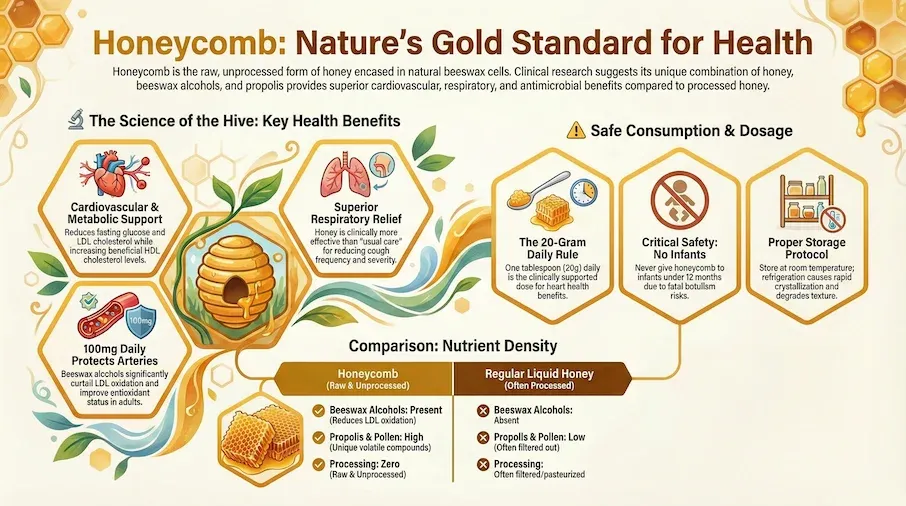
⚖️ Honeycomb vs Regular Honey
While both honeycomb and liquid honey come from the same source, they offer different benefits and characteristics. Understanding these differences helps you choose the right product for your needs.
| Feature | Honeycomb | Regular Liquid Honey |
|---|---|---|
| Processing Level | Unprocessed, raw | Usually filtered, sometimes pasteurized |
| Contains Beeswax | Yes (20-30% by weight) | No |
| Propolis Content | Higher (propolis-derived compounds identified)[C][15] | Lower (removed during processing) |
| Enzyme Activity | Fully preserved | May be reduced by pasteurization |
| Beeswax Alcohol Benefits | Present (reduces LDL oxidation)[B][5] | Absent |
| Pollen Traces | More likely present | Often filtered out |
| Convenience | Requires cutting/chewing | Ready to use |
| Shelf Stability | Excellent (wax protects honey) | Excellent |
| Price | Higher | Lower |
| Best Uses | Direct eating, cheese pairing, therapeutic | Cooking, baking, everyday sweetener |
Research Implications
One meta-analysis found that the effects of honey on lipid profiles showed significant heterogeneity among studies[Evidence: A][3]. This variation may partly be explained by differences in honey type, processing, and source. Raw honey and specific varieties like robinia honey showed more pronounced cardiometabolic benefits[Evidence: A][1], suggesting that less-processed forms like honeycomb may offer advantages..
Frequently Asked Questions
Honeycomb vs honey – which is better?
Neither is definitively 'better'—they serve different purposes. Honeycomb offers additional benefits from beeswax, including long-chain fatty alcohols that reduce LDL oxidation and propolis-derived compounds. It's also completely unprocessed, preserving all enzymes and beneficial compounds. Regular honey is more convenient for cooking and everyday use. For maximum health benefits, choose raw honeycomb; for convenience, choose quality raw honey. Research shows raw honey and specific varieties demonstrate the most pronounced beneficial effects on cardiometabolic markers.
Can pregnant women eat honeycomb?
There is currently no post-2015 clinical research specifically examining honeycomb safety during pregnancy. Unlike with infants, the botulism concern does not apply to healthy adults, including pregnant women, because the mature digestive system prevents Clostridium botulinum spore germination. However, due to the absence of specific clinical data and the high-sugar content, pregnant women should consult their healthcare provider before consuming honeycomb regularly. Moderation is advised—stick to the general recommendation of no more than 20 grams daily if approved by your doctor.
Is honeycomb good for diabetes?
The evidence is mixed and requires caution. A systematic review of 13 clinical trials found that honey showed no significant effects in non-diabetic subjects, but high intake may increase glucose levels and worsen metabolic parameters in type 2 diabetes patients. A cross-over trial with 50 g/day showed LDL cholesterol decreased by 16.8%, but there were adverse effects on adiponectin. If you have diabetes, limit honeycomb to ≤20 g/day, monitor your blood glucose response carefully, and consult your endocrinologist before regular use.
Does honeycomb boost immune system?
Honeycomb supports immune function primarily through its antimicrobial properties. Research identifies four key antimicrobial substances in honey: polyphenolic compounds, hydrogen peroxide, methylglyoxal, and bee-defensin 1. Honey inhibits both Gram-positive and Gram-negative bacteria, including antibiotic-resistant strains. The optimal effective dose of quercetin—a flavonoid found in honey—for inflammation reduction is 500 mg. While these properties support the body's defense against pathogens, honeycomb should complement—not replace—a healthy immune-supportive lifestyle.
Is honeycomb antibacterial?
Yes, honeycomb has well-documented antibacterial properties. Honey inhibits Gram-positive and Gram-negative bacteria, including antibiotic-resistant strains, through multiple mechanisms. The four key antimicrobial substances are: polyphenolic compounds, hydrogen peroxide (produced by glucose oxidase), methylglyoxal, and bee-defensin 1. When combined with antibiotics, bacteriophages, or antimicrobial peptides, honey demonstrates synergistic or additive effects. The beeswax in honeycomb may also provide additional protection by slowly releasing these compounds.
Does honeycomb help with allergies?
The theory that local honeycomb helps with seasonal allergies is popular but lacks strong clinical evidence. The idea is that trace pollen in raw honeycomb could provide gradual exposure, similar to allergy immunotherapy. However, no post-2015 randomized controlled trials specifically examined honeycomb for allergy prevention. Furthermore, people with bee or pollen allergies may experience adverse reactions to honeycomb. If you have known allergies, consult an allergist before trying honeycomb as a remedy. The antimicrobial and anti-inflammatory properties may help with secondary symptoms, but direct allergy relief remains unproven.
Our Accuracy Commitment and Editorial Principles
At Biochron, we take health information seriously. Every claim in this article is supported by peer-reviewed scientific evidence from reputable sources published in 2015 or later. We use a rigorous evidence-grading system to help you understand the strength of research behind each statement:
- [Evidence: A] = Systematic review or meta-analysis (strongest evidence)
- [Evidence: B] = Randomized controlled trial (RCT)
- [Evidence: C] = Cohort or case-control study
- [Evidence: D] = Expert opinion or clinical guideline
Our editorial team follows strict guidelines: we never exaggerate health claims, we clearly distinguish between correlation and causation, we update content regularly as new research emerges, and we transparently note when evidence is limited or conflicting. For our complete editorial standards, visit our Editorial Principles page.
This article is for informational purposes only and does not constitute medical advice. Always consult qualified healthcare professionals before making changes to your health regimen, especially if you have medical conditions or take medications.


References
- 1 . Effect of honey on cardiometabolic risk factors: a systematic review and meta-analysis, Nutrition Reviews, 2023, DOI [Evidence: A]
- 2 . Effectiveness of honey for symptomatic relief in upper respiratory tract infections: a systematic review and meta-analysis, BMJ Evidence Based Medicine, 2021, DOI [Evidence: A]
- 3 . The effect of honey on lipid profiles: a systematic review and meta-analysis of controlled clinical trials, British Journal of Nutrition, 2022, DOI [Evidence: A]
- 4 . The Effects of Oral Consumption of Honey on Key Metabolic Profiles in Adult Patients with Type 2 Diabetes Mellitus and Nondiabetic Individuals: A Systematic Review of Clinical Trials, Evidence-Based Complementary and Alternative Medicine, 2021, DOI [Evidence: A]
- 5 . Beeswax Alcohol Prevents Low-Density Lipoprotein Oxidation and Demonstrates Antioxidant Activities in Zebrafish Embryos and Human Subjects: A Clinical Study, Current Issues in Molecular Biology, 2024, DOI [Evidence: B]
- 6 . Long-term effects of honey on cardiovascular parameters and anthropometric measurements of postmenopausal women, Complement Ther Med, 2018, DOI [Evidence: B]
- 7 . Adverse effects of honey on low-density lipoprotein cholesterol and adiponectin concentrations in patients with type 2 diabetes: a randomized controlled cross-over trial, Journal of Diabetes and Metabolic Disorders, 2020, DOI [Evidence: B]
- 8 . A Comprehensive Review of the Effect of Honey on Human Health, Nutrients, 2023, DOI [Evidence: D]
- 9 . Honey: An Advanced Antimicrobial and Wound Healing Biomaterial for Tissue Engineering Applications, Pharmaceutics, 2022, DOI [Evidence: D]
- 10 . Honey in wound healing: An updated review, Open Life Sci, 2021, DOI [Evidence: D]
- 11 . Honey and Wound Healing: An Update, American Journal of Clinical Dermatology, 2017, DOI [Evidence: D]
- 12 . Cardioprotective Effects of Honey and Its Constituent: An Evidence-Based Review of Laboratory Studies and Clinical Trials, International Journal of Environmental Research and Public Health, 2020, DOI [Evidence: D]
- 13 . A current perspective on hydrogen peroxide production in honey. A review, Food Chemistry, 2020, DOI [Evidence: D]
- 14 . Dissecting the Antimicrobial Composition of Honey, Antibiotics (Basel), 2019, DOI [Evidence: D]
- 15 . Honeycomb, a New Food Resource with Health Care Functions: The Difference of Volatile Compounds found in Apis cerana and A. mellifera Honeycombs, Foods, 2022, DOI [Evidence: C]
- 16 . Bee Products: An Emblematic Example of Underutilized Sources of Bioactive Compounds, Journal of Agricultural and Food Chemistry, 2022, DOI [Evidence: D]
- 17 . Honey and Its Phenolic Compounds as an Effective Natural Medicine for Cardiovascular Diseases in Humans?, Nutrients, 2020, DOI [Evidence: D]
- 18 . Dietary Quercetin and Kaempferol: Bioavailability and Potential Cardiovascular-Related Bioactivity in Humans, Nutrients, 2019, DOI [Evidence: D]
- 19 . Honey as a Potential Natural Antioxidant Medicine: An Insight into Its Molecular Mechanisms of Action, Oxidative Medicine and Cellular Longevity, 2018, DOI [Evidence: D]
- 20 . Honey Combination Therapies for Skin and Wound Infections: A Systematic Review of the Literature, Clinical and Cosmetic Investigative Dermatology, 2020, DOI [Evidence: A]
- 21 . Honey Dressing in Wound Treatment: A Systematic Review, Complement Ther Med, 2020, DOI [Evidence: A]
- 22 . A review of the use of beeswax in skincare, Journal of Cosmetic Dermatology, 2023, DOI [Evidence: D]
Medical Disclaimer
This content is for informational and educational purposes only. It is not intended to provide medical advice or to take the place of such advice or treatment from a personal physician. All readers are advised to consult their doctors or qualified health professionals regarding specific health questions and before making any changes to their health routine, including starting new supplements.
Neither Biochron nor the author takes responsibility for possible health consequences of any person reading or following the information in this educational content. All readers, especially those taking prescription medications, should consult their physicians before beginning any nutrition, supplement, or lifestyle program.
If you have a medical emergency, call your doctor or emergency services immediately.
