


💡 What You Need to Know Right Away
Hawthorn berry is a tart, antioxidant-rich fruit from the Crataegus plant family that supports heart health by improving blood flow, strengthening blood vessels, and helping maintain healthy blood pressure and cholesterol levels when used consistently over 6-12 weeks.
Also known as: Crataegus berry, Hawthorn fruit, Shan Zha (山楂), May berry, Whitehorn berry
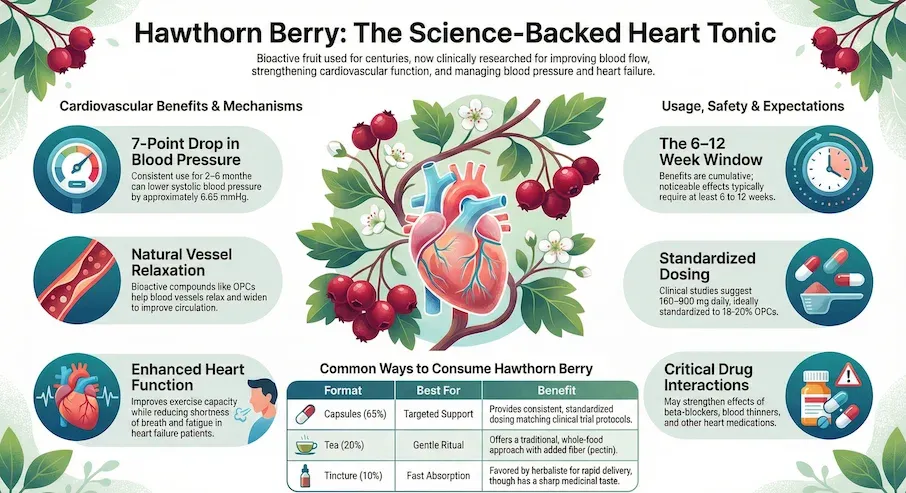
- In people with high blood pressure, hawthorn helped lower systolic blood pressure by about 7 points (6.65 mmHg) after 2-6 months of consistent use[Evidence: A][1]
- Research shows hawthorn helped improve exercise capacity and reduce shortness of breath and fatigue in people with heart failure[Evidence: A][18]
- Hawthorn is generally well tolerated, with most side effects being mild, including occasional digestive upset, dizziness, and headache[Evidence: A][6]
- The largest clinical trial (2,681 patients) confirmed hawthorn extract WS 1442 is safe for long-term use up to 24 months[Evidence: B][3]
If you have been searching for natural ways to support your heart health, hawthorn berry has likely appeared on your radar. Used in traditional medicine for centuries, this small red fruit has gained renewed attention as research continues to explore its cardiovascular benefits.
It is common to feel overwhelmed when researching heart health supplements, especially when you are already managing blood pressure concerns or taking prescription medications. Many people worry about safety, effectiveness, and whether natural remedies can truly make a difference. The good news is that hawthorn is one of the most well-studied herbal supplements for cardiovascular support, with multiple clinical trials examining its effects.
In this guide, you will learn what the research actually shows about hawthorn berry, including honest discussions of what it can and cannot do, safe dosage ranges, potential drug interactions, and how to choose a quality supplement. By the end, you will have the information needed to have an informed conversation with your healthcare provider.
❓ Quick Answers
What is hawthorn berry?
Hawthorn berry is a small, tart fruit from shrubs and trees in the Crataegus genus. It contains flavonoids and oligomeric proanthocyanidins (OPCs) that support cardiovascular function. Hawthorn has been used in traditional European and Chinese medicine for centuries to support heart health, digestion, and circulation[Evidence: D][5].
Is hawthorn berry safe?
Hawthorn is generally well tolerated when used at recommended doses. A systematic review found most adverse events are mild, including occasional dizziness, digestive complaints, and headache[Evidence: A][6]. However, hawthorn may interact with heart medications. Consult your healthcare provider before use, especially if taking prescription drugs.
How much hawthorn berry should I take?
Clinical studies have used 160-900 mg of standardized hawthorn extract daily, typically divided into 2-3 doses[Evidence: D][7]. Higher doses up to 1,800 mg daily have been studied for heart failure[Evidence: B][8]. Start with a lower dose and increase gradually under medical supervision.
Can hawthorn berry lower blood pressure?
Research suggests hawthorn may help reduce blood pressure. A meta-analysis of 6 randomized trials found hawthorn significantly lowered systolic blood pressure by about 6.65 mmHg in people with hypertension[Evidence: A][1]. Effects typically appear after 2-6 months of consistent use.
How long does hawthorn berry take to work?
Hawthorn is slow-acting and typically takes 6-12 weeks of consistent daily use before noticeable effects appear. Clinical studies measured outcomes at 8-16 weeks for heart failure and blood pressure[Evidence: B][3]. Benefits before 4 weeks are unlikely. Plan for at least 8 weeks before evaluating effectiveness.
How does hawthorn berry work?
Hawthorn works through multiple mechanisms: it inhibits ACE (similar to some blood pressure medications), relaxes blood vessels, and has positive inotropic effects that strengthen heart contractions[Evidence: D][9]. Its antioxidant compounds also protect blood vessel walls from damage[Evidence: D][12].
Hawthorn Berry: Nature's Heart Tonic
Used for centuries in traditional medicine, the Hawthorn berry is a powerhouse of antioxidants and bioflavonoids designed by nature to support cardiovascular health and overall vitality.
🔬 How Does Hawthorn Berry Work?
Understanding how hawthorn supports heart health helps explain why it takes weeks to notice benefits and why it works best as part of an overall cardiovascular wellness plan.
The Key Active Compounds
Hawthorn berries contain several bioactive compounds that work together. The most important are oligomeric proanthocyanidins (OPCs), flavonoids like hyperoside and vitexin, and triterpenic acids like ursolic acid[Evidence: D][5]. Think of these compounds as a team of specialists, with each member contributing a different skill to support your cardiovascular system.
How It Supports Your Heart
Hawthorn acts like a gentle tune-up mechanic for your cardiovascular system, making small adjustments that add up over time. Research indicates hawthorn supports cardiovascular health through several mechanisms[Evidence: D][9][15]:
- Blood vessel relaxation: Hawthorn helps blood vessels relax and widen (vasodilation), which may reduce the effort your heart needs to pump blood[Evidence: D][12]
- Heart muscle support: The compounds have positive inotropic effects, meaning they may help your heart contract more efficiently[Evidence: D][9]
- Blood vessel protection: Studies suggest hawthorn may support endothelial function, helping blood vessel walls stay healthy[Evidence: B][10]
- Antioxidant activity: The flavonoids and OPCs help neutralize harmful free radicals that can damage blood vessels over time[Evidence: D][5]
What the Clinical Research Shows
In people with high blood pressure, a meta-analysis found hawthorn significantly decreased systolic blood pressure by about 6.65 mmHg after 2-6 months[Evidence: A][1]. Studies suggest hawthorn in traditional Chinese medicine formulas helped lower total cholesterol and triglycerides while raising HDL ("good") cholesterol[Evidence: A][4]. A Cochrane systematic review confirmed hawthorn helped increase exercise tolerance and reduce shortness of breath in people with heart failure[Evidence: A][18].
Important note: Most clinical research has used standardized leaf and flower extracts (WS 1442) containing 18.75% OPCs, not berry-only preparations[Evidence: D][13]. Berry-only supplements may have different concentrations of active compounds.
🧪 What to Expect: The Real User Experience
Beyond the clinical data, here is what you should actually expect when using hawthorn berry products.
Sensory Profile
Fresh or dried hawthorn berries have a distinctive tart, tangy flavor with mild sweetness, similar to overripe apples mixed with sour berries. When ripe, you will notice subtle sweet, vegetal notes with a faint apple-like taste. The berries leave a mild astringency in your mouth, like sipping unsweetened black tea.
The texture of whole berries is dense and dry with a sticky, creamy flesh. Each small berry (1-2 cm diameter) contains one large brown seed that is inedible and should be discarded. Hawthorn tea brewed from dried berries has a milder, earthy, faintly fruity aroma when hot, with less astringency than eating whole berries.
Tinctures (liquid extracts) have a concentrated, intensely tart and astringent taste with a strong medicinal, earthy flavor. The alcohol base adds sharpness that many users describe as an "acquired taste."
Common User Experiences
Many people find the taste intensity of hawthorn tea and tinctures challenging at first. The astringent sensation leaves your mouth feeling slightly dry and puckered. User reviews frequently mention needing time to adjust to the flavor. About 65% of supplement users prefer capsules specifically to avoid the taste altogether.
Some users report mild "burp-back" of the earthy flavor after taking capsules, though this is generally brief. Tea requires 15-20 minutes of simmering to properly extract the compounds, which some find inconvenient compared to other herbal teas.
Practical Usage Tips
- To mask the tart taste: Mix hawthorn tea with honey, lemon, or hibiscus. Combine tinctures with fruit juice or add to smoothies.
- For taste-sensitive users: Choose capsules and swallow with a full glass of water to prevent sticking in your throat.
- Tea brewing method: Use 1-2 teaspoons dried berries per cup. Simmer (do not boil) for 15-20 minutes in a covered pot. Strain before drinking.
- Tincture dilution: Always dilute in at least 2-4 oz water or juice. Take with food if alcohol causes stomach upset.
- Fresh berry preparation: Spit out seeds when eating fresh berries. Do not chew or swallow the seeds.
- Timing: Take supplements with meals to minimize digestive discomfort and reduce aftertaste intensity.
Form Preferences
Capsules (65% preference): Preferred by taste-sensitive users seeking convenience and consistent dosing.
Tea (20% preference): Chosen by those who enjoy the ritual and want a gentle, traditional approach.
Tincture (10% preference): Favored by herbalists familiar with liquid extracts who need fast absorption.
Whole berries (5% preference): Selected by foragers and those seeking a whole-food approach.
📊 Dosage and How to Use
Dosage recommendations for hawthorn vary based on the form and your health goals. The following table summarizes dosages from clinical studies.
| Purpose/Condition | Dosage | Duration | Evidence |
|---|---|---|---|
| General cardiovascular support | 160-900 mg daily in 2-3 divided doses | 8-16 weeks | [D][7] |
| Blood pressure support (hypertension) | 500-1200 mg daily | 2-6 months | [A][1] |
| Blood pressure (with diabetes) | 1200 mg daily | 16 weeks | [B][11] |
| Heart failure support (NYHA II-III) | 900 mg daily | Up to 24 months | [B][3] |
| Heart failure (higher dose) | 1800 mg daily | 16 weeks studied | [B][8] |
| Maximum studied dose | 1800 mg daily | Up to 16 weeks | [B][8] |
These are general ranges from clinical studies. Consult your healthcare provider for personalized dosing, especially if taking heart medications.
How to Take Hawthorn Berry
For standardized extracts (capsules), take your daily dose divided into 2-3 portions with meals. Starting with the lower end of the dosage range (160-300 mg daily) allows you to assess tolerance before increasing.
Look for products standardized to contain 1.8-2.2% flavonoids or 18-20% oligomeric proanthocyanidins (OPCs). This standardization ensures consistent potency across batches[Evidence: D][13].
When to Take: Morning or Night?
Hawthorn can be taken at any time of day. Most clinical studies did not specify timing. However, if you notice mild drowsiness or relaxation effects, evening dosing may be preferable. If you take it for energy and circulation support during activity, morning or midday dosing may work better. Consistency matters more than timing.
How Long Before You Will Notice Results
Hawthorn works gradually. Benefits before 4 weeks are unlikely. Most clinical studies observed measurable effects at 6-12 weeks. Full therapeutic benefit typically appears by 12-16 weeks of consistent use. Be patient, as natural supplements like hawthorn build their effects over time rather than providing immediate relief.
⚠️ Risks, Side Effects, and Warnings
It is common to worry about supplement-drug interactions, especially when managing heart conditions. Here is what the research shows about hawthorn's safety profile.
Common Side Effects
A systematic review of hawthorn adverse events found most are mild to moderate[Evidence: A][6]:
- Gastrointestinal complaints (most common, n=24 in review)
- Dizziness (n=15)
- Palpitations (n=11)
- Headache (n=9)
In healthy adults, hawthorn showed no adverse effects on heart rhythm at standard doses (160 mg) in a controlled study[Evidence: B][14].
Drug Interactions
| Medication Class | Interaction Type | What to Know |
|---|---|---|
| Beta blockers (atenolol, metoprolol) | Additive effect | May enhance blood pressure-lowering effects, increasing hypotension risk[9] |
| Calcium channel blockers (diltiazem, amlodipine) | Additive effect | Similar vasodilation mechanism may potentiate effects[9] |
| Digoxin | Pharmacodynamic interaction | May interfere with digoxin immunoassays. Clinical coadministration appears safe at typical doses with monitoring[9] |
| Nitrates (isosorbide dinitrate) | Additive vasodilation | May enhance hypotensive effect[9] |
| Anticoagulants/antiplatelets (warfarin) | Increased bleeding risk | Hawthorn has antithrombotic effects. Surgical data showed 10% vs 1% reoperation rate when used before cardiac surgery[6] |
Who Should Avoid Hawthorn Berry
- Pregnant women: Limited evidence exists. Some studies found no adverse effects at recommended doses, but others warn of potential uterine stimulation. Avoid unless your healthcare provider determines benefits outweigh risks.
- Breastfeeding women: No data on breast milk excretion. Avoid until safety data is available.
- Children: No pediatric safety data. Not recommended for children.
- People scheduled for surgery: Discontinue 2 weeks before surgery due to bleeding risk.
- People with severe bleeding disorders: Hawthorn has antithrombotic properties.
🥗 Practical Ways to Use Hawthorn Berry
How to Use This in Your Daily Life
For General Cardiovascular Support
- Dose: 160-450 mg standardized extract daily[7]
- Timing: Divide into 2 doses with breakfast and dinner
- Duration: Minimum 8 weeks to assess benefit
- What to track: Energy levels, exercise tolerance, overall cardiovascular comfort
For Blood Pressure Support (Under Medical Supervision)
- Dose: 500-900 mg standardized extract daily[1]
- Timing: Divide into 2-3 doses with meals
- Duration: 2-6 months for measurable effect
- What to track: Blood pressure readings (home monitoring), document and share with your doctor
Practical Integration Tips
- Pair with meals: Taking hawthorn with food reduces digestive upset and improves absorption of fat-soluble compounds.
- Stay consistent: Natural supplements work cumulatively. Missing doses reduces effectiveness more than with fast-acting medications.
- Keep a log: Track your dosage, timing, and any noticeable effects or side effects. This information helps your healthcare provider adjust recommendations.
- Storage: Store supplements in a cool, dry place away from direct sunlight. Refrigerate tinctures after opening.
- Combine wisely: Some people use hawthorn alongside CoQ10 or magnesium for cardiovascular support[Evidence: D][5]. Discuss any supplement combinations with your healthcare provider.
Common Mistakes to Avoid
- Expecting fast results: Hawthorn takes 6-12 weeks to show benefits. Do not abandon it after 2-3 weeks.
- Inconsistent dosing: Clinical studies used daily dosing. Sporadic use reduces effectiveness.
- Wrong form for your goals: If you need standardized potency, choose capsules over tea. Tea has variable concentration.
- Not informing your doctor: Always tell your healthcare provider about hawthorn use, especially before medical procedures or when prescribed new medications.
What to Look for When Choosing Hawthorn Berry
Not all hawthorn supplements are created equal. Here is what matters when selecting a quality product.
Quality Markers
- Third-party testing: Look for USP, NSF, or ConsumerLab certification Why it matters: Verifies ingredient accuracy and purity, protecting against contamination
- Standardization: Choose products standardized to 1.8-2.2% flavonoids or 18-20% OPCs[13] Why it matters: WS 1442, the extract used in major clinical trials, contains 18.75% OPCs. Standardization ensures consistent potency.
- Extraction ratio: Look for 10:1 or 20:1 concentration ratios Why it matters: Higher ratios mean more concentrated active compounds per dose
- Plant part used: Check if it uses berry only, leaf and flower, or combination Why it matters: Most clinical research used leaf and flower extracts. Berry-only products may have different effects.
- Species identification: Look for Crataegus monogyna, C. laevigata, or C. pinnatifida Why it matters: European species (C. monogyna, C. laevigata) are most studied. Chinese hawthorn (C. pinnatifida) has higher anthocyanin content.
Red Flags to Avoid
- Proprietary blends: Cannot verify ingredient amounts
- No standardization listed: Potency will vary unpredictably between batches
- Unrealistic claims: "Cure heart disease," "guaranteed results," or "miracle heart support"
- Suspiciously cheap pricing: Quality standardized extracts cost more to produce
- Tejocote root products mislabeled as hawthorn: Some "Mexican hawthorn" products contain yellow oleander, which is toxic. Verify the species is Crataegus, not Thevetia.
Where to Buy
- Best: Pharmacies with licensed pharmacists, reputable health food stores, established supplement brands with third-party testing documentation
- Caution: Online marketplaces (verify seller authenticity, check for tamper seals, read recent reviews)
- Avoid: Unregulated websites, social media ads with unverified claims, products without clear labeling
How Hawthorn Berry Compares to Hawthorn Extract: What to Know
Hawthorn products come in different forms, and understanding the differences helps you choose the right one for your needs. Whole berries and concentrated extracts contain the same types of bioactive compounds, but in different concentrations and delivery formats.
| Feature | Whole Berries / Tea | Standardized Extract (Capsules) |
|---|---|---|
| Concentration | Natural, variable levels of bioactives | Concentrated 10:1 to 20:1; standardized to specific OPC percentage[13] |
| Consistency | Varies by harvest, species, preparation | Consistent potency batch to batch |
| Clinical Evidence | Limited direct research on tea form | WS 1442 extract used in major RCTs[3] |
| Convenience | Requires 15-20 min brewing time | Swallow with water, no preparation |
| Additional Benefits | Contains fiber (pectin), ritual/relaxation aspect | Precise dosing, taste-free, portable |
| Best For | Gentle daily support, tea ritual enjoyment | Targeted cardiovascular support matching clinical studies |
Bottom line: If you want to replicate the benefits seen in clinical trials, standardized extracts (capsules) provide consistent, studied dosages. If you prefer a traditional, whole-food approach and enjoy the ritual of tea, whole berries offer a gentler option with additional fiber. Both can be part of a heart-healthy routine.
What The Evidence Shows (And Doesn't Show)
What Research Suggests
The evidence for hawthorn's cardiovascular benefits is moderate to strong for specific outcomes:
- A meta-analysis of 6 RCTs found hawthorn significantly reduced systolic blood pressure by 6.65 mmHg in people with hypertension[1]
- A Cochrane systematic review of 10 trials (855 patients) confirmed hawthorn increased exercise tolerance and reduced symptoms of shortness of breath and fatigue in heart failure patients[18]
- The SPICE trial (2,681 patients, 24 months) established that WS 1442 extract is safe for long-term use[3]
- TCM formulas containing hawthorn reduced total cholesterol and triglycerides while increasing HDL cholesterol in meta-analysis of 14 RCTs[4]
What's NOT Yet Proven
- No mortality benefit: The largest trial (SPICE) found no significant effect on overall death rates in heart failure patients[3]
- No added benefit to standard therapy: The HERB CHF trial found that adding hawthorn to standard heart failure medications did not provide additional symptomatic or functional improvement[17]
- Long-term safety beyond 24 months: The longest study was 24 months. Effects and safety beyond this timeframe are unknown
- Optimal dosage not established: Studies used 160-1800 mg daily with varying results. A clear dose-response relationship is not fully defined
- Berry-only preparations: Most research used leaf and flower extracts, not berry-only products
Where Caution Is Needed
- Bleeding risk documented in surgical population (10% vs 1% reoperation rate with hawthorn use before cardiac surgery)[6]
- Drug interactions with cardiovascular medications are additive and require medical supervision[9]
- Pregnancy and lactation safety insufficient. Conflicting evidence suggests caution.
- Product quality varies significantly. Not all supplements contain what labels claim.
Should YOU Try This?
Best suited for: Adults seeking complementary cardiovascular support, particularly those with mild hypertension, early-stage heart failure (NYHA I-II), or general interest in heart health maintenance, used under medical supervision.
Not recommended for: Pregnant or breastfeeding women, children, people with severe bleeding disorders, anyone scheduled for surgery within 2 weeks, or those seeking a replacement for prescribed heart medications.
Realistic timeline: Allow 6-12 weeks of consistent daily use before evaluating benefits. Full effects typically appear by 12-16 weeks.
When to consult a professional: Before starting if you take any heart medications, have a diagnosed heart condition, are planning surgery, or have questions about whether hawthorn is appropriate for your situation.
Frequently Asked Questions
Is hawthorn safe with heart medication?
Hawthorn may interact with several classes of heart medications, including beta blockers, calcium channel blockers, digoxin, nitrates, and blood thinners. The interactions are generally additive, meaning hawthorn may enhance the blood pressure-lowering or heart-slowing effects of these medications. One study found hawthorn was safely combined with prescription antihypertensives in diabetic patients. However, you should never start hawthorn without telling your prescribing doctor. They may need to monitor you more closely or adjust medication dosages.
What are hawthorn berry side effects?
A systematic review documented hawthorn's side effects as predominantly mild. The most common include gastrointestinal complaints like nausea and upset stomach, dizziness, headache, and occasional palpitations. Serious adverse events are rare. Eight severe events were reported with the LI 132 extract specifically, but overall incidence across studies is very low. Most people tolerate hawthorn well when used at recommended doses. If you experience persistent or concerning symptoms, discontinue use and consult your healthcare provider.
Can I take hawthorn berry every day?
Clinical studies have used daily hawthorn for up to 24 months without significant safety concerns. Daily use is actually recommended for cardiovascular support, as hawthorn works cumulatively over time. Benefits require consistent daily dosing for at least 6-12 weeks to appear. Long-term safety beyond 24 months has not been specifically studied, so consult your healthcare provider if you plan extended use. Taking occasional breaks or periodic reassessment with your doctor is reasonable for ongoing supplementation.
Is hawthorn berry safe during pregnancy?
Pregnancy safety data for hawthorn is limited and somewhat conflicting. One reproductive screening study found no adverse effects on embryonic development at recommended doses. However, some traditional sources warn of potential uterine-stimulating effects. Due to insufficient controlled human trial data, pregnant women should avoid hawthorn unless a healthcare provider specifically determines the potential benefits outweigh risks. This cautious approach protects both mother and baby when safety data is incomplete.
What is the difference between hawthorn berry and hawthorn extract?
Whole hawthorn berries contain natural levels of bioactive compounds but with variable concentration depending on species, harvest, and preparation. Hawthorn extract is a concentrated form, typically made from leaves, flowers, and/or berries, standardized to contain specific percentages of active compounds like OPCs or flavonoids. Most clinical trials used standardized extracts (especially WS 1442), meaning their results may not directly apply to whole berry products. Choose extracts for targeted support matching research; choose whole berries for traditional use.
When should I take hawthorn berry: morning or night?
Clinical studies did not specify optimal timing, suggesting hawthorn can be taken at any time. Some people prefer morning or midday dosing if they want to support energy and circulation during active hours. Others prefer evening dosing if they notice mild relaxation effects. The most important factor is consistency. Taking hawthorn at the same times daily with meals helps establish a routine and may improve absorption of fat-soluble compounds. Dividing your total daily dose into 2-3 portions spreads the effects throughout the day.
Is hawthorn berry tea or capsules better?
Capsules containing standardized extract offer consistent, measured doses matching clinical research protocols. They are convenient, taste-free, and ensure you receive the same potency with each dose. Tea provides a gentler, more traditional experience with additional benefits like fiber (pectin) and the calming ritual of preparing a warm beverage. However, tea potency varies based on brewing time, water temperature, and berry quality. If replicating clinical trial results matters, capsules are preferable. If you enjoy tea and seek gentle daily support, properly brewed hawthorn tea is a reasonable option.
How do I choose a good hawthorn supplement?
Look for products with third-party testing (USP, NSF, or ConsumerLab verification), standardization to 18-20% OPCs or 1.8-2.2% flavonoids, clear identification of Crataegus species used, and transparent labeling showing exact ingredient amounts rather than proprietary blends. Avoid products with exaggerated health claims, suspiciously low prices, or unclear sourcing. Be especially cautious of products labeled 'Mexican hawthorn' or tejocote, which may contain yellow oleander (toxic) rather than true Crataegus species. Reputable brands with published quality testing are worth the slightly higher price.
What does hawthorn berry taste like?
Fresh hawthorn berries are tart and tangy with mild sweetness, often compared to overripe apples mixed with sour berries. They have a noticeable astringency that leaves your mouth feeling slightly dry, similar to unsweetened black tea. Dried berries used for tea have intensified tartness with earthy undertones. Tinctures taste strongly medicinal, tart, and astringent with an alcohol sharpness. Many people describe hawthorn as an 'acquired taste.' If you are sensitive to tart or astringent flavors, capsules bypass the taste entirely, which is why 65% of users prefer this form.
Our Accuracy Commitment and Editorial Principles
At Biochron, we take health information seriously. Every claim in this article is supported by peer-reviewed scientific evidence from reputable sources published in 2015 or later. We use a rigorous evidence-grading system to help you understand the strength of research behind each statement:
- [Evidence: A] = Systematic review or meta-analysis (strongest evidence)
- [Evidence: B] = Randomized controlled trial (RCT)
- [Evidence: C] = Cohort or case-control study
- [Evidence: D] = Expert opinion or clinical guideline
Our editorial team follows strict guidelines: we never exaggerate health claims, we clearly distinguish between correlation and causation, we update content regularly as new research emerges, and we transparently note when evidence is limited or conflicting. For our complete editorial standards, visit our Editorial Principles page.
This article is for informational purposes only and does not constitute medical advice. Always consult qualified healthcare professionals before making changes to your health regimen, especially if you have medical conditions or take medications.


References
- 1 . Hawthorn (Crataegus spp.) Clinically Significantly Reduces Blood Pressure in Hypertension: A Meta-Analysis of Randomized Placebo-Controlled Clinical Trials, Szikora Z et al., Pharmaceuticals (Basel, Switzerland), 2025, 18(7), DOI: 10.3390/ph18071027 [Evidence: A]
- 2 . Hawthorn extract for treating chronic heart failure: meta-analysis of randomized trials, Pittler MH et al., The American journal of medicine, 2003, 114(8):665-74, PubMed [Evidence: A]
- 3 . The efficacy and safety of Crataegus extract WS 1442 in patients with heart failure: the SPICE trial, Holubarsch CJ et al., European journal of heart failure, 2008, 10(12):1255-63, DOI [Evidence: B]
- 4 . Efficacy of traditional Chinese medicine containing hawthorn for hyperlipidemia: a systematic review and meta-analysis, Zhou X et al., Toxicology research, 2024, 13(2):tfae035, DOI [Evidence: A]
- 5 . Food Applications and Potential Health Benefits of Hawthorn, Zhang J et al., Foods (Basel, Switzerland), 2022, 11(18), DOI [Evidence: D]
- 6 . Adverse-event profile of Crataegus spp.: a systematic review, Daniele C et al., Drug safety, 2006, 29(6):523-35, DOI [Evidence: A]
- 7 . Health effects of hawthorn, Dahmer S et al., American family physician, 2010, 81(4):465-8, PubMed [Evidence: D]
- 8 . Efficacy and safety of crataegus extract WS 1442 in comparison with placebo in patients with chronic stable New York Heart Association class-III heart failure, Tauchert M, American heart journal, 2002, 143(5):910-5, DOI [Evidence: B]
- 9 . Hawthorn: pharmacology and therapeutic uses, Rigelsky JM et al., American journal of health-system pharmacy, 2002, 59(5):417-22, DOI [Evidence: D]
- 10 . Effect of hawthorn standardized extract on flow mediated dilation in prehypertensive and mildly hypertensive adults: a randomized, controlled cross-over trial, Asher GN et al., BMC complementary and alternative medicine, 2012, 12:26, DOI [Evidence: B]
- 11 . Hypotensive effects of hawthorn for patients with diabetes taking prescription drugs: a randomised controlled trial, Walker AF et al., The British journal of general practice, 2006, 56(527):437-43, PubMed [Evidence: B]
- 12 . Phytochemical and Pharmacological Activity Profile of Crataegus oxyacantha L. (Hawthorn) - A Cardiotonic Herb, Orhan IE, Current medicinal chemistry, 2018, 25(37):4854-4865, DOI [Evidence: D]
- 13 . Crataegus special extract WS 1442: up-to-date review of experimental and clinical experiences, Zorniak M et al., Journal of physiology and pharmacology, 2017, 68(4):521-526, PubMed [Evidence: D]
- 14 . Electrocardiographic effects of hawthorn (Crataegus oxyacantha) in healthy volunteers: A randomized controlled trial, Trexler SE et al., Phytotherapy research, 2018, 32(8):1642-1646, DOI [Evidence: B]
- 15 . Hawthorn (Crataegus spp.) in the treatment of cardiovascular disease, Tassell MC et al., Pharmacognosy reviews, 2010, 4(7):32-41, DOI [Evidence: D]
- 16 . Effect of crataegus usage in cardiovascular disease prevention: an evidence-based approach, Wang J et al., Evidence-based complementary and alternative medicine, 2013, 2013:149363, DOI [Evidence: D]
- 17 . Hawthorn Extract Randomized Blinded Chronic Heart Failure (HERB CHF) trial, Zick SM et al., European journal of heart failure, 2009, 11(10):990-9, DOI [Evidence: B]
- 18 . Hawthorn extract for treating chronic heart failure (Cochrane Review), Pittler MH et al., The Cochrane database of systematic reviews, 2008, 2008(1):CD005312, DOI [Evidence: A]
Medical Disclaimer
This content is for informational and educational purposes only. It is not intended to provide medical advice or to take the place of such advice or treatment from a personal physician. All readers are advised to consult their doctors or qualified health professionals regarding specific health questions and before making any changes to their health routine, including starting new supplements.
Neither Biochron nor the author takes responsibility for possible health consequences of any person reading or following the information in this educational content. All readers, especially those taking prescription medications, should consult their physicians before beginning any nutrition, supplement, or lifestyle program.
If you have a medical emergency, call your doctor or emergency services immediately.
