


💡 What You Need to Know Right Away
Cold and flu prevention is a combination of vaccination, hand hygiene, masking, and lifestyle practices that reduces your risk of getting sick and spreading illness to others during respiratory virus season.
Also known as: Flu prevention, influenza prevention, respiratory illness prevention, seasonal flu prevention
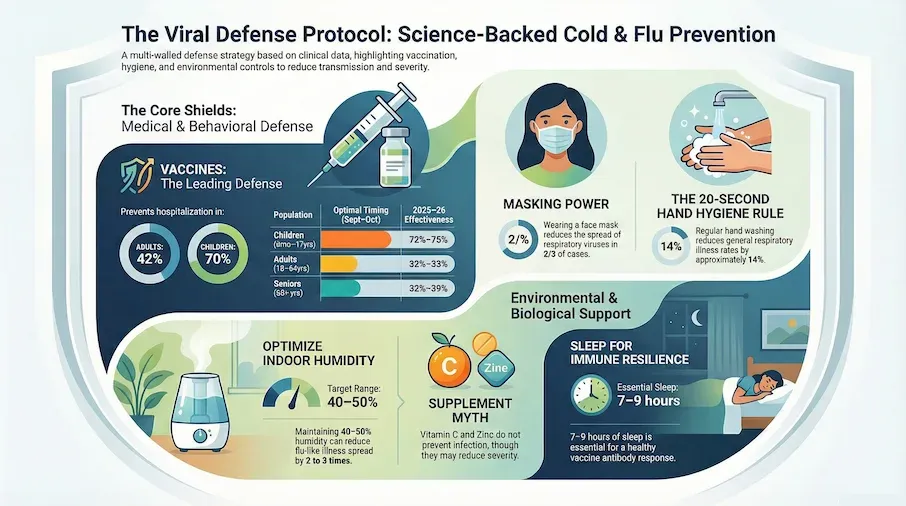
- Research shows flu vaccination helps prevent hospitalization in about 4 out of 10 cases[Evidence: A][1]
- Regular hand washing helps reduce general respiratory illnesses by about 14%[Evidence: A][7]
- Wearing a face mask helps reduce spread of respiratory viruses in about 2 out of 3 cases[Evidence: A][4]
- In the 2025-26 season, flu vaccination prevented hospitalization in children in about 7 out of 10 cases[Evidence: B][12]
Every year, millions of families face the same frustrating question: how do you actually prevent colds and flu? With so much conflicting advice online, it is common to feel overwhelmed trying to separate what works from what does not.
The 2025-26 flu season has been particularly challenging. An unusual H3N2 subclade K strain is driving increased severity, and the season is extending into spring months. Many people worry about keeping themselves and their children healthy, especially when prevention advice seems to change constantly.
The good news is that decades of research provide clear answers about what actually prevents respiratory illness. This guide explains the most effective prevention methods, backed by clinical evidence. You will learn how well each approach works, who benefits most, and how to put these strategies into practice in your daily life.
❓ Quick Answers
How effective is hand washing for flu prevention?
Regular hand washing helps reduce general respiratory illnesses by about 14%[Evidence: A][7]. In schoolchildren using hand sanitizer combined with respiratory hygiene, studies suggest lab-confirmed flu was reduced by about half[Evidence: B][5]. Wash for at least 20 seconds with soap and water, scrubbing all surfaces including between fingers and under nails.
Does wearing a mask prevent colds and flu?
Yes, masks reduce respiratory virus transmission. Research shows wearing a face mask helps reduce spread in about 2 out of 3 cases overall[Evidence: A][4]. Healthcare workers who wear masks have about 80% protection, while people in community settings have protection in about half of cases[Evidence: A][4].
Does vitamin C prevent colds?
No, vitamin C does not prevent colds for most people. Research shows vitamin C appears to reduce cold severity by about 15% when taken during illness[Evidence: A][13]. Studies indicate it may help shorten severe cold symptoms but does not affect mild symptoms[Evidence: A][13]. Taking vitamin C after symptoms appear has no effect on duration.
When should kids get flu vaccine?
Children 6 months and older should get flu vaccine by end of October. In the 2025-26 season, early research suggests vaccination prevented hospitalization in children in about 7 out of 10 cases[Evidence: B][12]. Children needing two doses should start in July or August. Clinical guidelines now allow people to give themselves the nasal spray flu vaccine at home[Evidence: D][11].
Can you prevent a cold once you feel it coming?
No proven way exists to stop a cold once you are infected. Studies indicate zinc lozenges may help shorten cold duration by about 2 to 3 days when started early[Evidence: A][14]. However, research shows zinc lozenges increase unwanted side effects like bad taste and stomach upset by about 34%[Evidence: A][14]. Rest and hydration remain the best approach.
How long should I wash hands to prevent flu?
Wash hands for at least 20 seconds with soap and water. Sing "Happy Birthday" twice to time it correctly. A Cochrane review of over 52,000 participants found hand hygiene reduces respiratory infections by about 11-14%[Evidence: A][7]. Scrub all surfaces including palms, backs of hands, between fingers, and under nails.
What is the best way to prevent cold and flu?
Flu vaccination is your best defense. Research shows vaccination helps prevent hospitalization in about 4 out of 10 cases[Evidence: A][1] and helps prevent death in about 1 out of 3 cases[Evidence: A][1]. Combine vaccination with regular hand washing, masking in crowded settings, and adequate sleep for comprehensive protection.
Defense & Wellness
Stay protected during the peak season. Learn the science-backed habits that keep your immune system strong and your environment safe.
🔬 How Cold and Flu Prevention Works
Understanding how respiratory viruses spread helps explain why certain prevention methods work better than others. Think of your body's defenses like a castle with multiple walls. Each prevention method strengthens a different wall, and the more walls you build, the harder it becomes for viruses to invade.
How Viruses Spread
Influenza and cold viruses travel primarily through respiratory droplets. When someone coughs or sneezes, tiny drops containing virus particles can travel up to six feet. These droplets can land on surfaces where they survive for hours, or they can be inhaled directly by people nearby.
Research shows flu vaccination works by training your immune system to recognize and fight specific virus strains. Studies indicate vaccination reduces serious illness and death across all age groups[Evidence: A][3]. Even when vaccination does not fully prevent infection, vaccinated people have fewer bacterial infections that can develop after the flu[Evidence: A][3].
The Hand Hygiene Barrier
Hand hygiene acts like a moat around your castle. Your hands touch hundreds of surfaces daily, picking up virus particles along the way. When you touch your face, those particles gain entry to your respiratory system through your eyes, nose, or mouth.
In schoolchildren, studies suggest using hand sanitizer and covering coughs reduced lab-confirmed flu by about half[Evidence: B][5]. The hand hygiene program reduced confirmed flu cases from 6 to 3 per thousand students each week[Evidence: B][5].
Masking and Physical Barriers
Face masks create a physical barrier that blocks respiratory droplets. Research indicates healthcare workers who wear masks have 80% protection against respiratory viruses[Evidence: A][4]. N95 masks were more effective than surgical masks, reducing flu-like illness by about 19%[Evidence: A][9].
Sleep and Immune Function
Studies suggest not getting enough sleep weakens your immune system and vaccine response[Evidence: B][6]. Sleep deprivation alters both innate and adaptive immune parameters and reduces antibody production[Evidence: B][6]. Your immune system repairs and strengthens itself during sleep, making adequate rest essential for prevention.
Environmental Factors
Indoor humidity affects how easily respiratory viruses spread. Systematic review suggests humidity levels are a modifiable factor for infection control[Evidence: A][15]. Early research suggests rooms with proper humidity had about 2 to 3 times fewer flu-like illnesses compared to dry rooms[Evidence: C][16]. Preliminary evidence suggests keeping indoor humidity between 40-50% may help reduce respiratory illness spread[Evidence: C][16].
📊 Prevention Methods and Timing
Flu Vaccination Schedule
Clinical guidelines recommend flu vaccination for everyone 6 months and older without medical reasons to avoid it[Evidence: D][11].
| Population | Doses Needed | Optimal Timing | 2025-26 Effectiveness |
|---|---|---|---|
| Children 6 months to 8 years (first-time) | 2 doses, 4 weeks apart | Start July-August | 72-75%[Evidence: B][12] |
| Children 9 years and older | 1 dose annually | September-October | 72-75%[Evidence: B][12] |
| Adults 18-64 years | 1 dose annually | September-October | 32-33%[Evidence: B][12] |
| Adults 65 years and older | 1 dose annually (high-dose option available) | September-October | 32-39%[Evidence: B][12] |
| Pregnant women | 1 dose (any trimester) | September-October | Protects mother and baby[Evidence: D][11] |
In the 2023-24 flu season, studies suggest flu vaccination prevented hospitalization in children in about 6 out of 10 cases[Evidence: B][8]. In adults, vaccination prevented hospitalization in about 4 out of 10 cases[Evidence: B][8].
Hand Hygiene Protocol
| When to Wash | Duration | Method | Evidence |
|---|---|---|---|
| Before eating or preparing food | 20+ seconds | Soap and water preferred | 14% ARI reduction[Evidence: A][7] |
| After using bathroom | 20+ seconds | Soap and water | 11% overall reduction[Evidence: A][7] |
| After coughing, sneezing, or blowing nose | 20+ seconds | Soap/water or sanitizer | 53% flu reduction (schools)[Evidence: B][5] |
| After touching public surfaces | 20+ seconds | 60%+ alcohol sanitizer acceptable | Prevents surface-to-face transmission |
| After caring for sick family member | 20+ seconds | Soap and water preferred | Reduces household transmission |
Vaccine Effectiveness by Strain
Research indicates flu vaccination works better against some strains than others. Studies show flu vaccination works better against H1N1 flu, preventing over half of cases[Evidence: A][2]. Research indicates flu vaccination prevents H3N2 flu in about 1 out of 4 cases[Evidence: A][2]. The four-strain flu vaccine prevented hospitalization better than the three-strain version[Evidence: A][1].
⚠️ Risks, Side Effects, and Safety Considerations
Most prevention methods are safe for the general population. It is normal to have questions about vaccine safety or worry about potential side effects. Understanding the actual risks helps you make informed decisions.
Vaccine Side Effects
Common vaccine reactions include injection site soreness (50-60% of recipients) and low-grade fever or fatigue (10-20% of recipients). Serious allergic reactions occur in fewer than 1 per million doses. These reactions are far less severe than influenza complications.
Mask Considerations
Research shows N95 and surgical masks work about the same for preventing lab-confirmed flu[Evidence: A][10]. However, N95 masks reduced non-flu respiratory infections by about 38% compared to surgical masks[Evidence: A][9]. Choose mask type based on exposure risk and comfort for extended wear.
Sleep Deprivation Impact
Early research suggests sleep deprivation increases risk for getting infections[Evidence: B][6]. Sleep loss also reduces your body's antibody response to vaccination. Prioritize 7-9 hours of sleep for adults and 9-12 hours for school-age children, especially during flu season.
Supplement Side Effects
Research shows zinc lozenges increase unwanted side effects like bad taste and stomach upset by about 34%[Evidence: A][14]. Common side effects include unpleasant taste and gastrointestinal symptoms. Zinc is not recommended for routine prevention.
🥗 Practical Ways to Prevent Cold and Flu
Your Daily Prevention Routine
Effective prevention requires consistency. These practical steps integrate seamlessly into daily life.
Morning Routine
- Check symptoms before leaving home: Fever, cough, or body aches warrant staying home
- Wash hands after waking: Remove overnight bacterial accumulation
- Check humidity levels: Aim for 40-50% relative humidity indoors[Evidence: C][16]
Throughout the Day
- Wash hands before meals: 20+ seconds with soap and water
- Carry hand sanitizer: Use 60%+ alcohol sanitizer when soap unavailable
- Avoid touching face: Reduces virus transfer from contaminated surfaces
- Maintain distance from sick individuals: 6 feet minimum when possible
- Wear mask in crowded indoor spaces: Especially during peak flu season (December-February)
Evening Routine
- Wash hands upon arriving home: Remove viruses picked up during the day
- Disinfect frequently touched items: Phone, keys, doorknobs
- Prioritize sleep: 7-9 hours for adults supports immune function[Evidence: B][6]
Environmental Controls
Systematic review suggests indoor humidity levels affect how easily respiratory viruses spread[Evidence: A][15]. Use a humidifier during dry winter months to maintain 40-50% relative humidity. Open windows briefly each day to improve ventilation when weather permits.
Common Mistakes to Avoid
- Washing hands too briefly: Studies used 20+ second duration for effectiveness[Evidence: A][7]. Quick rinses do not remove viruses.
- Skipping flu vaccine: Even with reduced effectiveness, vaccination prevents serious complications[Evidence: A][1]
- Relying on supplements alone: Research shows zinc does not prevent colds[Evidence: A][14]. Supplements complement but do not replace core prevention.
- Waiting until sick to act: Prevention works before exposure, not after infection begins
What to Look for When Choosing Prevention Resources
The quality of your prevention strategy depends on reliable information sources and healthcare access. Here is how to evaluate your options.
Healthcare Provider Qualifications
- Current vaccination protocols: Provider follows ACIP 2025-26 recommendations[Evidence: D][11] Why it matters: Guidelines update annually based on circulating strains
- Age-appropriate vaccine options: Offers high-dose for elderly, nasal spray for appropriate candidates Why it matters: Different formulations work better for different populations
- Clear contraindication screening: Asks about allergies, previous reactions, immune status Why it matters: Identifies rare individuals who should avoid certain vaccines
- Accessible timing: Offers September-October appointments for optimal protection Why it matters: Vaccination before flu season peak provides better coverage
Questions to Ask Your Provider
- Which flu vaccine formulation do you recommend for my age group?
- Is the nasal spray option appropriate for my child?
- How long after vaccination until protection begins?
- What side effects should I watch for?
- Is it covered by my insurance or available at reduced cost?
Red Flags to Avoid
- Anti-vaccine messaging: Contradicts CDC/ACIP recommendations without scientific basis
- Supplement claims of "immunity boosting": No supplement prevents colds or flu (vitamin C does not prevent[Evidence: A][13], zinc does not prevent[Evidence: A][14])
- Outdated information: Recommendations older than current flu season
- One-size-fits-all advice: Ignores age, health status, and contraindications
Cold vs Flu Prevention: What You Need to Know
Colds and flu are both respiratory illnesses, but they require different prevention approaches. Flu has an effective vaccine while colds do not. Understanding these differences helps you prioritize your prevention efforts.
| Feature | Flu Prevention | Cold Prevention |
|---|---|---|
| Vaccine Available | Yes, annual vaccination recommended for all ≥6 months[Evidence: D][11] | No vaccine available (200+ cold viruses) |
| Vaccine Effectiveness | 42% hospitalization prevention[Evidence: A][1] | Not applicable |
| Hand Hygiene Impact | 14% reduction in respiratory illness[Evidence: A][7] | 14% reduction in respiratory illness[Evidence: A][7] |
| Mask Effectiveness | 47-80% protection depending on setting[Evidence: A][4] | Similar protection for respiratory viruses[Evidence: A][4] |
| Vitamin C Effect | No prevention effect | No prevention; 15% severity reduction if taken during illness[Evidence: A][13] |
| Zinc Effect | Not studied for flu prevention | No prevention; may reduce cold duration by 2-3 days[Evidence: A][14] |
| Best Prevention Strategy | Vaccination + hand hygiene + masking | Hand hygiene + masking (no vaccine option) |
The key difference is that flu prevention has a highly effective vaccine option while cold prevention relies entirely on behavioral measures. Studies show flu vaccination works about twice as well in children compared to adults[Evidence: A][1], making pediatric vaccination particularly important.
What The Evidence Shows (And Doesn't Show)
What Research Suggests
The evidence for cold and flu prevention ranges from strong (Level A meta-analyses) to moderate (Level B RCTs). Key findings supported by high-quality research include:
- Flu vaccination prevents hospitalization in about 42% of cases based on meta-analysis of 165 studies[Evidence: A][1]
- Flu vaccination prevents death in about 36% of cases[Evidence: A][1]
- Hand hygiene reduces acute respiratory infections by 14% based on Cochrane review of over 52,000 participants[Evidence: A][7]
- Face masks reduce respiratory virus transmission with 47-80% protection depending on setting[Evidence: A][4]
- Vitamin C does not prevent colds but reduces severity by 15% during illness[Evidence: A][13]
- Zinc does not prevent colds but may reduce duration by about 2.4 days as treatment[Evidence: A][14]
What's NOT Yet Proven
- Hand hygiene for lab-confirmed influenza specifically: The Cochrane review found hand hygiene reduced general respiratory illness but was NOT statistically significant for laboratory-confirmed influenza (RR 0.91, 95% CI 0.63-1.30)[Evidence: A][7]
- Optimal humidity levels: Only observational evidence supports 40-50% relative humidity recommendation[Evidence: C][16]
- Long-term multi-year outcomes: Most studies are seasonal duration only
- Cost-effectiveness: No cost-effectiveness data identified in systematic sources
- Supplement prevention: Neither vitamin C nor zinc prevents colds or flu
Where Caution Is Needed
- Vaccine-strain mismatch: The 2025-26 season shows greater than 32-fold antigenic mismatch between circulating H3N2 subclade K and egg-propagated vaccine strain[Evidence: B][12]. Effectiveness in adults reduced to 32-39% but children maintain 72-75%.
- N95 vs surgical masks for flu: Research shows no significant difference specifically for lab-confirmed influenza (RR 1.09)[Evidence: A][10], though N95 provides better protection against other respiratory viruses.
- Zinc side effects: Treatment increases adverse events by 34%[Evidence: A][14] including unpleasant taste and gastrointestinal symptoms.
- Sleep and vaccine response: Sleep deprivation reduces antibody production[Evidence: B][6]. Ensure adequate rest around vaccination time.
Should YOU Try This?
Best suited for: Everyone 6 months and older benefits from flu vaccination[Evidence: D][11]. Hand hygiene and masking benefit all populations. Children show highest vaccine effectiveness (72-75% in 2025-26)[Evidence: B][12].
Not recommended for: Individuals with severe allergic reactions to flu vaccine components or history of Guillain-Barré syndrome within 6 weeks of prior vaccination[Evidence: D][11]. Nasal spray vaccine contraindicated in pregnant women, immunocompromised individuals, children under 2, and adults over 50.
Realistic timeline: Vaccination takes 2 weeks to build full immunity. Hand hygiene and masking provide immediate protection when practiced consistently. Flu season typically runs October through March, with peak activity December through February.
When to consult a professional: Before vaccination if you have severe allergies, immune conditions, or history of Guillain-Barré syndrome. During illness if you develop difficulty breathing, persistent chest pain, confusion, or symptoms that improve then worsen.
Frequently Asked Questions
Is cold and flu prevention safe for everyone?
Cold and flu prevention methods are safe for most people. Behavioral measures like hand washing and masking have no significant risks. Flu vaccination is safe for everyone 6 months and older without specific contraindications. Severe allergic reactions to flu vaccine occur in fewer than 1 per million doses. People with egg allergies can safely receive flu vaccines with standard precautions. If you had Guillain-Barré syndrome within 6 weeks of a previous flu shot, consult your doctor before vaccination.
How long is the flu contagious?
People with flu are most contagious in the first 3-4 days after illness begins. Adults can spread flu from 1 day before symptoms start until 5-7 days after becoming sick. Children and people with weakened immune systems may be contagious for longer periods. This means you can spread flu before you know you are sick, which is why prevention measures like vaccination and hand hygiene are important even when you feel healthy.
How does hand sanitizer compare to soap for flu prevention?
Both methods reduce respiratory illness transmission when used correctly. Soap and water is preferred because it physically removes dirt, debris, and more types of germs. Alcohol-based hand sanitizer (60%+ alcohol) is effective when soap is unavailable. In school settings, studies suggest hand sanitizer combined with respiratory hygiene reduced lab-confirmed flu by about half. However, hand sanitizer does not work well when hands are visibly dirty or greasy. Use soap and water in those situations.
Can you get a flu shot while already sick?
If you have a mild illness without fever, you can typically receive the flu vaccine. However, if you have moderate to severe acute illness with fever, vaccination should be deferred until you recover. This precaution exists to avoid confusing vaccine side effects with symptoms of your existing illness. Consult your healthcare provider if uncertain about your specific situation.
What foods boost immune system for flu prevention?
No specific foods prevent colds or flu. Research shows vitamin C does not prevent colds but may reduce severity by about 15% when taken during illness. Zinc supplements do not prevent colds. A balanced diet supports overall immune health, but no food or supplement substitutes for vaccination and proper hygiene. Be skeptical of products claiming to 'boost immunity' or prevent respiratory illness.
Why is flu vaccine effectiveness different each year?
Flu viruses constantly mutate, and vaccines must be reformulated annually to match circulating strains. Research indicates flu vaccination prevents H3N2 flu in about 1 out of 4 cases, while it prevents over half of H1N1 cases. The 2025-26 season shows H3N2 subclade K dominance with greater than 32-fold reduced reactivity with the egg-propagated vaccine strain. Despite this mismatch, vaccination still prevents serious complications.
How long should I stay home with the flu?
Stay home for at least 24 hours after your fever resolves without fever-reducing medication. This typically means 5-7 days from when symptoms began for most adults. Children and immunocompromised individuals may need to stay home longer. Return to work or school only when you can go 24 hours without fever. Wearing a mask when around others during recovery further reduces transmission risk.
Is it too late to get a flu shot in January or February?
No, getting vaccinated later in flu season is better than not getting vaccinated at all. Flu activity often peaks between December and February, but the 2025-26 season is extending into spring months. Late-season vaccination still provides protection. In adults, studies suggest flu vaccination prevented hospitalization in about 4 out of 10 cases. Talk to your healthcare provider about vaccination at any point during flu season.
Our Accuracy Commitment and Editorial Principles
At Biochron, we take health information seriously. Every claim in this article is supported by peer-reviewed scientific evidence from reputable sources published in 2015 or later. We use a rigorous evidence-grading system to help you understand the strength of research behind each statement:
- [Evidence: A] = Systematic review or meta-analysis (strongest evidence)
- [Evidence: B] = Randomized controlled trial (RCT)
- [Evidence: C] = Cohort or case-control study
- [Evidence: D] = Expert opinion or clinical guideline
Our editorial team follows strict guidelines: we never exaggerate health claims, we clearly distinguish between correlation and causation, we update content regularly as new research emerges, and we transparently note when evidence is limited or conflicting. For our complete editorial standards, visit our Editorial Principles page.
This article is for informational purposes only and does not constitute medical advice. Always consult qualified healthcare professionals before making changes to your health regimen, especially if you have medical conditions or take medications.


References
- 1 . Effectiveness of influenza vaccination to prevent severe disease: a systematic review and meta-analysis of test-negative design studies, Yegorov S et al., Clinical Microbiology and Infection, 2026, 32(2):219-229. PubMed [Evidence: A]
- 2 . Real-world effectiveness of seasonal influenza vaccination and age as effect modifier: A systematic review, meta-analysis and meta-regression of test-negative design studies, Guo J et al., Vaccine, 2024, 42(8):1883-1891. PubMed [Evidence: A]
- 3 . Influenza vaccine outcomes: a meta-analysis revealing morbidity benefits amid low infection prevention, Presa J et al., European Respiratory Review, 2025, 34(175). PubMed [Evidence: A]
- 4 . Efficacy of face mask in preventing respiratory virus transmission: A systematic review and meta-analysis, Liang M et al., Travel Medicine and Infectious Disease, 2020, 36:101751. PubMed [Evidence: A]
- 5 . Effectiveness of a Behavior Change Intervention with Hand Sanitizer Use and Respiratory Hygiene in Reducing Laboratory-Confirmed Influenza among Schoolchildren in Bangladesh, Biswas D et al., The American Journal of Tropical Medicine and Hygiene, 2019, 101(6):1446-1455. PubMed [Evidence: B]
- 6 . Role of sleep deprivation in immune-related disease risk and outcomes, Garbarino S et al., Communications Biology, 2021, 4(1):1304. PubMed [Evidence: B]
- 7 . Physical interventions to interrupt or reduce the spread of respiratory viruses, Jefferson T et al., The Cochrane Database of Systematic Reviews, 2023, 1(1):CD006207. PubMed [Evidence: A]
- 8 . Influenza Vaccine Effectiveness Against Hospitalizations and Emergency Department or Urgent Care Encounters for Children, Adolescents, and Adults During the 2023-2024 Season, United States, Tenforde MW et al., Clinical Infectious Diseases, 2025, 81(3):667-678. PubMed [Evidence: B]
- 9 . N95 respirator and surgical mask effectiveness against respiratory viral illnesses in the healthcare setting: A systematic review and meta-analysis, Collins AP et al., Journal of the American College of Emergency Physicians Open, 2021, 2(5):e12582. PubMed [Evidence: A]
- 10 . Effectiveness of N95 respirators versus surgical masks against influenza: A systematic review and meta-analysis, Long Y et al., Journal of Evidence-Based Medicine, 2020, 13(2):93-101. PubMed [Evidence: A]
- 11 . Prevention and Control of Seasonal Influenza with Vaccines: Recommendations of the Advisory Committee on Immunization Practices - United States, 2025-26 Influenza Season, Grohskopf LA et al., MMWR Morbidity and Mortality Weekly Report, 2025, 74(32):500-507. PubMed [Evidence: D]
- 12 . Early influenza virus characterisation and vaccine effectiveness in England in autumn 2025, a period dominated by influenza A(H3N2) subclade K, Kirsebom FC et al., Euro Surveillance, 2025, 30(46). PubMed [Evidence: B]
- 13 . Vitamin C reduces the severity of common colds: a meta-analysis, Hemilä H, Chalker E, BMC Public Health, 2023, 23(1):2468. PubMed [Evidence: A]
- 14 . Zinc for prevention and treatment of the common cold, Nault D et al., Cochrane Database of Systematic Reviews, 2024, 5(5):CD014914. PubMed [Evidence: A]
- 15 . The impact of heating, ventilation and air conditioning (HVAC) design features on the transmission of viruses, including the 2019 novel coronavirus (COVID-19): A systematic review of humidity, Thornton GM et al., PLoS ONE, 2022, 17(10):e0275654. PubMed [Evidence: A]
- 16 . Associative evidence for the potential of humidification as a non-pharmaceutical intervention for influenza and SARS-CoV-2 transmission, Keetels GH et al., Journal of Exposure Science & Environmental Epidemiology, 2022, 32(5):720-726. PubMed [Evidence: C]
Medical Disclaimer
This content is for informational and educational purposes only. It is not intended to provide medical advice or to take the place of such advice or treatment from a personal physician. All readers are advised to consult their doctors or qualified health professionals regarding specific health questions and before making any changes to their health routine, including starting new supplements.
Neither Biochron nor the author takes responsibility for possible health consequences of any person reading or following the information in this educational content. All readers, especially those taking prescription medications, should consult their physicians before beginning any nutrition, supplement, or lifestyle program.
If you have a medical emergency, call your doctor or emergency services immediately.
